What to Eat in Marrakech: The Ultimate Street Food Guide from a Local
What to Eat in Marrakech: The Ultimate Street Food Guide from a Local
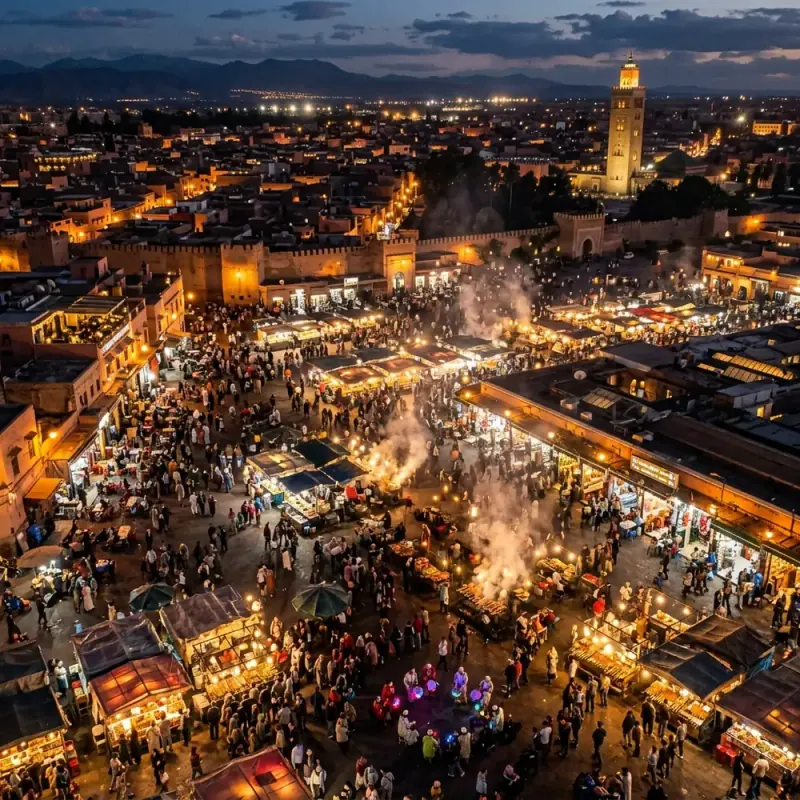
Welcome to my table—or rather, welcome to the lively, labyrinthine streets of my city. There is a specific hour in Marrakech, just as the blazing sun begins its descent behind the minaret of the Koutoubia Mosque, when the atmosphere fundamentally shifts. The relentless, dry heat of the afternoon finally breaks, and a different kind of warmth takes over: the rich, heavy warmth of woodsmoke, toasting cumin, sweet cinnamon, and sizzling lamb fat. If you were to close your eyes in the heart of the ancient Medina, your nose would effortlessly guide you long before your eyes adjusted to the flickering lights of the night market.
When people ask me what they should do when they visit the Red City, my answer is always the same, and it’s unapologetically simple: eat. Eat everything you can.
Marrakech is a city that doesn't just feed you; it embraces you, overwhelms you, and seduces your palate. Forget the white tablecloths of the upscale palmeraie resorts for a moment. The true culinary soul of Morocco isn't found in a quiet, air-conditioned dining room. It’s found on the corner of a noisy, dusty alleyway, handed to you on a piece of rough brown paper by a vendor whose family has been perfecting that exact recipe for three generations.
So, loosen your belt, wash your hands, and prepare your senses. Here is your ultimate street food guide to Marrakech, curated with love, nostalgia, and a fierce pride for my Moroccan heritage.
The Heart of the Medina: Jemaa el-Fnaa After Dark
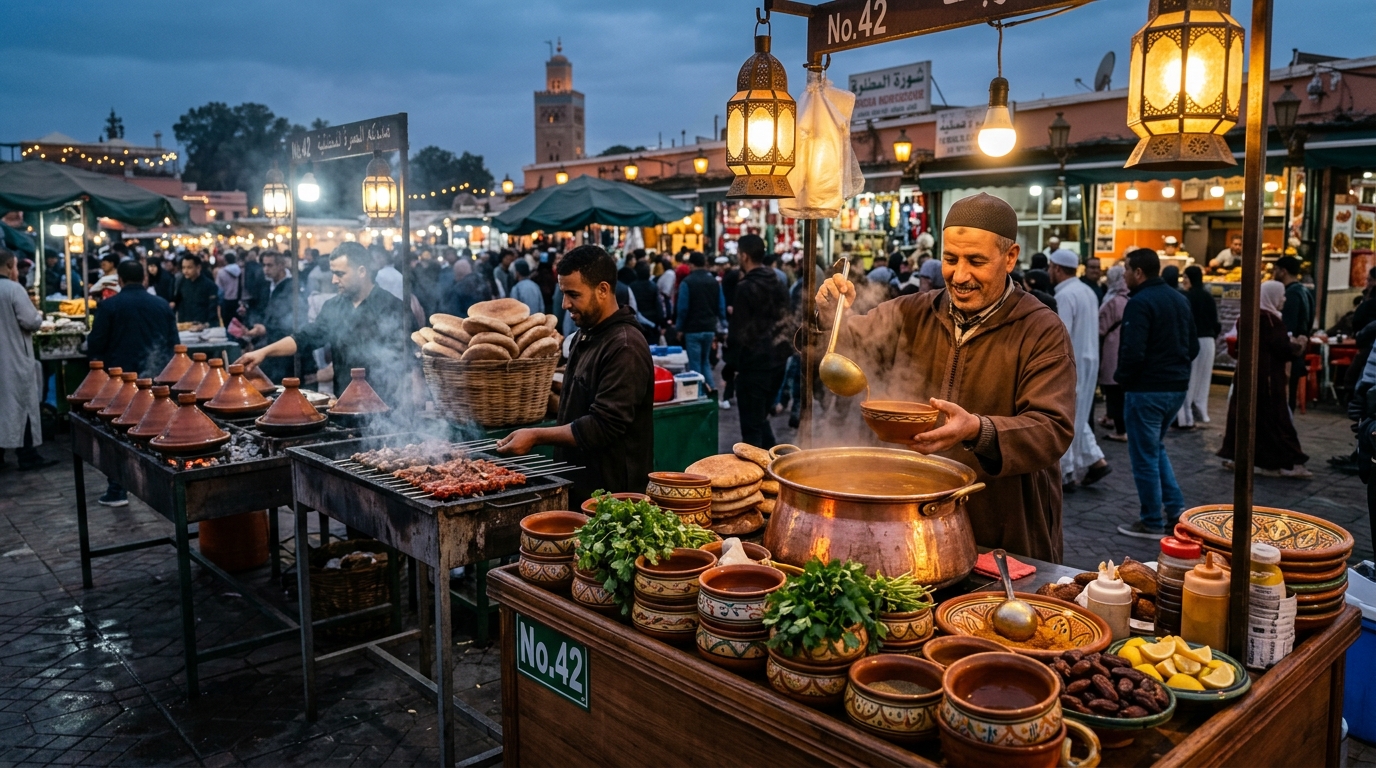
You cannot talk about Marrakech street food without starting at the epicenter: Jemaa el-Fnaa. By day, it’s a chaotic plaza of snake charmers, henna artists, and juice stalls. But as dusk falls, hundreds of food stalls are wheeled out in a choreographed ballet that has played out every evening for centuries. White smoke billows into the night sky, and the cacophony of vendors enthusiastically beckoning you to their numbered stalls becomes the soundtrack to your dinner.
Tanjia: The Working Man's Stew (and My Personal Obsession)
If Marrakech had an official municipal dish, it would be the Tanjia. Do not confuse this with Tajine—they are entirely different beasts. Tanjia is exclusively Marrakchi, originally created by the city’s bachelors and working men.
The preparation is an art form. Large cuts of beef or lamb are stuffed into a traditional terracotta urn (the tanjia) along with copious amounts of garlic, earthy cumin, saffron threads, a dollop of smen (fermented, aged butter that gives Moroccan food its distinct funky richness), and arguably the most important ingredient: deeply preserved lemons. The urn is sealed with parchment paper and wire, then taken to the farnatchi—the man who stokes the wood fires for the neighborhood hammam (public bath). The urn is buried in the hot ashes and left to slow-cook for anywhere from six to twelve hours.
When you order Tanjia in the square or down a side street in the Medina, the vendor tips the urn, and out pours meat so tender it yields to a harsh glance, swimming in a thick, gelatinous, impossibly flavorful gravy. You eat it by tearing off pieces of crusty khobz (Moroccan bread) and scooping up the meat. It is a masterpiece of slow cooking.
Merguez and Kefta: The Smoke of the Square
Walking through the food stalls, you will inevitably be enveloped by the smoke of grilling meats. For a quick, deeply satisfying bite, pull up a plastic stool at one of the grill stations. Kefta (minced beef or lamb spiced with paprika, cumin, coriander, and fresh herbs) is molded onto skewers and grilled over roaring charcoal. Merguez, the spicy, garlicky lamb sausages, blister and pop on the grill.
Order a mixed plate. It will be slammed down in front of you alongside a plate of tomato and onion salad, a small dish of fiery harissa paste, and bread. The char from the grill combined with the aromatic spices is intoxicating.
Sheep’s Head and Snail Soup: For the Adventurous Palate
For those willing to step outside their culinary comfort zone, the deeper corners of Jemaa el-Fnaa offer delicacies that are deeply beloved by locals. You will see stalls lined with steaming sheep heads. Don't be intimidated. The meat from the cheek and the brain is incredibly tender and rich, served simply with a dusting of salt and cumin.
If that’s a step too far, try Babbouche (snail soup). The snails are simmered in an earthy, dark, almost medicinal broth flavored with over a dozen spices including licorice root, thyme, aniseed, and bitter orange peel. It’s earthy, warming, and locals swear by its restorative properties, especially on a chilly desert night.
Morning Rituals: Breakfast in the Red City
Street food in Marrakech isn't just a nighttime affair. The mornings here have their own distinct rhythm and flavor profile.
Sfenj: The Moroccan Doughnut
If you wake up early enough and wander the quiet alleys, you will hear the rhythmic bubbling of hot oil. Follow it, and you will find the sfenj maker. Sfenj are rustic, unsweetened Moroccan doughnuts, made from a sticky, yeast-heavy dough that is expertly shaped into rings and dropped into boiling oil until deeply golden and blistered.
They are crispy on the outside, incredibly chewy on the inside, and traditionally served threaded onto a frond of palm leaf for you to carry away. Eat them piping hot. You can have them dusted with coarse sugar, but I prefer them plain, dipped into a glass of brutally hot, heavily sweetened mint tea. The contrast of the oily, savory dough and the astringent, sweet tea is the taste of my childhood mornings.
Msemmen and Baghrir: A Thousand Holes and Flaky Layers
Breakfast in Morocco is a carb-lover’s absolute dream. Keep an eye out for women cooking on large flat griddles. They are likely making Msemmen—a square, laminated flatbread that is stretched paper-thin with oil and butter, folded, and cooked until flaky and crisp.
Right next to it, you might find Baghrir, often called the "thousand-hole pancake." Made from a semolina batter, it is cooked only on one side until the top is riddled with tiny, sponge-like craters. Both of these are vehicles for amlou (a decadent, addictive paste made from toasted almonds, argan oil, and honey) or simple triangles of laughing cow cheese and jam.
Midday Fuel: Hidden Alleyway Treasures
As the midday sun beats down, the Medina turns into a maze of shadowed alleys. This is the perfect time to seek out the humble, soul-warming lunches that fuel the artisans, shopkeepers, and students of the city.
Bissara: The Soul-Warming Broad Bean Soup
In the cooler months, or simply when you need a hug in a bowl, Bissara is the answer. It is a thick, rustic purée made from dried split fava beans or peas, simmered with garlic until it breaks down into a creamy velvet.
It is served in a shallow clay bowl, aggressively drizzled with pungent, grassy Moroccan olive oil, and generously dusted with cumin and paprika. It costs pennies, it fills you up for hours, and its humble simplicity is a proof to the fact that Moroccan cuisine doesn't always need thirty ingredients to be profound.
Makouda: The Perfect Potato Bite
If you want something to eat on the go while haggling for rugs, find a Makouda vendor. These are small, spiced potato cakes, dipped in a light batter and deep-fried until golden. They are crispy on the outside, fluffy and heavily spiced on the inside.
While you can eat them on their own, the ultimate Marrakech street food hack is to order a Makouda sandwich. The vendor will slice open a piece of khobz, smash three or four hot makoudas inside, add a smear of spicy harissa, some chopped tomatoes, and perhaps an olive or two. It is a textural marvel and a flavor bomb.
B'stilla: The Sweet and Savory Masterpiece
While traditionally a dish served at weddings and grand celebrations, you can find smaller, street-friendly versions of B'stilla (pastilla) in the medina. This is arguably the most complex and sophisticated dish in the Moroccan repertoire.
It is a pie made from dozens of layers of werqa (a dough even thinner than phyllo), traditionally stuffed with pigeon (though chicken is more common now) that has been slow-cooked with ginger, saffron, and cinnamon. The meat is shredded and mixed with an egg-thickened onion sauce, topped with a layer of crushed, fried almonds, baked until crisp, and then heavily dusted with powdered sugar and more cinnamon.
The juxtaposition of the savory, spiced poultry with the sweet, nutty, cinnamon-laced crust sounds jarring to the uninitiated palate, but I promise you, one bite and you will understand the genius of Moroccan flavor layering.
The Sweet Finish: Desserts of the Souks
Moroccans don't typically end a meal with a heavy dessert—we prefer fresh fruit. However, the souks are full of sweet treats designed to give you a sugar rush to keep you shopping.
Look for carts selling Chebakia, a sesame-scented dough shaped into a flower, deep-fried, and instantly submerged in boiling honey and orange blossom water. It is sticky, fragrant, and deeply satisfying. Pair it with a handful of Sellou, a rich, unbaked sweet made from browned flour, toasted sesame seeds, fried almonds, honey, and a heavy dose of anise and cinnamon.
And, of course, no culinary tour of Marrakech is complete without a stop at one of the dozens of freshly squeezed orange juice carts in Jemaa el-Fnaa. The oranges grown in the surrounding region are incredibly sweet, and a cold glass costs almost nothing. It is the perfect palate cleanser after a night of heavy, spiced meats.
My Golden Rules for Eating Street Food in Marrakech
Before I let you wander off into the souks, hungry and eager, allow me to share a few rules from a local to keep you happy and healthy:
- Follow the locals: The oldest rule in the book remains the truest. If a stall has a long line of Moroccans waiting, the food is fresh, and the turnover is high. Avoid empty stalls.
- Peel it, cook it, or forget it: When it comes to fresh produce in the streets, stick to things you can peel (like oranges or bananas) or things that have been cooked over high heat.
- Eat with your right hand: In Moroccan culture, food is traditionally eaten with the right hand, using bread as your utensil. The left hand is considered unclean. It takes practice to tear bread and scoop meat with one hand, but the locals will deeply appreciate the effort.
- Embrace the chaos: Ordering street food in Marrakech is not a polite, orderly affair. You must assert yourself, point at what you want, smile warmly, and get into the beautiful mess of it all.
Marrakech is a city that is best understood through its food. Every spice, every slow-cooked stew, and every handmade bread tells the story of our Berber, Arab, Andalusian, and Saharan heritage. So come hungry, leave your dietary inhibitions at your hotel, and let the streets feed your soul. Besseha! (To your health!)
Frequently Asked Questions (FAQ)
Q: Is street food in Marrakech safe to eat? A: Generally, yes, especially if you follow the rule of eating where the locals eat. High turnover means the food hasn't been sitting out. Stick to cooked foods, grilled meats, and boiling soups. Avoid raw salads or unpeeled fruits from street carts if you have a sensitive stomach.
Q: How much should I expect to pay for street food? A: Street food is incredibly affordable. A bowl of snail soup or bissara might cost you 10-15 MAD (around $1-$1.50 USD). A Tanjia meal or a plate of mixed grilled meats in the square will run you between 40-80 MAD ($4-$8 USD). Always clarify the price before you order.
Q: Do I need to speak Arabic or French to order? A: While a little Moroccan Arabic (Darija) or French goes a long way and wins you smiles, it is absolutely not necessary. Pointing, smiling, and holding up fingers for quantities works universally in the medina. The vendors in Jemaa el-Fnaa are used to tourists and often speak a smattering of English, Spanish, and Italian.
Q: What are the best options for vegetarians? A: Moroccan street food can be very meat-heavy, but vegetarians won't starve! Look for Bissara (fava bean soup), Makouda (potato cakes), vegetarian Msemmen (sometimes stuffed with onions and peppers), wood-fired flatbreads, fresh olives, roasted nuts, and the incredible array of fresh fruit and juices.
Image Prompts for Your Blog Post
Image Prompt 1: The Tanjia Maker Subject: A close-up, dramatic shot of a weathered Moroccan man's hands pouring a rich, dark Tanjia (meat stew) from a traditional terracotta urn onto a rustic ceramic plate. The meat looks incredibly tender and steaming. Vibe: Warm, authentic, rustic, mouth-watering. Style: Food photography, shallow depth of field, dramatic chiaroscuro lighting emphasizing the steam and the rich textures of the meat and preserved lemons. Format: 4:3 aspect ratio, high resolution, realistic, non-stock aesthetic.
Image Prompt 2: Jemaa el-Fnaa Smoke Subject: A wide-angle evening shot of the Jemaa el-Fnaa food stalls. Thick plumes of white smoke rise from charcoal grills, illuminated by hanging warm, bare incandescent lightbulbs. Silhouettes of locals and tourists sit shoulder-to-shoulder on benches eating. Vibe: Chaotic, atmospheric, energetic, smoky. Style: Street photography, cinematic lighting, long exposure to capture the movement of the crowd but keeping the food stalls sharp. Format: 16:9 aspect ratio, highly detailed, raw and authentic.
Image Prompt 3: The Perfect Sfenj Subject: A close-up of a stack of golden, crispy, oddly shaped Moroccan Sfenj (doughnuts) threaded onto a green palm frond. In the background, slightly out of focus, a bubbling vat of oil and the hands of the vendor shaping the dough. Vibe: Morning light, fresh, tempting, traditional. Style: Macro food photography, natural morning sunlight casting soft shadows, vibrant warm tones. Format: 1:1 aspect ratio, editorial food magazine style.
Image Prompt 4: The Spice of the Makouda Subject: A street vendor handing a hot, overstuffed Makouda sandwich (potato cakes in bread) wrapped in rough brown paper directly to the camera. Bright red harissa is slightly dripping from the edge of the bread. Vibe: Inviting, dynamic, bold flavors. Style: First-person perspective (POV), vivid colors emphasizing the red harissa and golden fried potato, shallow depth of field focusing on the sandwich with a blurred medina alley in the background. Format: 4:5 aspect ratio, immersive, casual.
Image Prompt 5: B'stilla Perfection Subject: A small, individual-sized Moroccan B'stilla pie resting on an intricately patterned zellige tile table. The pie is beautifully dusted with powdered sugar and geometric lines of cinnamon, with a few toasted almonds scattered around. Vibe: Elegant yet accessible, sweet and savory, culturally rich. Style: Top-down flat lay food photography, soft diffused natural light, highlighting the delicate, flaky layers of the pastry and the contrast of the spices against the sugar. Format: 1:1 aspect ratio, sophisticated, high culinary detail.
Experience the true heart of Moroccan heritage through its culinary traditions. Join us in preserving and honoring these ancestral recipes.
What People Are Saying
No comments yet. Be the first — we'd love to hear from you.
Youssef Amazigh
Culturally Verified & Fact-CheckedThe Moroccan Food editorial team brings together native culinary researchers, heritage preservationists, and experienced home cooks across Marrakech, Fes, and Casablanca. Every recipe and cultural guide is reviewed against ancestral oral traditions and authentic regional practices.