Women’s Lives in Contemporary Morocco: Progress, Challenges, and Everyday Strength
Women’s Lives in Contemporary Morocco: Progress, Challenges, and Everyday Strength
If your image of a Moroccan woman is based entirely on 20th-century Orientalist paintings or outdated Hollywood tropes — a veiled, silent figure confined to the interior of a riad — you are going to be severely disoriented when you actually arrive in the country.
Step out into the streets of Casablanca, Rabat, or Tangier at 8:00 AM on a Tuesday. You will see women driving the tramways, presenting the morning news, walking to university campuses carrying medical textbooks, and directing traffic in police uniforms.
Moroccan women are the engine of the country’s contemporary transformation. But their reality is not a simple, linear narrative of ‘Western-style liberation.’ It is a deeply complex, distinctly Moroccan negotiation between deep traditional values, Islamic faith, and aggressive modernization.
The Legal Landscape: The Moudawana and Beyond
You cannot talk about women in Morocco without talking about the Moudawana (the Family Code). In 2004, under the leadership of King Mohammed VI, Morocco passed one of the most progressive family laws in the Arab-Islamic world.
The 2004 Moudawana raised the legal age of marriage for women from 15 to 18, placed severe restrictions on polygamy (making it practically very difficult), gave women the right to initiate divorce, and established joint responsibility of the family between husband and wife (abolishing the concept of the husband as the sole head of the household).
It was a seismic shift. However, passing a law and changing a culture are two different things. Today, in 2026, Moroccan feminists and civil society organizations are pushing for the next wave of reforms. The debates are fierce and public. They center on issues like inheritance inequality (under traditional Islamic law applied in Morocco, a woman inherits half the share of a man in the same degree of kinship), the closing of legal loopholes that still allow for underage marriage with a judge’s permission, and stronger protections against domestic violence.
The Economic Force: From Cooperatives to Corporate
Economically, the presence of women is transformative, but deeply stratified.
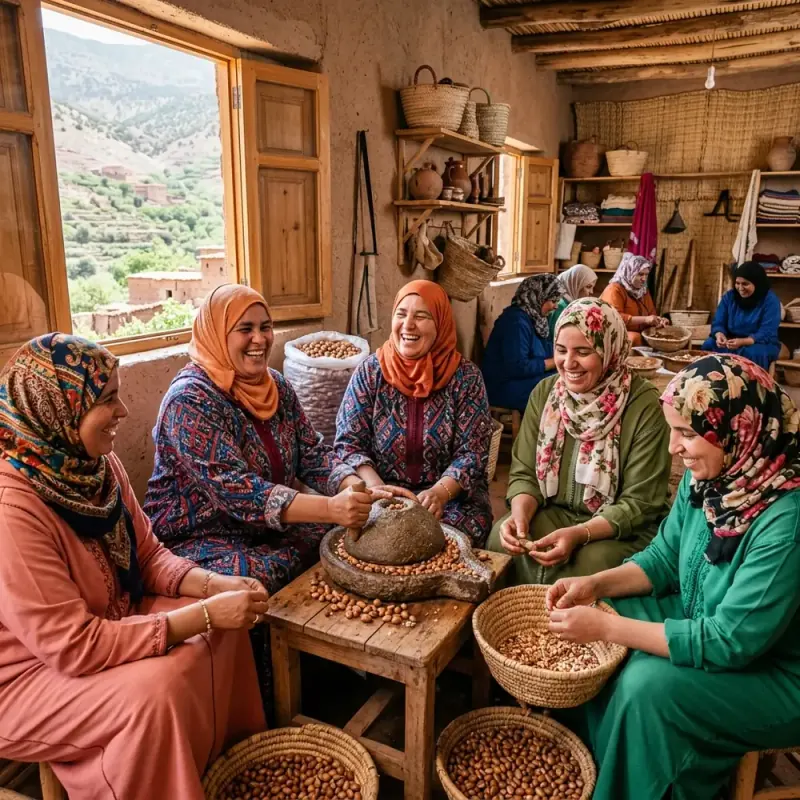
In the rural areas, particularly in the south and the Atlas Mountains, women are the backbone of the local economy. They are the driving force behind the renowned Argan oil cooperatives. These cooperatives have not only commercialized a local product for the global luxury cosmetics market but have fundamentally changed the social dynamics of the villages. Women who previously had no independent income are now breadwinners, running businesses, and sending their daughters to high school and university.
In the urban centers, women are dominating higher education. In many university faculties — particularly in medicine, engineering, and the humanities — female students outnumber their male counterparts.
Yet, a paradox remains: despite high educational attainment, the formal female labor force participation rate in Morocco remains stubbornly low compared to global averages (often hovering around 20-25%). Many highly educated women face societal pressure to step back from their careers after marriage or childbirth. But those who do stay in the workforce are breaking glass ceilings; you will find Moroccan women serving as government ministers, CEOs of major banks, and leading tech startups.
The Public Sphere: Navigating Space
For a visitor, one of the most visible realities of gender in Morocco is the navigation of public space.
Historically, the street and the café were considered male domains, while the home was the female domain. This has changed radically, but echoes remain. In a traditional medina or a working-class neighborhood, a local café with chairs facing the street might still be occupied entirely by men sipping mint tea.
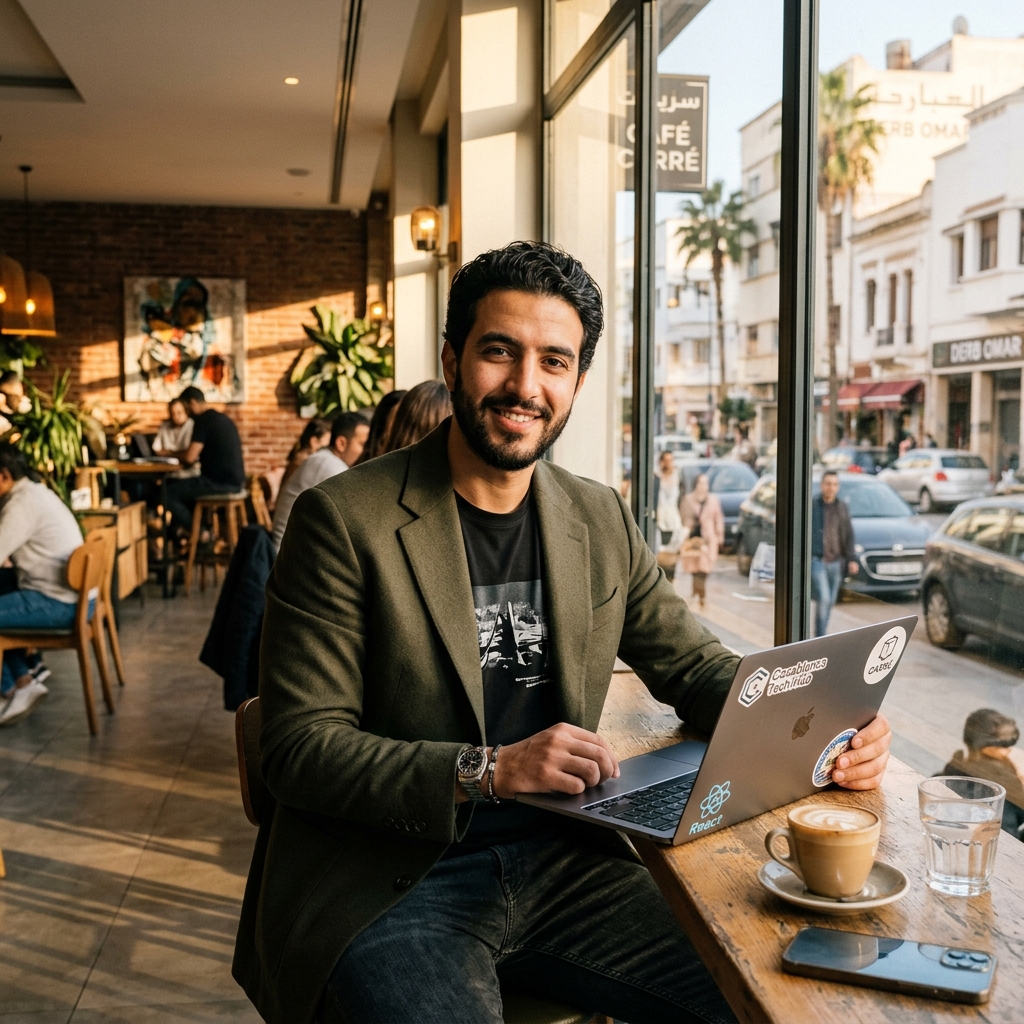
But walk into a modern café in the Gueliz neighborhood of Marrakech or the Agdal in Rabat, and it is entirely mixed. Young women sit together smoking, working on laptops, or socializing exactly as they would in Madrid or Milan.
The issue of street harassment remains a genuine challenge. Moroccan women navigate the public space with a highly developed sense of situational awareness. The government passed a law in 2018 criminalizing sexual harassment in public spaces (the ‘Hakimoui law’), which was a significant symbolic victory, but enforcement on the ground remains inconsistent.
The Nuance of Modesty
Western observers often obsess over what Moroccan women wear, equating the hijab (headscarf) directly with oppression and Western clothing with liberation.
This is a fundamental misunderstanding of Moroccan society. Dress in Morocco is a personal, familial, and religious choice. In the same family, you might find a mother wearing a traditional djellaba and hijab, one daughter wearing jeans and a leather jacket with her hair uncovered, and another daughter wearing a modern, fashionable turban-style hijab with a tailored suit.
Moroccan women do not need to be ‘saved’ from their culture. They are actively defining what their culture means in the 21st century. They are interpreting their faith, building their careers, and raising their families on their own terms.
The Everyday Strength
What still strikes me the most is the quiet, unbreakable strength of the Moroccan mother — the Mima. She is the absolute center of the Moroccan family structure. The respect and reverence commanded by mothers in Moroccan culture is deep; it is the glue that holds the society together during times of rapid economic and social stress.
When you visit Morocco, look beyond the surface. Look at the women running the stalls in the souk, negotiating fiercely in Darija. Look at the young students walking together, debating politics. Look at the artisans preserving centuries-old crafts. They are not the backdrop to the Moroccan story. They are the authors of it.
Experience the true heart of Moroccan heritage through its culinary traditions. Join us in preserving and honoring these ancestral recipes.
What People Are Saying
No comments yet. Be the first — we'd love to hear from you.
Fatima Zahra Benmoussa
Culturally Verified & Fact-CheckedThe Moroccan Food editorial team brings together native culinary researchers, heritage preservationists, and experienced home cooks across Marrakech, Fes, and Casablanca. Every recipe and cultural guide is reviewed against ancestral oral traditions and authentic regional practices.