World Cup 2030 in Morocco: The Stadiums, Trains, and Hotels Being Built Right Now (And What It Means for You)
World Cup 2030 in Morocco: The Stadiums, Trains, and Hotels Being Built Right Now (And What It Means for You)
Let’s be honest. When Morocco co-won the bid to host the 2030 FIFA World Cup alongside Spain and Portugal, most people’s first reaction was something like: “Wait, can Morocco actually pull this off?”
The answer, based on what is happening on the ground right now, is a very loud yes.
But this is not just a sports story. It is a story about an entire country deciding to press fast-forward on a decade of infrastructure development and compress it into half the time. If you have visited Morocco before, or are planning to, understanding what is changing will completely reshape your travel plans.
The Six Moroccan Host Cities: A Geography Lesson First
Morocco is not using one or two cities as symbolic gestures. Six cities are being developed as genuine World Cup hubs:
- Casablanca (Grand Stade Hassan II, 115,000 capacity — the largest stadium in the world when complete)
- Marrakech (expanded and modernised)
- Rabat
- Fes
- Tangier
- Agadir
This spread matters. It means the infrastructure investment is not concentrated in one showpiece city. Every major region of the country is getting an upgrade.
The Grand Stade Hassan II: Africa’s Answer to the Bernabéu
The headline project is impossible to ignore.
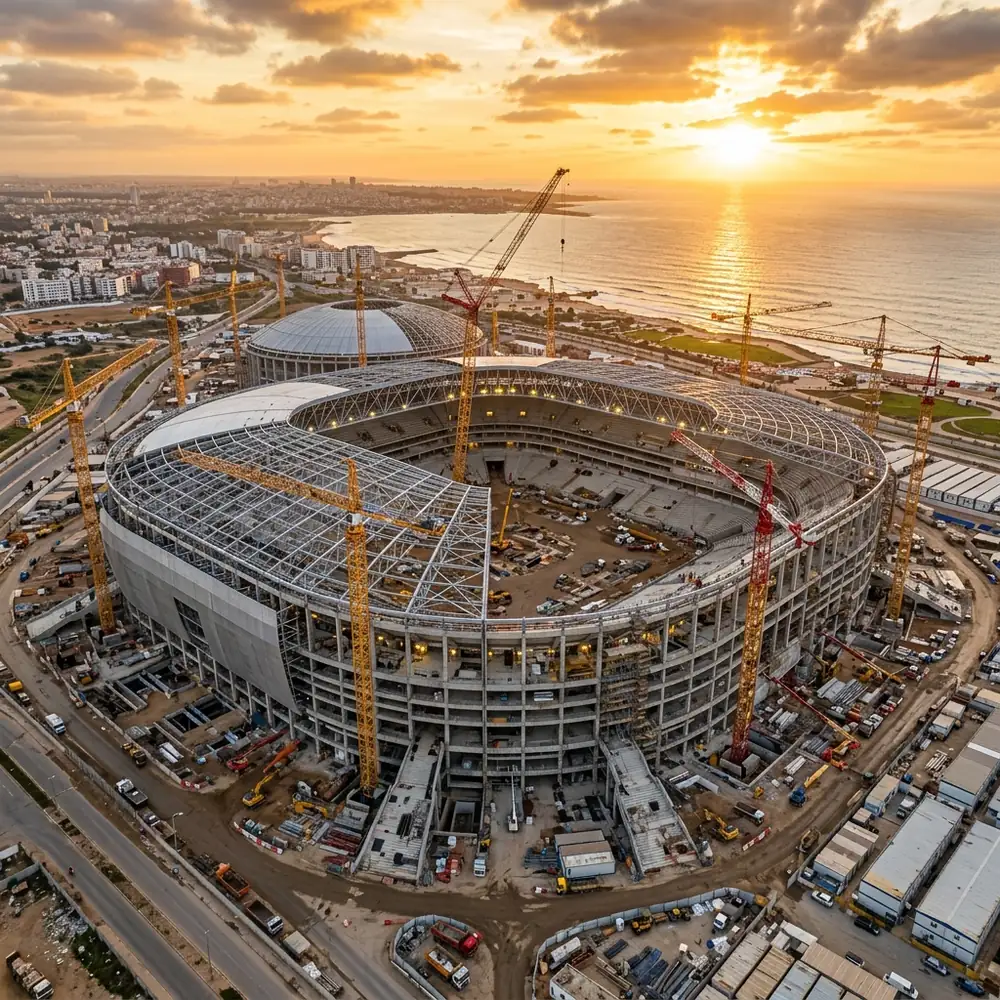
Located in the Casablanca suburb of Bouskoura, the Grand Stade Hassan II will be, when it opens, the largest football stadium on Earth. With a capacity of 115,000, it overtakes Camp Nou’s expanded version and India’s Narendra Modi Stadium.
Here is what makes it interesting beyond the raw numbers:
- Solar panels covering the roof — designed to generate a portion of its own energy
- A retractable pitch system to protect the grass
- Direct highway connections and a new tramway extension
- A surrounding district being developed as a sports-tech business park
Construction began in 2023. Visit Bouskoura today and you can see it rising.
The Al Boraq Problem — and How Morocco Is Solving It
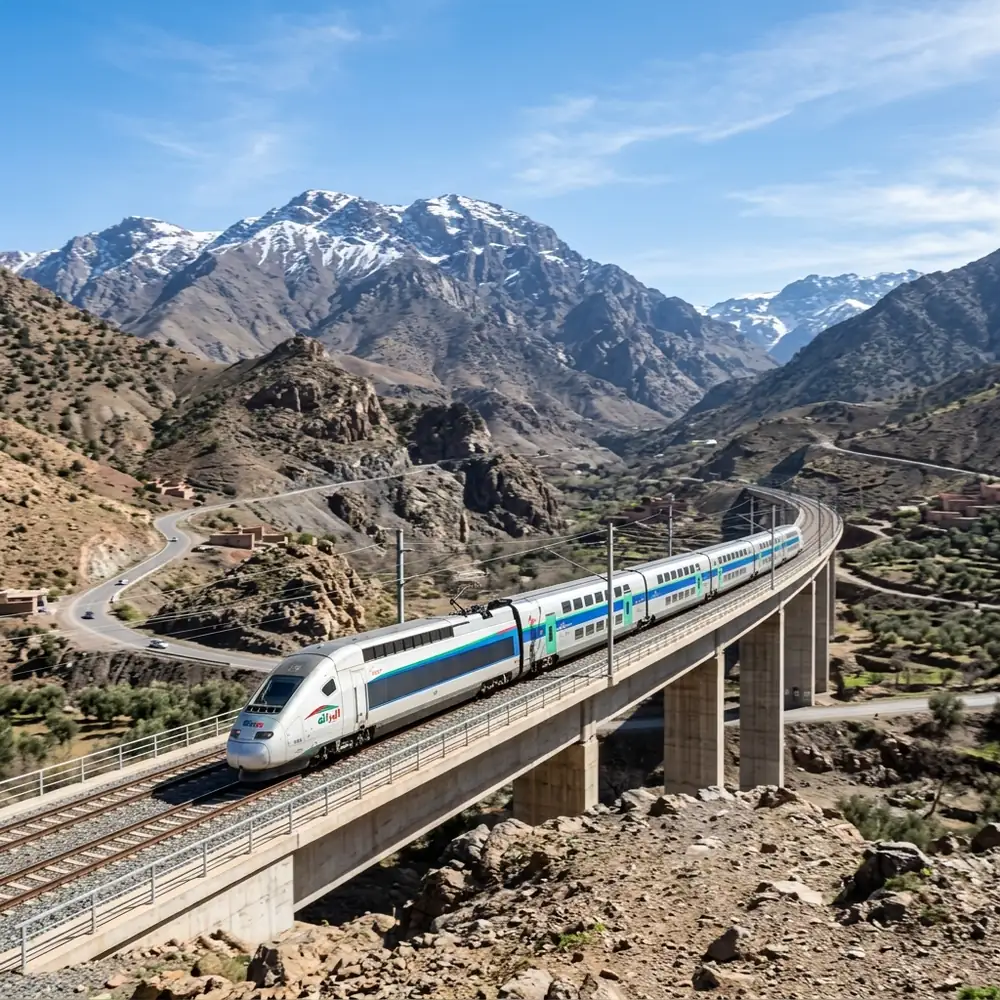
Here is the thing about Morocco’s high-speed rail: it currently only connects Tangier to Casablanca. Full stop. No Marrakech, no Agadir, no Fes on the high-speed network.
That is about to change, at least partially, before 2030.
What is confirmed for 2030:
- Casablanca to Marrakech at high speed (currently 3+ hours; target: under 90 minutes)
- Improved conventional rail to Fes, Tangier, and Agadir
- New train stations being built in Agadir, which currently has no rail connection at all
What is planned but may run behind schedule:
- Full Al Boraq extension to Agadir (a far more technically complex route through the Atlas Mountains)
- A light rail system in Marrakech to connect the airport, medina, and train station
The honest truth? Not all of this will be finished by July 2030. Infrastructure projects in Morocco — as in every country — have a way of taking longer than announced. But the money is committed, the contracts are signed, and the direction is irreversible.
Airports: Where the Real Action Is
Your entry point into Morocco is getting a major overhaul.
Mohammed V International Airport in Casablanca is the biggest project. A new terminal is under construction that will nearly double the airport’s capacity to handle 60 million passengers annually. Currently, Mohammed V handles about 18 million. The jump is staggering.
Other airports seeing expansion:
- Marrakech Menara: new terminal and additional capacity
- Agadir Al Massira: international expansion
- Tangier Ibn Battouta: modernisation and freight upgrades
- Fes-Saïss: smaller but significant upgrades
If you have flown through Casablanca recently and experienced the chaos of Terminal 1, the new terminal cannot come fast enough.
The Hotel Gap: 150,000 Rooms and Counting
This is where Morocco faces its most honest challenge.
To host a World Cup, FIFA requires a certain density of hotel rooms within reasonable distance of stadiums. Morocco currently does not have enough — at least not at the four- and five-star level that FIFA demands for official visitor accommodation.
The government has launched a programme to add 150,000 new hotel rooms by 2030. Is this achievable? Probably not at that full number. But the construction is very real.
What this means for travellers:
- More choice at mid-range price points — not just luxury riads or budget hostels
- New hotel districts emerging in cities like Agadir and Fes outside the medina walls
- Increased Airbnb competition as property developers realise the opportunity
If you are planning to visit Morocco for the World Cup itself and have not already booked accommodation, the time pressure is genuine.
Road Infrastructure: Getting Between Cities
One underreported dimension of Morocco’s World Cup preparation is road construction.
The motorway network is expanding significantly, particularly:
- The Marrakech–Agadir highway (a route that currently takes nearly three hours; the new road will halve this)
- Upgraded ring roads around Casablanca and Fes
- New tunnel projects through the Atlas Mountains
For independent travellers who rent cars — and many people explore Morocco this way — this will be genuinely transformative.
The 2025 AFCON Effect
Before the World Cup arrives, Morocco is hosting the 2025 Africa Cup of Nations. This is not a small thing.
AFCON 2025 is essentially a dress rehearsal. Stadiums need to be ready, transport links need to function, and the hospitality industry needs to prove it can handle international visitor flows. Morocco is using it intentionally as a stress test.
By the time AFCON is over, you will have a much clearer picture of how prepared the country actually is.
What Does All This Mean If You Are Planning a Trip?
If you are going before 2028: You will see construction everywhere, especially in Casablanca and Marrakech. Budget extra time at airports. Some roads will have diversions. But Morocco is entirely functional and extraordinary to visit — it always has been.
If you are going in 2025-2030: You will arrive in a significantly different country. The airport experience will be smoother, getting between cities will be faster, and the hotel inventory will be deeper.
If you are going for the World Cup itself: Book everything now. Accommodation prices are already climbing for that period, and they will only go one direction.
The Side Effects Nobody Talks About
Every major infrastructure push like this creates ripple effects that matter to ordinary travellers.
- Real estate prices in Casablanca, Marrakech, and Tangier have risen sharply as investors anticipate demand
- Local businesses in the medinas are upgrading their storefronts and menus to meet international expectations
- English proficiency among hospitality workers is increasing as part of a government training programme
- Heritage conservation battles are happening in Fes and Marrakech as development pressure meets UNESCO protected medina walls
Morocco has always been a country in motion. What is happening now is that motion at maximum speed.
Frequently Asked Questions
When will the World Cup take place in Morocco? The 2030 FIFA World Cup will be held across the summer of 2030, with Morocco co-hosting alongside Spain and Portugal. The exact match schedule will be announced closer to the tournament.
Which Moroccan cities will host World Cup matches? Casablanca, Marrakech, Rabat, Fes, Tangier, and Agadir are the six confirmed Moroccan host cities.
Is Morocco safe to visit during this construction period? Completely. Construction activity is concentrated around specific sites and does not affect the day-to-day experience of visiting the medinas, desert, Atlas Mountains, or coastal cities.
Will my flight to Morocco be affected by airport construction? Casablanca’s Mohammed V airport is operational throughout the construction phase, with phased expansions. Expect some congestion in the short term, but no significant disruptions to flight schedules.
Experience the true heart of Moroccan heritage through its traditions. Join us in preserving these ancestral rituals.
What People Are Saying
No comments yet. Be the first — we'd love to hear from you.
The Moroccan Editorial Team
A Moroccan cultural writer dedicated to documenting the authentic voice, history, and heritage of the Kingdom. Writing from within — to share what truly makes Morocco extraordinary.
Our Mission →