Best Moroccan Food in Casablanca: Seafood, Street Food & Where Locals Actually Go
When travelers plan a food trip to Morocco, Casablanca is usually just the airport they fly into before taking a train straight to Marrakech or Fes. This is a massive mistake.
Casablanca is the economic engine of Morocco, and its food scene reflects a fast-paced, cosmopolitan city that still holds deeply to its Atlantic roots. If you want the absolute freshest seafood in the country, an incredible street food culture, and modern Moroccan dining, Casa is where you need to be. Here is a guide to the best Moroccan food in Casablanca and where the locals actually eat.
The Marché Central: An Atlantic Seafood Feast
You cannot talk about eating in Casablanca without starting at the Central Market (Marché Central). Built during the French protectorate era, this market is the beating heart of the city’s food culture.
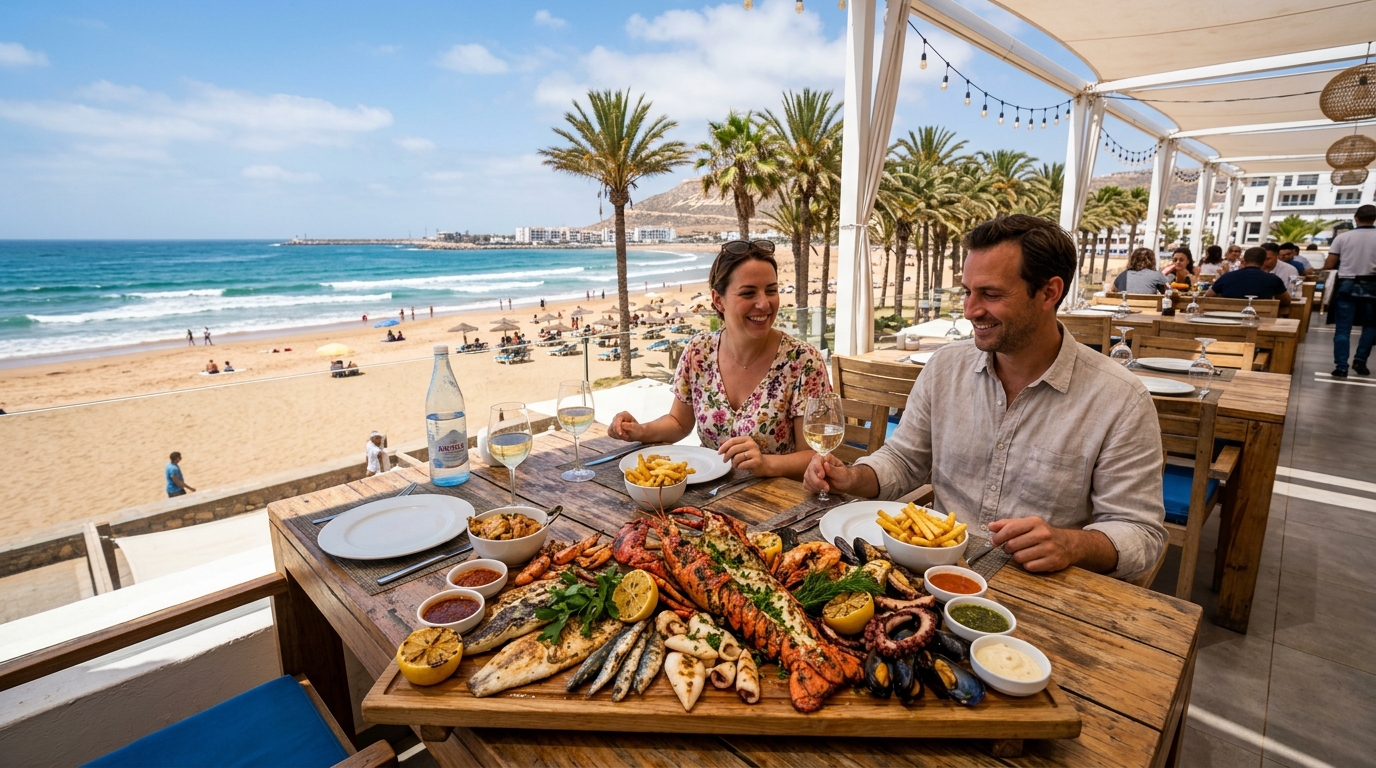
The strategy here is simple: you do not go to a restaurant; you go to the fishmongers. You buy your own seafood directly from the stalls—fresh oysters from Oualidia, massive prawns, whole sea bass, and baskets of fresh sardines. Once you have your catch, you walk a few meters to one of the small grill stands ringing the market. For a small fee, they will clean, spice, and grill or fry your fish on the spot, serving it with fresh bread, a Moroccan tomato salad, and wedges of lemon. It is chaotic, loud, and absolutely perfect.
Chermoula and Shrimp Pil Pil
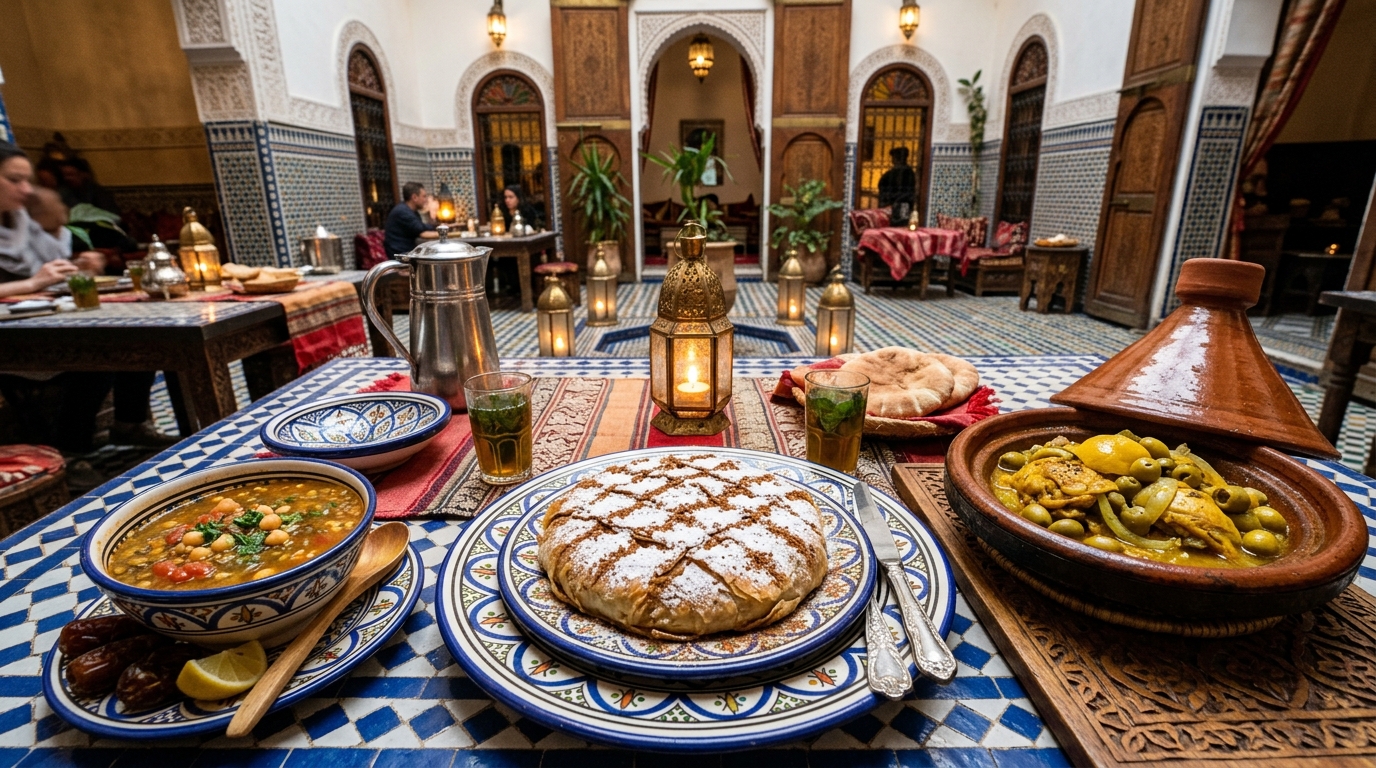
Because of its coastal location, Casa’s traditional restaurants lean heavily on fish. You need to seek out fish cooked in chermoula, a classic Moroccan marinade made from fresh cilantro, parsley, garlic, cumin, paprika, and olive oil. Whether it is rubbed on grilled sardines or used as a base for a fish tagine with potatoes and olives, it is the defining flavor of the Moroccan coast.
For a starter, you must order Shrimp Pil Pil. Served in small clay dishes sizzling hot from the oven, this dish features fresh Atlantic shrimp bubbling in olive oil, garlic, sweet paprika, and a heavy hit of spicy chili. You eat it by tearing off pieces of bread and dunking them directly into the boiling, spiced oil.
The Bocadillo: Casablanca’s Fast Food
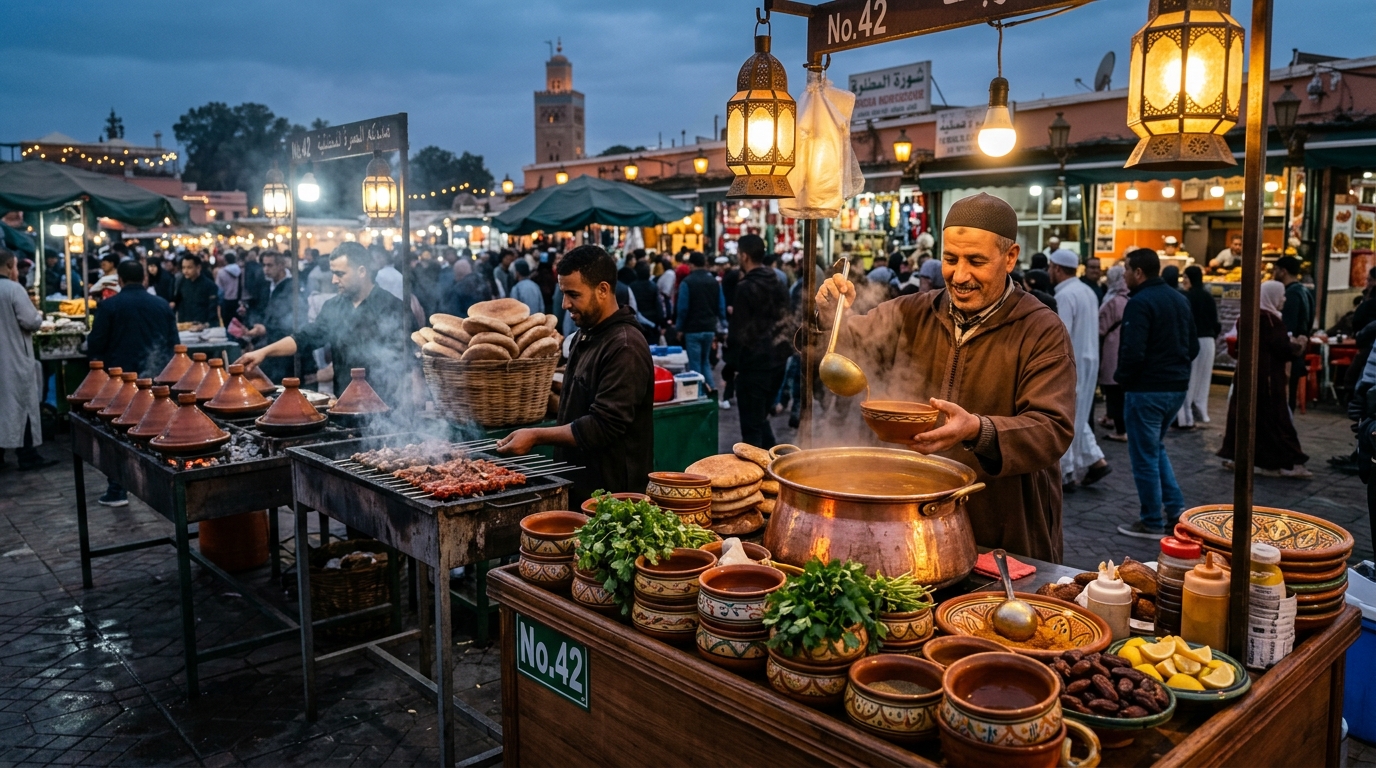
Casa is a working city, which means street food has to be fast, cheap, and filling. Enter the bocadillo.
Originally a Spanish concept, the Moroccan bocadillo is a massive sandwich built inside a crusty half-baguette. In Casablanca, the classic filling is a mix of canned tuna, boiled potatoes, hard-boiled eggs, olives, tomatoes, and a generous squirt of spicy harissa and mayonnaise. You will find bocadillo stands in the Maârif district and near the beaches, surrounded by young locals grabbing a quick, heavily satisfying lunch.
Upscale Dining and Meknes Wines
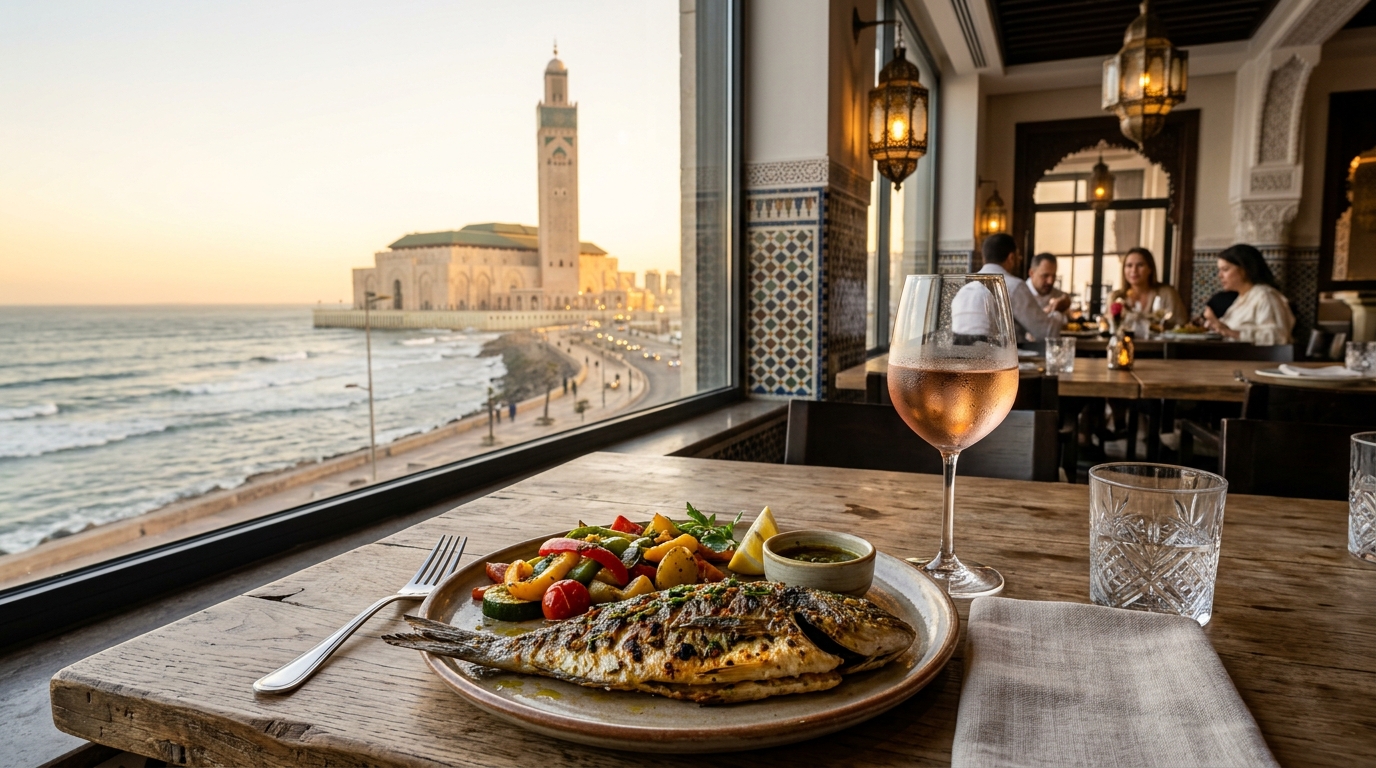
Casablanca is where Moroccan cuisine meets modern dining. In neighborhoods like Anfa and along the Corniche (the coastal road facing the Hassan II Mosque), you will find beautiful, upscale Moroccan restaurants.
This is the perfect place to explore the intersection of Moroccan food and local viticulture. Order a platter of fresh Atlantic seafood and pair it with a crisp Vin Gris—a uniquely Moroccan style of pale, grey-pink rosé produced in the Meknes region. It is dry, light, and cuts perfectly through the rich spices of a fish tagine.
Frequently Asked Questions
Is it safe to eat oysters in Casablanca? Yes, if you eat them at the Central Market or high-end seafood restaurants on the Corniche. The oysters are usually brought in daily from Oualidia, a coastal lagoon south of Casablanca famous for its pristine oyster beds.
What is the best neighborhood for food in Casablanca? For traditional seafood, the Central Market. For upscale dining and cafes, the Gauthier and Anfa neighborhoods. For fast street food and snacks, the bustling Maârif district.
Can you drink alcohol in Casablanca restaurants? Yes, Casablanca is very cosmopolitan. Many upscale restaurants, hotel bars, and specifically licensed establishments serve alcohol, including excellent local Moroccan wines from the Meknes and Benslimane regions.
Experience the true heart of Moroccan heritage through its culinary traditions. Join us in preserving and honoring these ancestral recipes.
What People Are Saying
No comments yet. Be the first — we'd love to hear from you.
The Moroccan Food
Culturally Verified & Fact-CheckedThe Moroccan Food editorial team brings together native culinary researchers, heritage preservationists, and experienced home cooks across Marrakech, Fes, and Casablanca. Every recipe and cultural guide is reviewed against ancestral oral traditions and authentic regional practices.