Fresh Food in Marrakech: A Season-by-Season Guide to the Souks and What to Buy
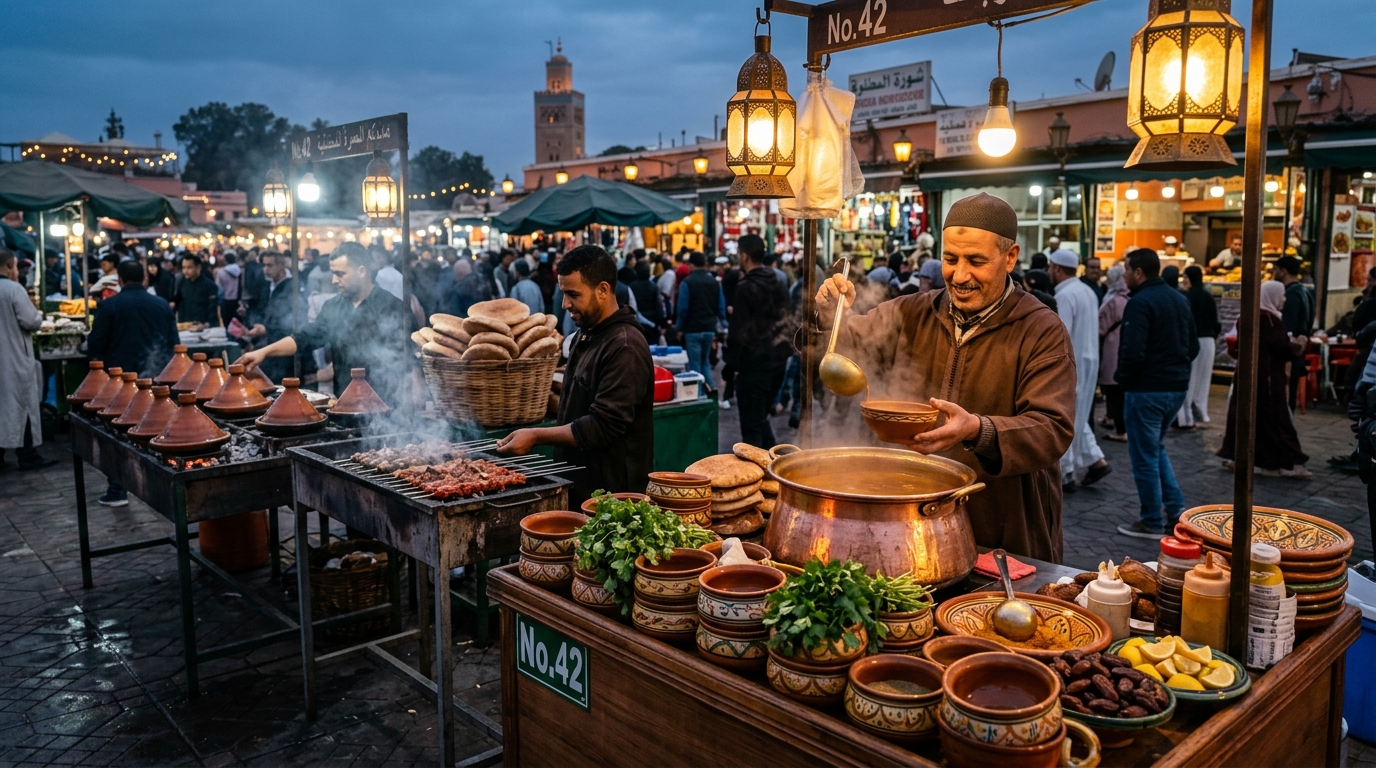
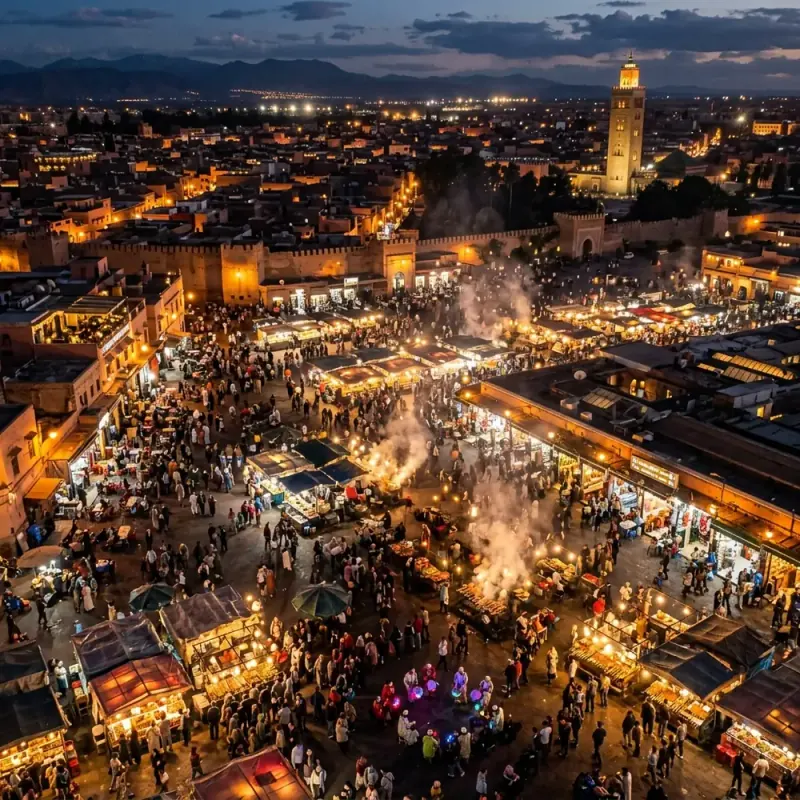
Most people who visit Marrakech take one look at Jemaa el-Fna and think that is the food experience. The smoke, the snake charmers, the rows of grilled meat and snail soup steaming in the square. And yes, the Jemaa is extraordinary in its own chaotic way. But if you want to understand how Marrakech actually eats — not what it performs for visitors but what it cooks in the quiet of its own kitchens — you need to leave the square and walk toward the markets where nobody is watching you. The souks (markets) where real Marrakchi food begins.
The Markets Worth Knowing
Mellah Market (Souk el-Mellah)
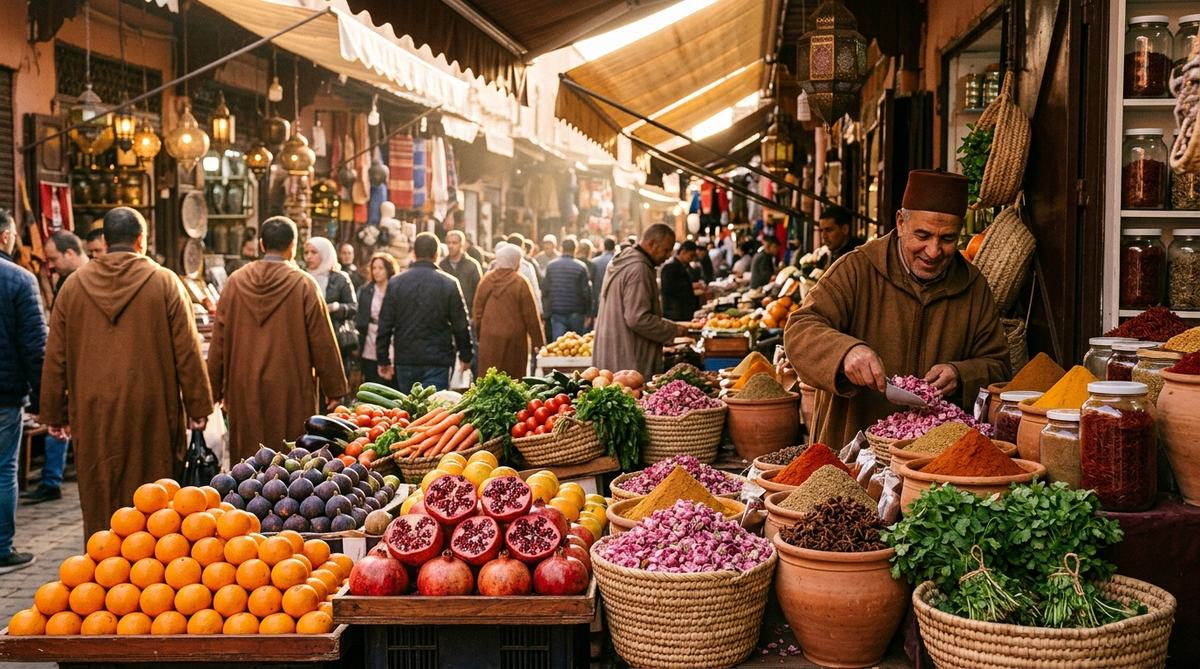
Located in the old Jewish quarter near the Bahia Palace, the Mellah market is one of the oldest and least touristic food markets in Marrakech. Women from surrounding neighbourhoods do their daily shopping here in the early morning, and the produce is brought in from the Haouz Plain that surrounds the city — one of Morocco’s most productive agricultural regions. You will find vegetables piled directly on low wooden tables, herbs sold in generous fistfuls tied with esparto grass, and a range of dried goods (pulses, nuts, olives, preserved lemons) in the dark interior of the permanent stalls. The prices here are lower than anywhere near the main medina, and the quality is often higher.
Bab Doukkala Market
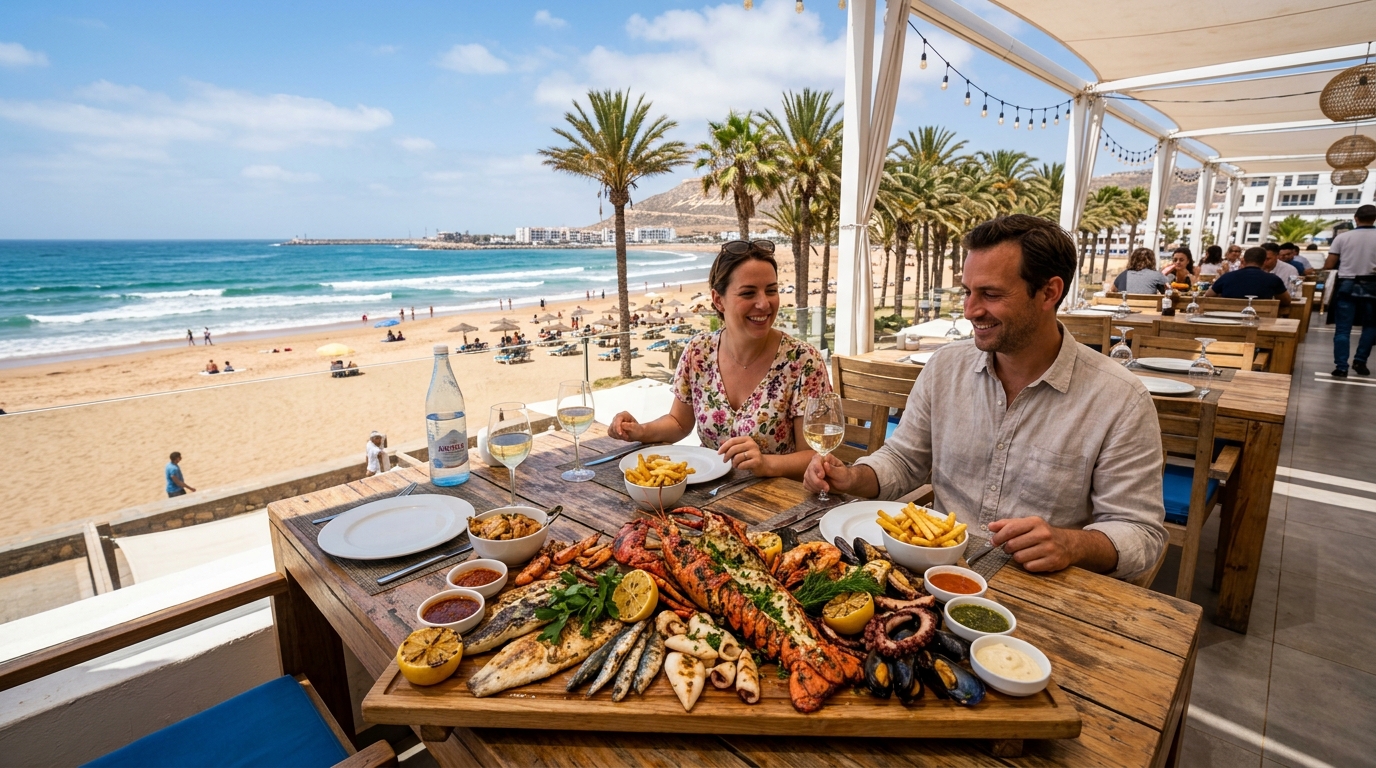
Just inside the Bab Doukkala gate on the northwestern edge of the medina, this market is where Marrakech’s domestic cooks have been buying their weekly supplies for generations. It is active from six in the morning and begins to wind down by noon. The fish section, tucked in toward the back, is worth specific attention — the traders here receive deliveries from the Atlantic coast at Essaouira and Agadir, and on a good morning the selection of sea bream, sardines, and red mullet can be exceptional. Arrive early.
Souk Haddadine and Surrounding Markets
The Haddadine area (named for its historic blacksmiths) connects to a network of smaller produce stalls that stretch toward the tanneries neighbourhood. This is less a single market than an ecosystem of sellers — a corner with nothing but parsley and cilantro, a stall specialising only in belboula (pearl barley) and grains, another with thirty varieties of olive in open clay pots. Navigation is instinctive; follow what smells interesting.
Jemaa el-Fna: The Daytime Market
Before the evening spectacle begins, the square’s daytime identity is a fresh produce and dry goods market of genuine quality. Orange juice sellers aside (though their fresh-squeezed juice at dawn is one of Marrakech’s true pleasures), there are vendors selling seasonal fruit, dried figs and dates, argan oil in unlabelled bottles, and fresh almonds in season. The light here in the early morning is extraordinary — pink over the Koutoubia minaret, the Atlas Mountains white-capped in winter — and shopping here in the first hours of the day is as close to a spiritual experience as market shopping gets.
What to Buy by Season
Marrakech sits at the edge of two climatic worlds — the Atlantic mildness to the west and the Saharan heat to the south — and this position means the city enjoys a growing season of remarkable variety. Seasonality is not a trend here. It is the architecture of the diet.
Winter (November – February): Citrus, Root Vegetables, and Olives
This is the season of maltaise blood oranges — arguably the finest eating orange in the world, grown in the Souss valley south of Marrakech, available in the markets from January through March. The skin is thin, the juice almost burgundy, and the flavour is complex enough to make you rethink everything you thought you knew about citrus. Buy a kilo and eat them standing at a table in the market. Do not save them for later.
Winter is also the season of navet (turnips), selqa (Swiss chard), khodar (a generic term for root vegetables including sweet-fleshed carrot varieties grown in the Atlas foothills), and leeks. The harira (the great Moroccan tomato-lentil-herb soup) that Marrakchi families eat through winter draws heavily on these roots. A good winter harira is inseparable from the market vegetables that go into it.
And olives: the olive harvest comes in October through December, and the Mellah market in winter is an education in olive varieties. Picholine olives from the Beni Mellal region, cracked msir olives preserved with preserved lemon and chermoula, oil-cured black olives so shrivelled they look like raisins and taste like concentrated earth. Buy them by the cup from the metal scoop sellers.
Spring (March – May): Artichokes, Fava Beans, and Wild Herbs
Spring in Marrakech means foul akhdar (fresh fava beans, or broad beans) appearing in enormous piles — still in their pods, intensely green. The Moroccan habit of eating young fava beans raw, dipped in salt and cumin, is one of the simplest and most revelatory things you can do with a spring vegetable. The beans here are smaller and more tender than what reaches European supermarkets; eat them before they get a chance to develop their tough inner skin.
Spring also brings the globe artichoke season, when the Haouz Plain artichoke farms send their harvest to the Marrakech markets by the truck-load. Moroccan artichokes are cooked into tagines with preserved lemon and olive oil, or simmered with fava beans and cilantro, or eaten braised and cold as a salad. The market artichokes are often sold still warm from transport, their outer leaves still damp with field moisture.
Wild herbs — zaâtar (thyme), chermoula herbs including flat-leaf parsley and fresh coriander in overwhelming abundance, fenugreek leaves — arrive in spring bundles. Marrakchi cooks buy herbs in quantities that would alarm most European shoppers: a fistful of parsley costs a few dirhams and is enough to perfume a pot of soup for a family of eight.
Summer (June – September): Tomatoes, Courgettes, Figs, and Peppers
Marrakech summers are hot in a way that concentrates flavour into produce that would be merely good anywhere else. The summer tomatoes from the Souss valley — the tomate de la région — are a different category of fruit from anything sold under the same name in a Northern European supermarket. Eaten simply with olive oil and cumin, they need nothing else.
Karaa (Moroccan courgette, often a paler, thicker variety than the Italian type) appears in summer alongside its compatriots: green peppers, felfel (sweet and mildly hot varieties), eggplant, and the first cucumbers. The classic Marrakchi summer dish of taktouka — roasted green pepper and tomato salad with cumin and garlic — is made entirely from summer market produce and requires almost no cooking skill and almost all shopping skill: the quality of the tomatoes and peppers determines everything.
Figs (kermouss) arrive in August, and at the Mellah market in high summer, you can buy fresh figs of a quality that makes the dried version seem like a different fruit entirely. The best are the borsa variety — green-skinned, red-fleshed, honey-sweet. Eat them within two days of purchase.
Autumn (September – November): Pomegranates, Quince, and Late Olives
The pomegranate (rouman) juice sellers who set up at the edges of Jemaa el-Fna in autumn are not a tourist convenience. Pomegranate juice is a genuine Moroccan autumn tradition, consumed in the evenings when the heat of the day finally breaks. The market pomegranates in October are at their best: heavy, thin-skinned, with seeds the colour of rubies and a balance of sweet and tart that fresh pomegranate juice in other seasons never quite achieves.
Sfargel (quince) is the autumn fruit that most non-Moroccan visitors overlook entirely, because quince eaten raw tastes of almost nothing. Cooked with lamb and cinnamon and honey in a tagine, however, it becomes something extraordinary — complex, slightly floral, with a texture somewhere between apple and sweet potato. Buy them hard and greenish; they will cook into gold.
The Freshness Test for Fish
At any Marrakech fish market, apply the following tests without embarrassment. Serious fish buyers perform them automatically:
- Eyes: They should be clear, convex (slightly protruding), and glossy. Sunken, cloudy, or flat eyes indicate age.
- Gills: Open the gill flap and look. Fresh gills are bright red or pink. Grey or brown gills mean the fish has been sitting too long.
- Flesh: Press the flesh with a finger and release. Fresh fish springs back immediately. If the indentation stays, the fish is past its prime.
- Smell: Fresh sea fish smells of the ocean — clean, briny, almost mineral. An ammonia smell or an overly “fishy” odour means it is no longer fresh.
How to Bargain Politely
The negotiation at Marrakech markets is not aggressive bargaining. It is a conversation. The price a seller quotes to someone unfamiliar with the market is often slightly high; the real transaction price is arrived at through a brief, good-natured exchange. The formula is simple: express interest, ask the price, offer 80% with a smile, settle somewhere between the two, thank the seller warmly. This takes thirty seconds and should be conducted with the register of an ordinary friendly conversation, not a confrontation.
Buying a small amount first and returning to the same seller establishes a relationship that, over subsequent visits, brings better produce, better prices, and sometimes gifts of a handful of herbs thrown in with your purchase.
A Sample Daily Market Itinerary
6:00am — Bab Doukkala fish section. Buy the fish you need for lunch before the best pieces are taken.
6:30am — Walk east through the medina to Mellah market. Buy herbs, olives, seasonal vegetables.
7:30am — Orange juice at Jemaa el-Fna, taken standing at a stall before the square changes character.
8:00am — If you need dried goods — lentils, chickpeas, flour, whole spices — the stalls around Souk Haddadine open now.
8:30am — Argan oil from a trusted stall (ask to smell it before buying; fresh, quality argan oil smells like toasted almonds, not rancid oil).
9:00am — Back to your riad kitchen. The day’s cooking begins.
Frequently Asked Questions
What is the best time of day to shop at Marrakech’s fresh food markets? Without question, early morning — between 6:00am and 9:00am. This is when the produce is freshest, the sellers are most alert and amenable, and the prices are often at their lowest before the late-morning tourist traffic changes the energy of the markets. The fish in particular must be bought early; by 10am the best pieces are gone.
Is it safe for tourists to buy and eat fresh food from Marrakech markets? Yes, with sensible precautions. Buy produce you will cook rather than eat raw if you are not accustomed to local bacteria. Wash everything thoroughly. Fish and meat should be cooked on the day of purchase, particularly in summer when temperatures are high. The market produce itself is generally excellent quality — the concern is handling and hygiene during transport back to where you are staying, so bring your own bags and avoid long detours on a hot day.
How do I find good quality argan oil at the Marrakech markets? Look for sellers who store their argan oil in dark glass bottles or sealed ceramic containers, out of direct sunlight. Ask to smell it before buying — quality culinary argan oil (roasted argan, for cooking and dipping) has a warm, nutty, toasted smell that is immediately distinctive. Cosmetic argan oil (cold-pressed, unroasted) has a lighter, more neutral smell and should not be used in cooking. Buy a small quantity first, taste it at home, and return to the same seller if satisfied.
What fresh produce should I bring back from Marrakech when leaving? The most transportable and rewarding items are: dried argan oil (well-sealed), whole dried spices (cinnamon sticks, cumin seeds, coriander seeds — incomparably fresher than most imported versions), maa zahar and maa ward (orange blossom and rosewater, in sealed bottles), dried figs, olives packed in oil (check customs regulations for your destination), and preserved lemons if well-sealed. Fresh produce faces customs restrictions in most countries, but these pantry staples travel well and will change your cooking at home.
Experience the true heart of Moroccan heritage through its culinary traditions. Join us in preserving and honoring these ancestral recipes.
What People Are Saying
No comments yet. Be the first — we'd love to hear from you.
The Moroccan Food
Culturally Verified & Fact-CheckedThe Moroccan Food editorial team brings together native culinary researchers, heritage preservationists, and experienced home cooks across Marrakech, Fes, and Casablanca. Every recipe and cultural guide is reviewed against ancestral oral traditions and authentic regional practices.