Marrakech City Guide: Ancient Medina Quarters, Almoravid Roots, and Authentic Culinary Traditions
archived: false
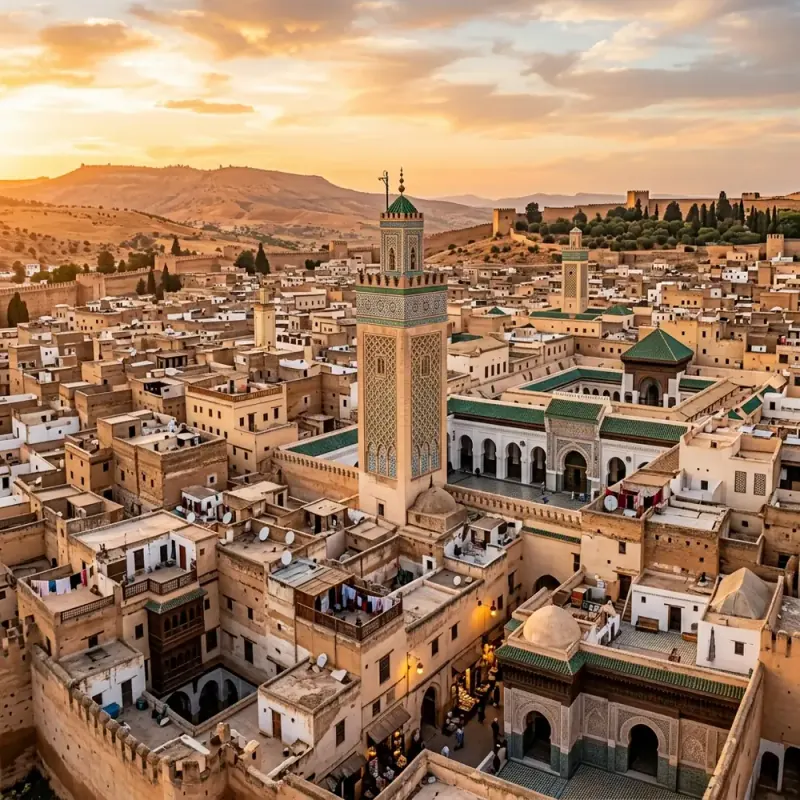
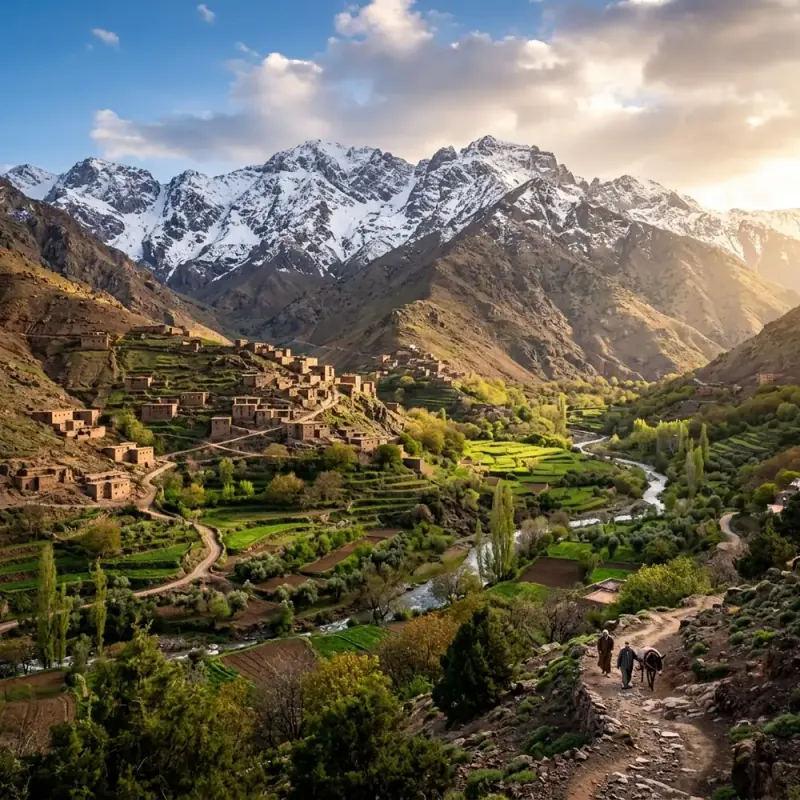
Marrakech stands as the historic southern capital of Morocco, anchored against the snowcapped peaks of the High Atlas mountains. Founded in 1062 AD by the Almoravid leader Abu Bakr ibn Umar and consolidated by Sultan Yusuf ibn Tashfin, the city was conceived as a fortified imperial outpost managing trans-Saharan trade routes. The pink adobe clay walls (Tabia) that still encircle the historic medina give the city its world-famous moniker: the Red City (Al-Madina Al-Hamra).
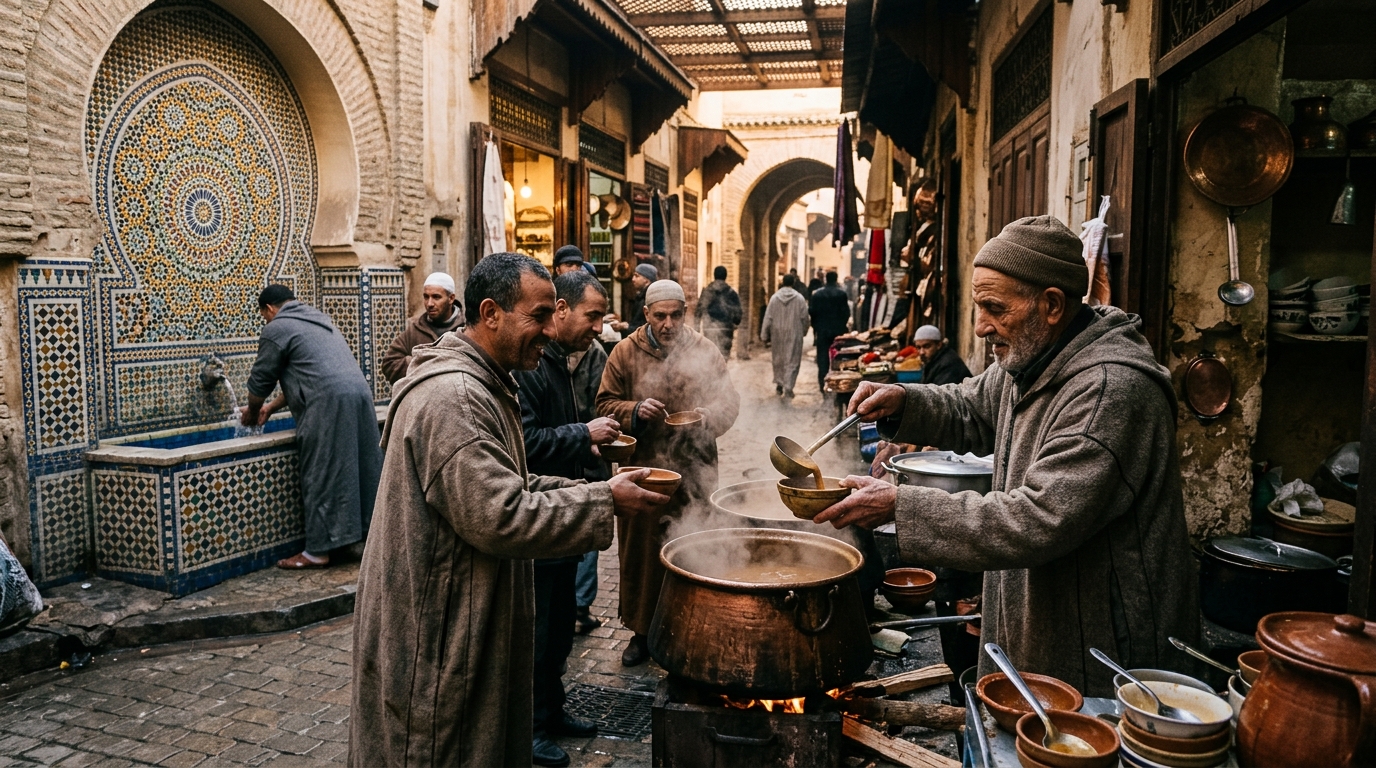
Beyond the glamour of luxury riads and boutique tourism, Marrakech possesses an ancient urban framework where communal bakeries, water fountains, mosques, and neighborhood ovens operate as living public infrastructure. Navigating Marrakech with territorial awareness allows travelers to appreciate its deep architectural logic, artisan traditions, and culinary heritage.
The Almoravid Urban Blueprint and Hydraulic Mastery
To understand Marrakech, one must understand how water transformed an arid desert plain into an imperial capital. The Almoravids engineered the Khettara system, a subterranean network of sloping gravity-fed aqueducts tapping deep water tables at the base of the Atlas mountains. This water flowed underground for miles without evaporating in the desert heat, feeding palaces, mosques, public fountains, and lush date palm groves (Palmeraie).
The medina was laid out within nineteen kilometers of ramparts, entered through monumental horseshoe-arch gates:
- Bab Doukkala: The northwestern trade gateway connecting the city to the fertile agricultural plains of Doukkala.
- Bab Agnaou: The magnificent twelfth-century Almohad portal leading into the royal Kasbah, carved from local Gueliz sandstone with floral and Quranic inscriptions.
- Bab Aylen: An ancient eastern gate named after a local Sanhaja Berber tribe, witnessing historic battles between Almoravids and Almohads.
- Bab Debbagh: The northeastern gate housing the ancient leather tanneries, strategically placed downwind from residential quarters.
The Communal Oven and the Secret of Tanjia Marrakchia
While the tagine is ubiquitous throughout Morocco, the undisputed culinary soul of Marrakech is the Tanjia Marrakchia. This dish belongs uniquely to the men of Marrakech, originally prepared by bachelor market craftsmen who sealed seasoned cuts of beef or lamb into an earthenware amphora (Tanjia) on their Friday day off.
The preparation of an authentic Tanjia is deceptively simple yet chemically exact:
- The Ingredients: Tough, collagen-rich cuts such as beef shank or lamb knuckle are packed into the clay jar with aged preserved lemons (Lhamd Mssayer), crushed garlic cloves, freshly toasted cumin, whole coriander seeds, saffron strands steeped in water, and a generous dollop of fermented rancid butter (Smen). No water or fresh vegetables are added; only olive oil.
- The Seal: The neck of the clay urn is wrapped with heavy butcher paper and tied tightly with butcher twine, then pierced with small pinholes to release steam slowly.
- The Farnatchi Oven: The true magic occurs at the Farnatchi, the underground furnace that heats the neighborhood public hammam. The communal oven operator (Fernatchi) buries the clay urns beneath hot, smoldering wood ashes rather than direct flames.
- The Slow Simmer: The Tanjia rests in the embers for six to eight hours. The intense, steady heat melts the connective tissue into gelatin, creating a rich, glossy, concentrated sauce with deeply smoky citrus undertones.
Visitors who want an authentic Tanjia should order directly from historic butchers around Souk Ableuh (the olive market near Jemaa el-Fna) or small neighborhood stalls behind the Ben Youssef Madrasa, where local shopkeepers gather for midday lunch.
Navigating the Historic Souks Without Getting Lost
The souks of Marrakech represent one of the largest continuous commercial craft ecosystems in the Islamic world. Divided historically into specialized guilds, each trade occupied its own quarter to prevent industrial friction:
- Souk Haddadine (Blacksmiths): Echoing with hammer strikes against iron, where artisans forge lanterns, fireplace grates, and door hardware over open coal fires.
- Souk Cherratine (Leatherworkers): Filled with the rich aroma of tanned hides, producing hand-stitched travel bags, sandals (Babouches), and saddlery.
- Souk des Teinturiers (Dyers): Overhead wooden racks suspend long hanks of freshly dyed wool and silk in brilliant indigo, saffron yellow, and poppy red.
- Souk Seffarine (Coppersmiths): Where traditional brass tea trays, kettles, and ornate mirrors are hammered by hand from flat sheets of raw metal.
- Souk Ableuh (Olive Market): Towering mounds of green, violet, and wrinkled black olives cured with preserved lemon, wild mountain oregano, and crushed chili.
When exploring the souks, keep three practical guidelines in mind: walk on the right-hand side of narrow alleys to make room for delivery carts and mopeds; if you find yourself confused, walk toward wide pedestrian thoroughfares rather than taking dead-end residential alleys (Derbs); and treat bargaining as a cordial social conversation rather than a combat, smiling and taking your time over sweet mint tea.
Jemaa el-Fna: Oral Tradition as Intangible Heritage
Recognized by UNESCO in 2001 as a Masterpiece of the Oral and Intangible Heritage of Humanity, Jemaa el-Fna is far more than a public square; it is an open-air theater that has functioned continuously for a thousand years.
Historically, the square served as a gathering point where merchants, camel caravans, and mountain farmers exchanged news. Even today, as dusk descends:
- Halqa Storytellers: Traditional bards gather circular crowds (Halqa) to recount ancestral tales from the Arabian Nights, Amazigh folklore, and historical epics in Moroccan Darija.
- Gnawa Musicians: Descendants of sub-Saharan musicians play iron castanets (Qraqeb) and three-stringed goat-hide lutes (Guembri), performing rhythmic healing trance songs.
- Herbal Doctors and Acrobats: Traditional healers display desert botanicals, while young acrobats from the Souss region perform human pyramids passed down through generations.
To experience the square authentically, avoid the crowded commercial dining stalls in the center during peak dinner hours. Instead, enjoy mint tea from the upper terraces around 5:30 PM to watch the lanterns light up, then descend to small, family-owned grills on the perimeter alleys for charcoal-grilled spiced kefta or steaming bowls of snail broth (Babbouche) infused with fifteen restorative medicinal herbs.
Historic Landmarks of Architectural Distinction
Beyond the souks, Marrakech preserves monumental architectural treasures that illustrate the apex of Moroccan decorative arts:
Ben Youssef Madrasa
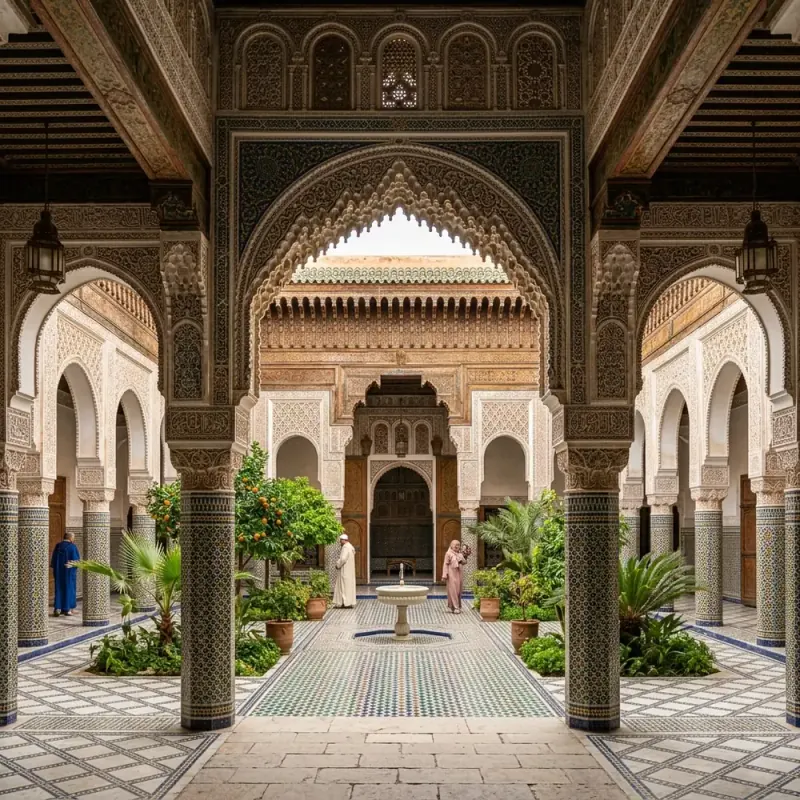
Reconstructed in 1565 by Saadian Sultan Abdallah al-Ghalib, this Quranic college once housed nine hundred students. Its central courtyard displays exquisite stucco carvings (Stuc), carved Atlas cedarwood lintels, and intricate geometric zellige tilework that demonstrates the mathematical sophistication of medieval Islamic architecture.
The Saadian Tombs
Sealed for two centuries behind medina walls until rediscovered by aerial photography in 1917, this royal necropolis features the Chamber of the Twelve Pillars. Carved from imported Italian Carrara marble and honeycombed with delicate stalactite vaulting (Muqarnas), it remains one of the finest burial chambers in the world.
Badi Palace (El Badi)
Built by Ahmad al-Mansur following the Battle of the Three Kings in 1578, this palace was once paved with Italian marble, gold leaf, and Sudanese onyx. While later dismantled by Sultan Moulay Ismail, the immense sunken orange gardens, sandstone walls, and resident white storks nesting along the battlements convey immense imperial scale.
Frequently Asked Questions
How many days are needed to explore Marrakech comfortably?
A three to four-day stay is ideal for exploring the historic medina, major monuments, and craft souks at a comfortable pace. Adding a fifth day allows for a scenic day trip into the High Atlas valleys (such as Ourika or Imlil) or the peaceful desert landscapes of Agafay.
Is it easy to find authentic traditional food in Marrakech?
Yes, if you venture slightly off the main tourist streets. Seek out small neighborhood eateries where local shopkeepers dine, particularly around the Ben Youssef quarter and Bab Doukkala. Look for daily specials like slow-cooked lamb Tanjia, fresh sardines fried with chermoula herb paste, and hand-rolled semolina couscous served on Fridays.
What is the best way to travel from Marrakech Menara Airport to the Medina?
The official L19 Airport Express Bus runs every twenty minutes directly from the terminal to Jemaa el-Fna and Bab Doukkala for thirty dirhams. Alternatively, pre-arrange a transfer through your riad or negotiate an official taxi ride from the clearly marked airport taxi rank before loading your luggage.
How should visitors dress when walking through the Marrakech medina?
While Marrakech is cosmopolitan and accustomed to international travelers, the medina remains a living traditional residential community. Both men and women should wear modest, breathable clothing that covers shoulders and knees to show respect for local customs, particularly when walking near neighborhood mosques and family residential alleys.
Experience the true heart of Moroccan heritage through its culinary traditions. Join us in preserving and honoring these ancestral recipes.
What People Are Saying
No comments yet. Be the first — we'd love to hear from you.
Houssam Elmrabet
Culturally Verified & Fact-CheckedHoussam Elmrabet is a Moroccan researcher in territorial marketing and cultural heritage preservation. His work documents regional gastronomic identities, local agricultural heritage, and how ancestral culinary traditions define authentic territorial branding across the Kingdom.