The History of Harcha: Morocco's Ancient Berber Semolina Flatbread
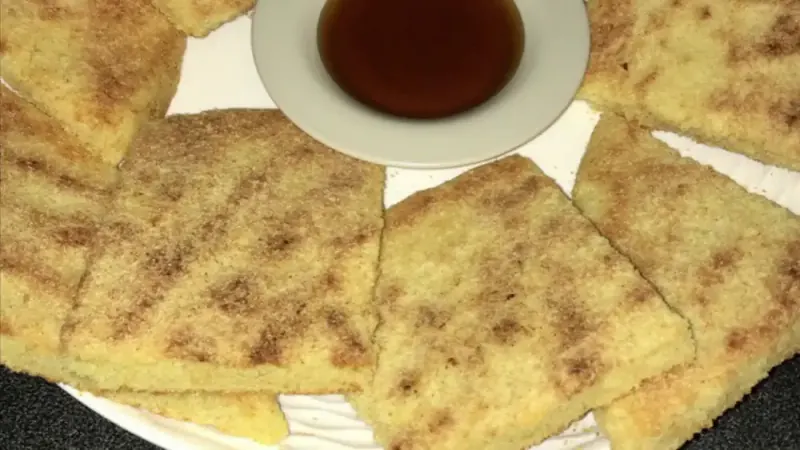
If you walk down a residential alley in any Moroccan town at seven in the morning, you will hear it before you see it: the steady scrape of spatulas against heavy cast iron, accompanied by the toasted perfume of roasted semolina. Follow that aroma to the neighborhood mahlaba (dairy shop) or peer into a family kitchen, and you will find golden disks browning steadily over flames. This is harcha, the skillet flatbread that has greeted Moroccan mornings for centuries.
To the uninitiated, harcha resembles American cornbread or an English griddle muffin. Yet one bite shatters that comparison. The word harcha comes from the Moroccan Arabic root harsh, meaning rough or coarse. It refers to the dry semolina grains coating its exterior, giving each slice a sandy, crackling crust that breaks open to a steaming, butter-soaked crumb.
       +-------------------------------------------------------------+
       |               THE GOLDEN ANATOMY OF HARCHA                  |
       +-------------------------------------------------------------+
       | [ Crust ]      Toasted, dry semolina grain crunch (rough)   |
       | [ Crumb ]      Melting, buttery, coarse-grain crumb         |
       | [ Core ]       Light, tender, tenderized with milk or water |
       | [ Fat Engine ] Cultured butter (zoubda beldia) & olive oil  |
       | [ Companion ]  Fresh mountain jben, wild thyme honey, amlou |
       +-------------------------------------------------------------+
The Amazigh Roots in the Middle Atlas
The indigenous Amazigh communities of the Middle Atlas and Rif ranges lived by the seasonal rhythm of cereal farming. In remote mountain hamlets where stone hand-mills ground hard durum kernels into semolina (smida), hearth cooks needed a bread suited to cold climates and rapid preparation.
Leavened wheat bread (khobz) demanded hours of rising and a wood-fired communal clay oven. In winter, sub-zero mountain mornings made dough fermentation sluggish and impractical. Harcha was the mountain answer. It required no yeast, no waiting for dough to rise, and no public bakery. A shepherd’s family could rub coarse semolina with salt, spring water, and rendered sheep butter (zoubda beldia), shape it into a flat round, and cook it on a flat stone over hearth embers. In twenty minutes, hot sustenance was ready to fortify workers against icy winds.
Seasonal trade carried harcha along mountain routes into imperial centers like Fes and Meknes. Even today, the Middle Atlas version remains distinct: rustic, firm, golden from pasture butter, and carrying the clean scent of wild herbs.
The Chemistry of Smida: Why Wheat Flour Fails
The secret lies in durum wheat (Triticum durum), an ancient grain whose hard endosperm fractures into gritty, angular granules rather than powdery dust.
Harcha requires the reverse. Kneading harcha dough yields a dense, rubbery cake. The objective here is a crumbly texture known in Moroccan kitchens as mhafhaf.
Coating dry semolina granules in melted butter and olive oil before adding liquid creates a lipid shield over starches. When milk or water enters, the grain hydrates without forming an elastic gluten network. The result is a crumb that shatters tenderly under your teeth and melts into rich, buttery warmth on the tongue.
The Secret of Sablage: Rubbing Fat into Grain
This step is called t-bsiss in Moroccan Darija, or sablage—the rubbing of fat into dry semolina.
In a wide earthenware dish (gsaâ), combine coarse and medium semolina with sea salt, a spoon of sugar or honey, and a pinch of baking powder. Pour warm melted butter and olive oil over the top. Rub the mixture between your palms until every grain glistens like moist sea sand.
Scoop out two handfuls of this oily semolina and set it aside to coat the pan and the top of the bread. When adding warm milk or water, use only fingertips to fold the liquid in. Never knead. The batter will look loose, like thick porridge, but as it rests for five minutes, the semolina drinks the liquid, setting into a soft dough.
The Makla: The Heavy Iron Griddle
The quintessential Moroccan pan is the makla el-harcha—a heavy cast-iron skillet seasoned over decades of daily use.
Old cooks assemble the dough directly in an unheated pan. Dust the iron base with half of your reserved buttered semolina. Place the soft dough in the center and pat it out with your palms into an even disc about one centimeter thick. Smooth the surface, prick it with a fork to prevent steam bubbles, and dust the top with the remaining semolina.
Place the pan over medium-low heat. Cook slowly for ten minutes until the bottom is firm and golden. Slide the bread onto a flat wooden board, invert the pan, and slip the pale side back down onto the iron to cook for another eight minutes.
Regional Variations
Harcha shifts character across Morocco’s geography:
- The Middle Atlas: Savory and dense, using spring water instead of milk. Often seasoned with mountain herbs like pennyroyal (fllio) or wild thyme (za’atar).
- Fes and Meknes: Enriched with whole milk, honey, and ground anise seed, baked thicker for afternoon family tea spreads.
- The Street Mahlaba: Small, single-serving disks cooked by the dozen in metal rings on commercial gas griddles, sliced open and stuffed with white cheese or tuna.
The Morning Tea Ritual
In Moroccan households, harcha anchors daily breakfast and afternoon tea alongside fresh mint tea. Its buttery, neutral crumb pairs effortlessly with both sides of the Moroccan pantry:
- Jben Beldi: Fresh, tangy goat or cow cheese spread over warm slices.
- Wild Thyme Honey (3ssel Hor): Dark, resinous mountain honey drizzled into the cracks.
- Amlou: The southern spread of stone-ground toasted almonds, argan oil, and honey.
- Black Olives and Cumin: Dry-cured salt olives drizzled with green olive oil for a savory contrast.
       +-------------------------------------------------------------+
       |               AUTHENTIC HOMESTYLE HARCHA RECIPE             |
       +-------------------------------------------------------------+
       | * 250 g medium semolina (smida mtwassata)                   |
       | * 100 g coarse semolina (smida ghlida)                      |
       | * 70 g unsalted butter, gently melted                       |
       | * 30 ml extra virgin olive oil                              |
       | * 1 tablespoon granulated sugar or wildflower honey         |
       | * 1 teaspoon fine sea salt                                  |
       | * 1 teaspoon baking powder                                  |
       | * 160 ml whole milk or lukewarm water                       |
       +-------------------------------------------------------------+
Method:
- In a large bowl, whisk medium and coarse semolina, salt, sugar, and baking powder.
- Pour in melted butter and olive oil. Rub between palms for two minutes until grains resemble wet sand. Reserve 3 tablespoons for dusting.
- Pour milk into the bowl, stirring gently with fingertips until a soft dough forms. Rest for 5 minutes.
- Dust a cold cast-iron skillet with half the reserved semolina. Press dough into an even disk.
- Dust surface with remaining semolina, prick with a fork, and place over medium-low heat.
- Cook for 10 minutes until golden. Invert using a flat plate and cook the second side for 8 minutes. Serve hot.
Grandmother’s Golden Rules
- Never Knead: Handle like shortcrust pastry. Kneading creates rubbery bread.
- Rest the Dough: Give the semolina five minutes to swell before pressing it into the skillet.
- Cold Pan Start: Shape your disk in a cold pan to achieve an even thickness without burning hands.
- Gentle Heat: Keep the flame medium-low. Rushing burns the exterior and leaves the center raw.
Frequently Asked Questions
Why did my harcha turn out dry and hard instead of crumbly?
A tough harcha is almost always caused by kneading or inadequate hydration. Kneading activates gluten and destroys the crumbly texture. If the dough lacks sufficient liquid or fat during the sablage stage, the semolina grains cannot soften, resulting in a dense, dry disk.
Can you bake harcha in the oven?
Yes. Bake at 200°C (400°F) in a round baking pan for twenty to twenty-five minutes. Brush the top with melted butter and dust with semolina before baking, then broil for two minutes to achieve a golden crust.
What is the difference between harcha and cornbread?
Cornbread relies on cornmeal, wheat flour, and eggs to create a sweet, cake-like bread. Harcha uses durum wheat semolina, melted butter, and no eggs, producing a savory, crumbly flatbread cooked on a stovetop griddle.
How do you store and reheat leftover harcha?
Store wrapped in parchment and a clean cloth for up to two days. Reheat wedges in a dry skillet over medium heat for three minutes until the outside crisps up again. Never microwave it, as microwaves make the crumb rubbery and limp.
Experience the true heart of Moroccan heritage through its culinary traditions. Join us in preserving and honoring these ancestral recipes.
What People Are Saying
No comments yet. Be the first — we'd love to hear from you.
The Moroccan Food
Culturally Verified & Fact-CheckedThe Moroccan Food editorial team brings together native culinary researchers, heritage preservationists, and experienced home cooks across Marrakech, Fes, and Casablanca. Every recipe and cultural guide is reviewed against ancestral oral traditions and authentic regional practices.