Authentic Kefta Tagine: Sizzling Spiced Meatballs in Rich Tomato Cumin Sauce
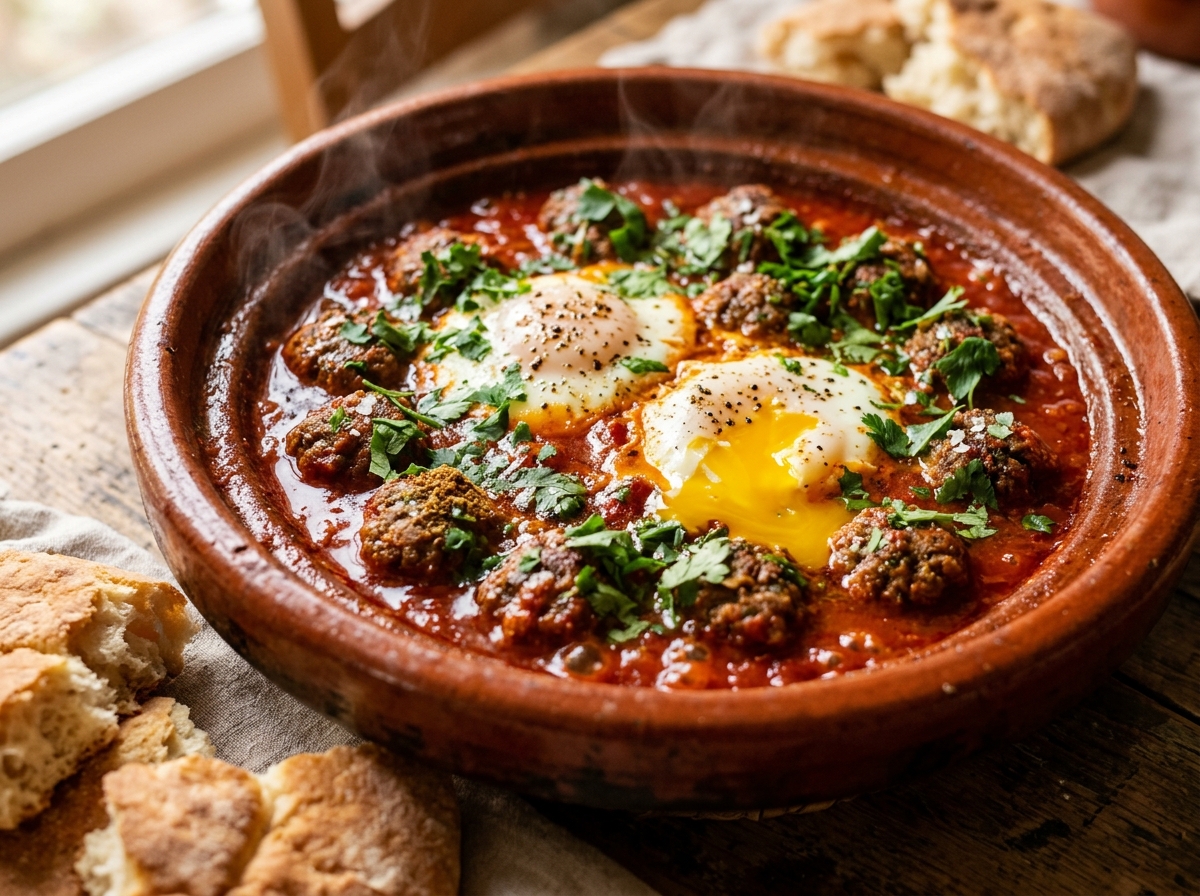
Authentic Kefta Tagine: Sizzling Spiced Meatballs in Rich Tomato Cumin Sauce
If you walk down a residential alleyway in Fes, Marrakech, or Tangier around one o’clock in the afternoon, a particular aroma spills from kitchen windows: sweet grated tomatoes simmering in olive oil, crushed garlic, earthy cumin seeds, and spiced ground meat sizzling in unglazed clay. This is the scent of kefta tagine, the quintessential comfort food of the Moroccan family table.
Unlike elaborate multi-day banquet dishes like slow-roasted lamb mechoui or intricate pigeon pastilla, kefta tagine is everyday soul food. It is fast, hearty, and deeply satisfying. Yet beneath its rustic simplicity lies precise culinary technique. When prepared by an experienced Moroccan home cook, the meatballs are remarkably tender, melt-in-your-mouth juicy, and cloaked in a thick, sweet tomato reduction that demands to be scooped up with hot, crusty bread.
Here is the ancestral guide to mastering authentic Moroccan kefta tagine in your own kitchen.
The Meat Foundation: The 80/20 Rule and the Role of Suet
The most common mistake home cooks make with Moroccan kefta is buying ultra-lean supermarket minced meat. Lean meat produces hard, rubbery spheres that dry out the moment they hit hot tomato sauce.
The Ideal Meat Blend
In Moroccan butcher shops (gazzar), you point to fresh cuts of beef chuck and lamb shoulder, and the butcher grinds them on the spot. An authentic kefta mixture combines seventy percent beef chuck and thirty percent lamb shoulder. Beef provides savory depth, while lamb lends tenderness and rich aroma.
The Secret of Grated Suet (Chhma)
For true medina-style meatballs, the fat ratio must sit between twenty and twenty-five percent. Moroccan grandmothers achieve this by grating chilled beef kidney fat or lamb flank suet (chhma) directly into the meat mixture on the small holes of a box grater. As meatballs simmer, this finely dispersed fat melts from the inside out, basting the meat fibers and keeping each meatball juicy without requiring breadcrumbs, milk, or egg binders.
The Onion Technique: Why We Grate and Strain
If you dice onions with a chef’s knife and toss them into ground kefta meat, the meatballs will split apart while simmering. In addition, raw onion chunks release harsh juices that overpower the spices.
Moroccan cooks use a specific two-step technique:
- Grate on a Box Grater: Grate a medium yellow onion on the fine rasp side of a box grater until you have a wet, pulpy purée.
- Squeeze Out Excess Water: Take the grated onion in your fist or place it inside a clean towel and squeeze firmly over the sink. Squeeze out the bitter water until left with dry, tender onion fibers.
When you knead this dry onion pulp into the minced meat, it acts as a natural binder. It softens meat proteins during cooking, adds gentle sweetness, and ensures the meatballs remain intact without breaking apart in the sauce.
The Ancestral Kefta Spice Formula
Moroccan spice architecture relies on harmony rather than fiery heat. The goal is to highlight the natural flavor of the meat, not drown it.
For 500 grams of ground meat, knead in:
- Cumin (Kamoun): One rounded teaspoon of freshly ground cumin seeds. Roasted whole cumin seeds ground in a mortar yield a warm, nutty aroma that pre-ground store powder cannot match.
- Sweet Paprika (Tahmira): One teaspoon of sweet, sun-dried red paprika for mild earthy sweetness and rich color.
- A Pinch of Cinnamon (Qarfa): Just a quarter teaspoon. This is an ancient Moorish touch. You should not distinctly taste cinnamon in the cooked meatball; instead, it provides a warm background note that balances the cumin and lamb fat.
- Fresh Herbs: Three tablespoons of finely minced flat-leaf parsley (maadnous) and two tablespoons of fresh coriander (qesbour), chopped finely by hand.
- Salt and Pepper: One teaspoon of fine sea salt and half a teaspoon of freshly cracked black pepper.
Knead meat, spices, onion pulp, and herbs with clean hands for two minutes until the fat emulsifies and the mixture turns tacky. Cover and chill in the refrigerator for thirty minutes so flavors marry.
The Sauce Architecture: Reducing Fresh Plum Tomatoes
A genuine kefta tagine never uses canned marinara or commercial tomato passata. The sauce must be built from fresh, ripe plum or Roma tomatoes.
Grating the Tomatoes
Cut ripe tomatoes in half horizontally. Place the cut side against the large holes of a box grater and grate the flesh into a bowl. The sharp holes shred the sweet pulp and seeds while leaving the tough skin flat against your palm to be discarded.
Building the Base
In the base of your tagine or heavy skillet, warm four tablespoons of good extra-virgin olive oil over medium-low heat. Add:
- Three cloves of garlic, finely grated
- One dried bay leaf (waraqat sayyidna moussa)
- Half a teaspoon of sweet paprika
- Half a teaspoon of ground cumin
- Half a teaspoon of sea salt
- A small pinch of chili powder or half a teaspoon of Moroccan harissa paste
Stir garlic and spices in the oil for thirty seconds until fragrant, then pour in the grated fresh tomatoes.
Achieving the M’gemmar Stage
Let the sauce simmer uncovered over medium heat for fifteen minutes. As water evaporates, the tomatoes concentrate from a pale pink broth into a thick, deep-crimson sauce. You know the sauce is ready when olive oil separates from the tomato flesh and beads around the perimeter of the pan. In Moroccan cooking, this reduced stage is called m’gemmar.
Cooking in Clay: Simmering Bite-Sized Meatballs
Once your tomato sauce has thickened, shape and cook the kefta.
Roll Them Small
In Morocco, kefta meatballs are shaped small—roughly the size of a walnut or large marble (about twenty grams each). Small meatballs cook quickly and evenly, ensuring the interior remains juicy while allowing every bite to carry a generous coating of sauce. Wet your hands with cold water and roll smooth spheres between your palms.
The Gentle Simmer
Nestle meatballs gently into the bubbling tomato sauce in a single layer. Do not stir immediately to avoid breaking the soft meat; gently swirl the vessel instead.
Cover with the conical clay lid. The cone catches rising steam, condenses it against the ceramic walls, and trickles it back down into the sauce. Simmer over low heat for ten to twelve minutes. The meatballs cook through completely while remaining tender.
Scatter two tablespoons of fresh chopped parsley and coriander over the top, along with a final dusting of ground cumin before serving.
The Table Ritual: Tearing Khobz and Eating with Three Fingers
Kefta tagine is never dished out onto individual plates with metal forks. It is served directly in the sizzling clay vessel, placed in the center of the table on a round woven straw mat (tebq).
Diners gather around the pot with rounds of warm, crusty bread (khobz), fresh from the communal oven (ferran). Tearing off a bite-sized piece of bread with the thumb, index, and middle finger of the right hand, each person forms a small pocket to pinch a tender meatball and scoop up a generous pool of spiced tomato sauce.
Eating from the section of the dish directly in front of you is standard table etiquette. Accompanied by small bowls of cured purple olives and a pot of steaming mint tea, it is the ultimate expression of home-cooked Moroccan hospitality.
Frequently Asked Questions
What is the best substitute if I do not own a clay tagine?
A heavy cast-iron skillet, Dutch oven, or enamelled braiser with a tight-fitting lid works wonderfully. The heavy base provides even heat to concentrate the sauce without scorching.
Can I make kefta tagine with ground turkey or chicken?
Yes, ground dark-meat turkey or chicken thigh makes a delicious lighter alternative. Because poultry contains less natural fat than beef chuck and lamb, add two extra tablespoons of extra-virgin olive oil into the meat mixture to keep the meatballs juicy.
Why do my meatballs sometimes turn tough and dense?
Tough meatballs result from lean meat, overworking during kneading, or overcooking. Kefta meatballs need only ten to twelve minutes of gentle simmering in the tomato sauce.
Can I prepare kefta tagine in advance?
You can prepare the spiced meat mixture and the reduced tomato sauce up to twenty-four hours in advance, storing them in separate airtight containers in the refrigerator. When ready to serve, reheat the sauce until bubbling, drop in the rolled meatballs, and simmer for ten minutes.
Experience the true heart of Moroccan heritage through its culinary traditions. Join us in preserving and honoring these ancestral recipes.
What People Are Saying
No comments yet. Be the first — we'd love to hear from you.
The Moroccan Food
Culturally Verified & Fact-CheckedThe Moroccan Food editorial team brings together native culinary researchers, heritage preservationists, and experienced home cooks across Marrakech, Fes, and Casablanca. Every recipe and cultural guide is reviewed against ancestral oral traditions and authentic regional practices.