Jus d'Avocat: How Morocco Turned Avocado into the Ultimate Medina Milkshake
Jus d’Avocat: How Morocco Turned Avocado into the Ultimate Medina Milkshake
In California, Mexico, and across much of the Western world, the avocado belongs strictly to the savory universe. It is mashed with lime, sea salt, and cilantro into guacamole; sliced over sourdough toast with poached eggs; or diced into salads alongside onions and tomatoes. Treat an avocado with sugar and milk in Europe or the Americas, and people will look at you with deep suspicion.
Cross the Strait of Gibraltar into Morocco, and that entire worldview turns upside down.
Here, in the tiled juice bars (mahlabas) of Tangier, Casablanca, and Marrakech, the avocado has never been considered a salad vegetable. From the moment it arrived on North African soil, Moroccans recognized the fruit for what it truly is botanically: an intensely rich, buttery, emerald-green tree berry.
Instead of mashing it with chili and garlic, medina artisans toss ripe avocado flesh into heavy glass blenders with ice-cold whole milk, pure cane sugar, a whisper of distilled orange blossom water, and a shower of toasted nuts.
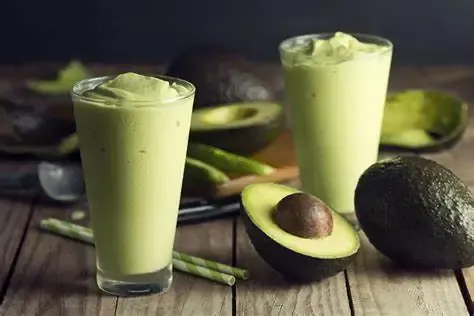
The result is Jus d’Avocat—a legendary Moroccan smoothie so velvety, dense, and luxurious that a straw placed into the glass stands completely upright on its own. It is a dessert, an energy elixir, and a cherished street ritual all poured into a single heavy glass.
The Northern Groves: How the Avocado Took Root in Morocco
While the avocado is native to Central and South America, it found a second home along the Atlantic coast of northern Morocco during the twentieth century.
The fertile alluvial soils of the Gharb basin, stretching between Kenitra, Sidi Kacem, and the Loukkos river valley near Larache, offered optimal growing conditions: mild Atlantic winters, abundant groundwater, and hot summer sunshine sheltered from harsh desert winds.
Moroccan farmers embraced varieties like Hass, Fuerte, and Bacon. But while international markets imported avocados for salads, Moroccan domestic kitchens took an entirely sweet direction.
Milk bars and dairy cooperatives—known throughout Morocco as mahlabas—had long been neighborhood social centers where city residents gathered to drink fresh buttermilk (lben), eat fresh goat cheese (jben), and enjoy sweet almond milks. When local avocado orchards began yielding abundant harvests, creative mahlaba masters realized the fruit’s high natural oil content made it a plant-based partner for whole milk and honey.
By the 1970s, the avocado shake had become a permanent fixture of urban Moroccan street food culture.
Anatomy of the Perfect Jus d’Avocat: Ratios and Aromas
Creating an authentic Moroccan avocado shake is an exercise in culinary balance. It looks simple on paper, but achieving the signature medina texture requires precision.
A true mahlaba master follows three sacred principles:
1. Perfectly Ripe Fruit
Under-ripe avocados yield a grassy, astringent bitterness and a gritty texture that completely ruins the drink. Over-ripe avocados turn brown and greasy. The cook selects fruit that yields softly to gentle thumb pressure near the stem—pale butter-yellow at the core with a rim of vivid jade green along the skin.
2. High-Fat Dairy
Water has no place near a Moroccan avocado shake. Traditional shops use cold, unhomogenized whole milk, often sourced directly from regional dairy farms. The dairy fat emulsifies with the natural monounsaturated oils of the fruit, creating a texture as smooth as melted custard.
3. The Floral Signature (Ma Zhar)
This is the touch that makes the drink unmistakably Moroccan. Just before blending, the maker splashes in a teaspoon of pure distilled orange blossom water (ma zhar), or occasionally a single drop of bitter almond extract. The floral note lifts the heavy fat of the avocado, transforming a dense smoothie into an aromatic, refreshing experience.
The fruit, milk, sugar, and blossom water are blended at high speed until the mixture forms a pale green vortex. When poured into a tall soda glass, it moves with the deliberate, heavy flow of warm ganache.
The Luxury Upgrade: Nuts, Dates, and Medina Decadence
While a basic jus d’avocat is delightful on its own, medina milk bars are famous for turning the drink into a monumental feast known as Jus d’Avocat Royal.
Step into a neighborhood mahlaba around eight in the evening, and you can watch the vendor assemble this edible masterpiece:
- First comes the base of thick avocado cream, filling three-quarters of a heavy glass tumbler.
- The vendor then reaches into glass apothecary jars lined along the counter, pulling out hand-shelled Atlas walnuts (gargaa) and toasted blanched almonds (louz), crushing them with a wooden pestle.
- Plump, sticky Medjool dates from the Draa Valley are pitted, sliced into dark ribbons, and layered across the surface.
- A handful of golden sultanas (zbib) is sprinkled over the fruit, followed by a generous drizzle of dark wildflower honey or sweet caramel.
Served with both a wide straw and a long silver spoon, the Royal version demands to be eaten in alternating bites and sips: crunchy roasted nuts, chewy sweet dates, and cool, silky avocado cream. It is nourishing enough to replace an entire evening meal, which is precisely why university students, laborers, and taxi drivers rely on it for lasting energy.
Ramadan Evenings and Grandmother Wisdom
Nowhere is jus d’avocat more deeply cherished than at the Ramadan iftar (the evening meal to break the fast, called ftour in Morocco).
After fourteen hours of fasting without food or water, the body craves clean hydration, gentle sugars, and nutrient-dense fuel. While dates and harira soup open the table, a tall pitcher of chilled avocado shake holds the place of honor in the center.
“The avocado is gentle on an empty stomach,” Moroccan grandmothers teach their daughters. “It coats the stomach lining, restores healthy fats to the blood, and gives strength without causing heavy bloating. Drink your avocado milk slowly at sunset, and your body will have steady energy until the dawn prayer.”
Mothers also prepare it as a comforting home remedy for children recovering from illness or young students cramming for national examinations. It is viewed not as junk food, but as wholesome strength in liquid form—an energy elixir gifted by nature and sweetened by Moroccan hospitality.
Frequently Asked Questions
Why is avocado treated as sweet rather than savory in Morocco?
Historically, Moroccans first encountered avocados through dairy bars (mahlabas) that specialized in sweet milk-based drinks and fruit shakes. Because the botanical nature of the avocado is a fruit with a naturally mild, buttery flavor, local cooks paired it with ingredients already common in Moroccan pastry: milk, sugar, orange blossom water, and toasted nuts, creating a smoothie tradition rather than a savory dip.
Can you make Moroccan avocado shake with plant-based milk?
Yes. While traditional medina vendors use whole cow’s milk for maximum creaminess, almond milk or oat milk make wonderful substitutes. Almond milk in particular complements the natural flavors, especially when paired with a drop of orange blossom water, toasted almonds, and sweet dates.
What is the difference between a standard avocado shake and a “Royal”?
A standard jus d’avocat consists simply of ripe avocado blended with cold whole milk, sugar, and orange blossom water. The “Royal” version adds generous toppings of hand-crushed roasted almonds, chopped walnuts, sliced Medjool dates, raisins, and a drizzle of pure honey, transforming the shake into a loaded, spoonable dessert.
How much does an avocado shake cost at a Moroccan juice bar?
At a local neighborhood mahlaba, a standard fresh avocado milkshake typically costs between 12 and 18 Moroccan dirhams (about $1.20 to $1.80 USD). A fully loaded “Royal” shake with premium dates, almonds, and walnuts generally ranges from 20 to 30 dirhams depending on the city and the quantity of nuts included.
Experience the true heart of Moroccan heritage through its culinary traditions. Join us in preserving and honoring these ancestral recipes.
What People Are Saying
No comments yet. Be the first — we'd love to hear from you.
The Moroccan Food
Culturally Verified & Fact-CheckedThe Moroccan Food editorial team brings together native culinary researchers, heritage preservationists, and experienced home cooks across Marrakech, Fes, and Casablanca. Every recipe and cultural guide is reviewed against ancestral oral traditions and authentic regional practices.