Moroccan Eid Recipes: From Mechoui to Mrouzia — The Complete Eid al-Adha Food Guide
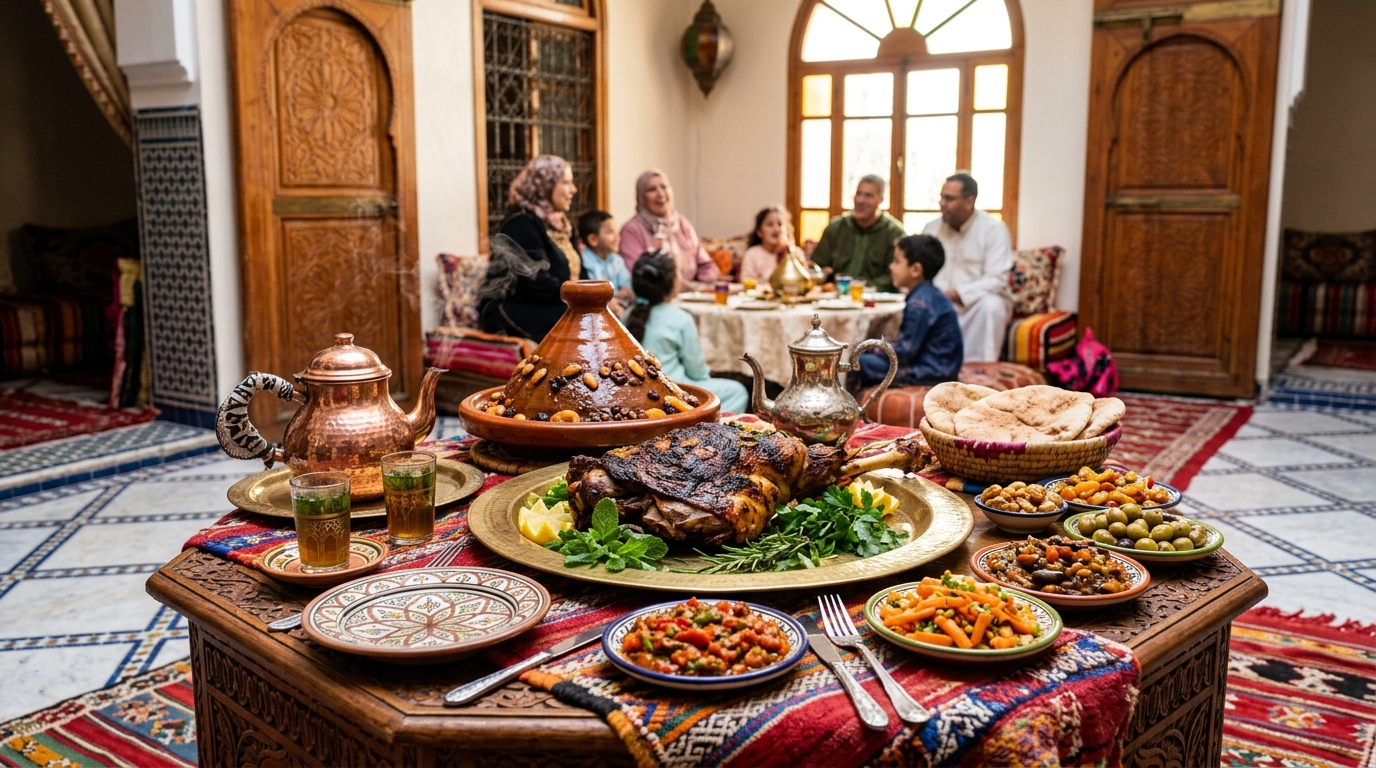
In Morocco, Eid al-Adha (the Festival of Sacrifice), locally known as Eid al-Kabir (the Big Holiday), is not just a religious event. It is a multi-day culinary marathon.
Following the tradition of the Prophet Ibrahim, families sacrifice a sheep. What happens next is a masterclass in nose-to-tail cooking. Absolutely nothing is wasted. Over the course of three to four days, Moroccans cook their way through the entire animal in a highly specific, generational sequence. The air in every city and village fills with the smell of wood smoke, cumin, and roasting meat.
If you want to understand Moroccan meat cookery, you have to look at the Eid al-Adha table. Here is the exact timeline and the recipes that define the holiday.
Day 1: The Organ Meats and Boulfaf
On the morning of the first day, after the sacrifice, the focus is entirely on the highly perishable organ meats. The star of the first day is a dish called Boulfaf.
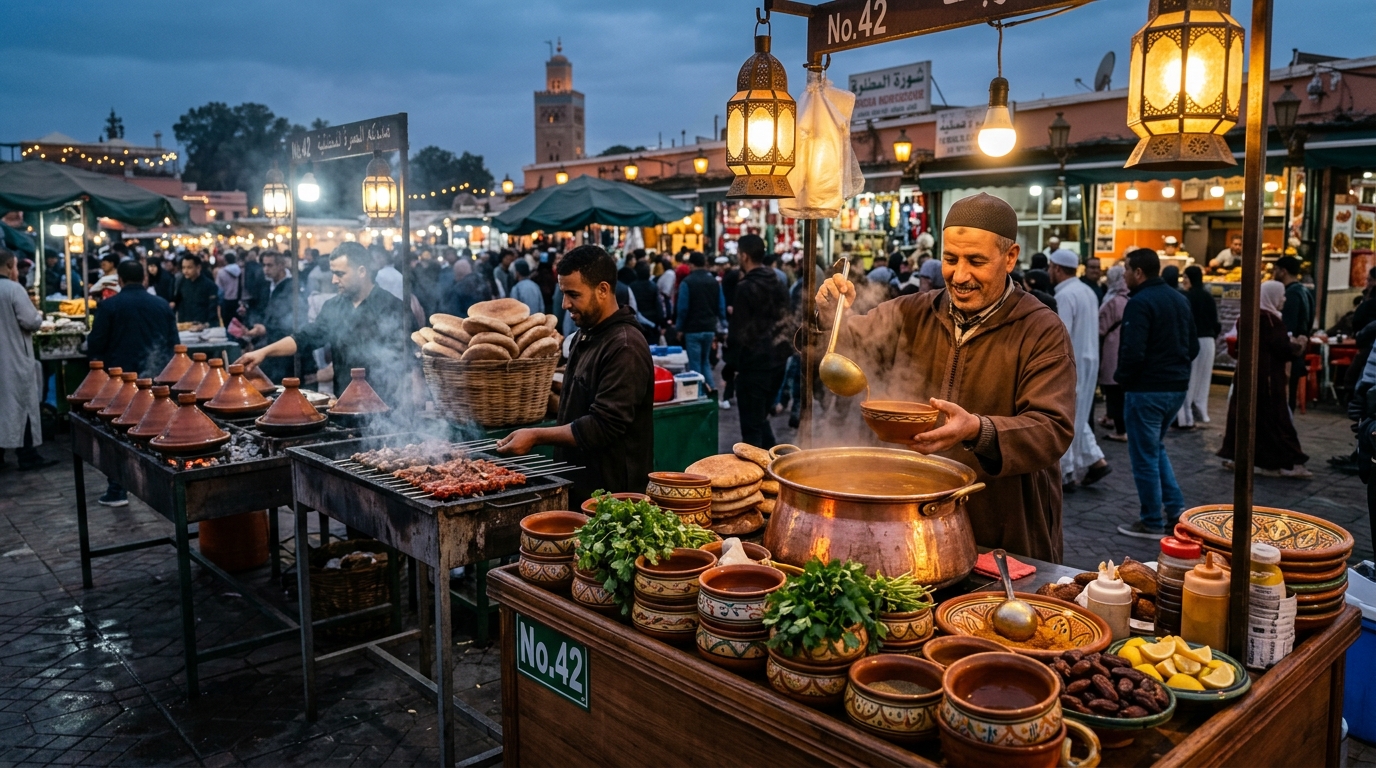
Boulfaf consists of cubes of lamb liver, grilled lightly over charcoal, then wrapped in caul fat (the lacy membrane of fat from the sheep’s stomach), dusted heavily with salt, cumin, and paprika, and placed back on the grill. As the fat melts and drips onto the coals, it creates a thick, aromatic smoke that flavors the liver. It is eaten immediately off the skewer with fresh bread and glasses of strong mint tea to cut through the richness.
Later that evening, families will often eat the stomach (tripe), cleaned thoroughly and cooked into a spicy, garlicky stew called Tkalia, cooked with olives and preserved lemons.
Day 2: The Head and The Kefta
By the second day, the neighborhood is filled with the smell of singed wool. Young men set up fires on street corners to help families char and clean the sheep’s heads and trotters.
The meat from the head is steamed for hours until it is incredibly tender and served simply with a pinch of cumin. The brains are gently poached in a rich, spicy tomato and garlic sauce, forming a delicate tagine.
This is also the day the family begins grinding meat for Kefta. The minced lamb is heavily spiced with fresh parsley, cilantro, grated onion, paprika, and cumin, then formed into small sausages and grilled over the dying charcoal embers.
Day 3: The Slow Cookers – Mechoui and Mrouzia
By day three, the meat has properly rested, and the grand dishes are prepared.
For large families, a shoulder or leg of lamb is prepared as Mechoui—rubbed with smen (fermented butter) and garlic, and slow-roasted for hours until the meat falls off the bone.
But the undisputed king of Eid al-Adha is Mrouzia. Before modern refrigeration, preserving meat in the hot Moroccan sun was a challenge. Mrouzia was the solution. It is a tagine made with bone-in cuts of lamb, slow-cooked in a massive amount of honey, raisins, and a specific spice blend called Ras el Hanout. The meat is essentially candied in its own fat and sugar, allowing it to stay edible for weeks at room temperature. The sweet, heavily spiced, sticky meat topped with toasted almonds is the definitive taste of a Moroccan holiday.
The Rule of Thirds
The food of Eid al-Adha is deeply tied to charity. Islamic tradition dictates a “Rule of Thirds” for the meat of the sacrificed animal:
- One third is kept for the immediate family to eat.
- One third is given to relatives, friends, and neighbors as a gift.
- One third is donated to the poor and those who cannot afford a sheep of their own.
The Sweets of Eid al-Fitr
While Eid al-Adha is focused almost entirely on savory meats, the other major holiday, Eid al-Fitr (which marks the end of Ramadan), is entirely focused on baking.
If you visit during Eid al-Fitr, you will be offered plates piled high with Kaab el Ghazal (Gazelle Horns filled with almond paste), Ghriba (cracked, chewy cookies made from walnuts or coconut), and Fekkas (twice-baked biscotti-like cookies studded with almonds and raisins).
Frequently Asked Questions
What does Mrouzia taste like? It is incredibly rich and very sweet. The flavor profile is closer to a heavily spiced fruitcake mixed with savory, fatty lamb. The Ras el Hanout spice blend gives it a warm, floral depth, while the honey and raisins provide a thick, jam-like sauce.
Is it safe to eat Boulfaf (grilled liver) if I usually don’t like organ meat? Boulfaf is the dish that converts people who hate liver. Because it is wrapped in caul fat, the fat bastes the liver as it cooks, keeping it moist and masking the strong iron flavor. The heavy use of cumin also balances the taste perfectly.
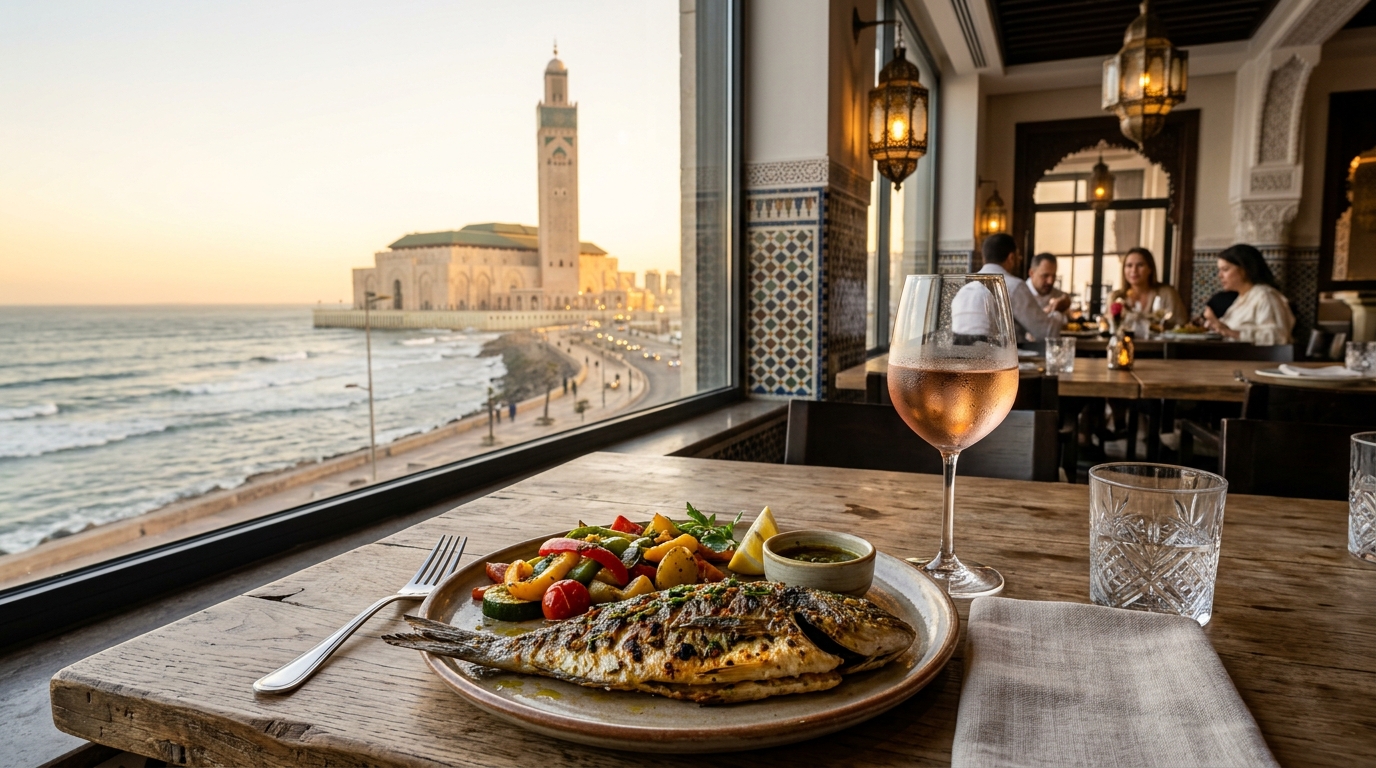
Do restaurants serve Mrouzia? Yes, but usually only high-end, traditional Moroccan restaurants, as it takes hours to prepare properly. It is most commonly found on menus around the time of the holiday, though some places in Fes and Marrakech serve it year-round.
How do you eat Tkalia (tripe stew)? Like most Moroccan stews, with bread. You tear off a piece of crusty khobz, use it to pinch the pieces of tripe and olives, and soak up the spicy, garlicky sauce.
Experience the true heart of Moroccan heritage through its culinary traditions. Join us in preserving and honoring these ancestral recipes.
What People Are Saying
No comments yet. Be the first — we'd love to hear from you.
The Moroccan Food
Culturally Verified & Fact-CheckedThe Moroccan Food editorial team brings together native culinary researchers, heritage preservationists, and experienced home cooks across Marrakech, Fes, and Casablanca. Every recipe and cultural guide is reviewed against ancestral oral traditions and authentic regional practices.