The Liquid Sun: Why Moroccan Fresh Orange Juice Stalls Are World-Famous
The Liquid Sun: Why Moroccan Fresh Orange Juice Stalls Are World-Famous
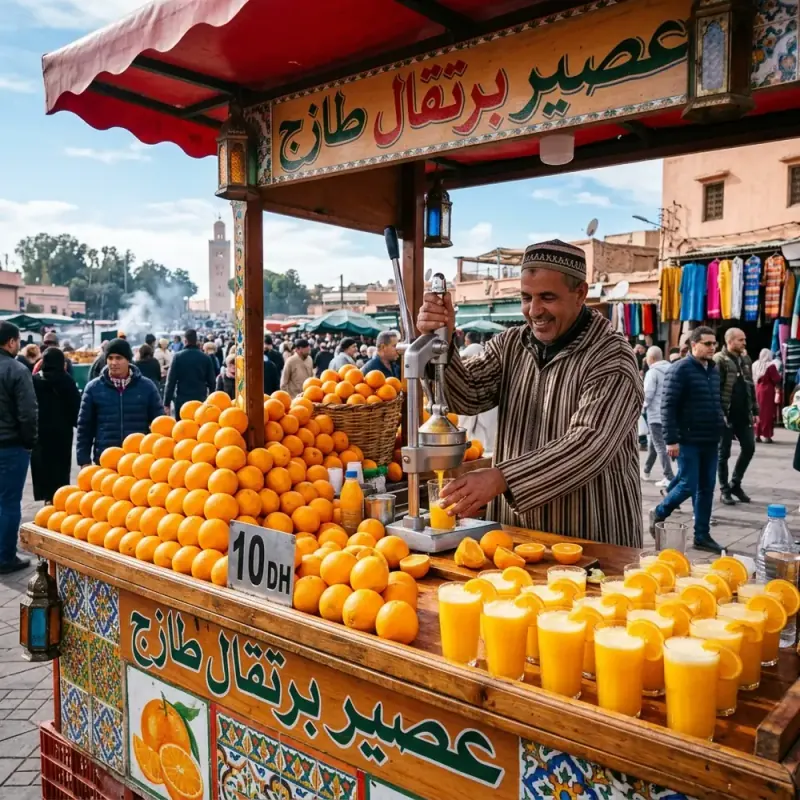
Walk across the sun-baked expanse of Marrakech’s Jemaa el-Fna at high noon, and before you see the snake charmers or hear metal castanets, a brilliant wall of orange captures your vision. Long rows of wooden carts rise like citrus fortresses against the red clay backdrop of the medina. Thousands of oranges, grapefruits, and tangerines sit stacked in steep pyramids, so polished and symmetrical they resemble cannonballs prepared for an imperial siege.
Above each cart hangs a bold, hand-painted number—Stall 32, Stall 45, Stall 51. Behind the fruit stands a man in an apron, his hands moving with the precision of a boxer, grabbing heavy oranges, slicing them with his knife, and driving down the steel handle of a cast-iron press.
Within five seconds, a heavy glass tumbler fills with frothy, ice-cold citrus juice. He slides it across the stainless counter.
You hand him a four-dirham coin—less than half a dollar. You take your first gulp.
The juice does not taste like anything poured from a carton. It is sweet yet electrified with crisp acidity, thick with aromatic pulp, and cold enough to revive you from the heaviest heat. In Morocco, fresh orange juice is not an expensive wellness trend or an airport brunch luxury. It is a daily birthright, a street-level institution, and an agricultural gift that feeds the kingdom’s soul.
The Citrus Soil: From Berkane to the Souss Plain
To understand why a four-dirham glass of juice in Marrakech or Fes tastes so sweet, you must look beyond the medina walls to the agricultural geography of Morocco. The secret lies in the kingdom’s rare convergence of microclimates, mineral-rich soils, and centuries of horticultural devotion.
Morocco is blessed with three distinct citrus heartlands:
1. The Souss Valley and Taroudant Plain
Flanked by the High Atlas to the north and the Anti-Atlas to the south, the Souss basin enjoys over three hundred days of sunshine every year. Cool Atlantic breezes push inland every evening, creating dramatic temperature swings between blazing days and cool nights. This climate stress forces trees to pump natural sugars into the fruit to protect their seeds. The result is Washington Navel and Maroc Late oranges—heavy with juice, thin-skinned, and packing sugar levels that need no added sweetener.
2. The Eastern Oasis of Berkane
Near the Algerian border along the Moulouya River, Berkane is Morocco’s clementine capital. Sheltered by the Beni Snassen mountains, the region’s clay soils and natural spring waters produce small, seedless mandarins with an intense perfumed aroma. In winter, juice stalls blend these clementines directly into the orange press, creating a honeyed flavor.
3. The Gharb Basin and Loukkos Plain
In the north, fed by the Sebou River, the fertile plains of Kenitra and Sidi Slimane produce massive harvests of Valencia oranges. These trees drink from deep alluvial water tables, yielding fruit with exceptional water volume and crisp acidity that balances the heavy sweetness of southern varieties.
Because these regions harvest at different times across the calendar—from early Clementines in October to sweet Navels in January and sun-drenched Maroc Late through July—Moroccan juice carts pour sweet, fresh-picked citrus every single month of the year.
The Jemaa el-Fna Juice Numbers: A Guild of Generations
The iconic juice carts lining Jemaa el-Fna in Marrakech and Bab Boujloud in Fes are not temporary pop-up businesses. They are licensed historical concessions, many held by the same families since the middle of the twentieth century.
The large wooden numbers displayed on each cart are symbols of civic heritage. Decades ago, the municipality assigned numbered pitches to establish order in the great square. Over the decades, those numbers transformed into proud family identities.
“My grandfather stood on this exact pitch in 1968 using a hand-cranked squeezer,” says Si Mohammed, who runs Stall 42 with his nephew. “My father took over the press in the eighties, and I learned how to gauge the sweetness of an orange by its weight when I was ten years old. Every cart has its loyal customers who never buy from any cart except their family’s chosen number.”
The equipment itself is built like industrial machinery. The heavy cast-iron presses weigh forty kilograms or more. Their long levers generate enormous mechanical leverage, crushing every drop of nectar from the fruit in a single fluid stroke without bruising the bitter white pith.
There are no electric blenders plugged into generators here, no plastic bottles, and no pasteurization vats. Everything is squeezed directly before your eyes into faceted glass tumblers, rinsed in clean rushing water, and placed immediately into your waiting hand.
The 4-Dirham Miracle: Everyday Democracy in a Glass
In an era of rising food prices, the Moroccan orange juice stall remains a sanctuary of pure culinary democracy. For four dirhams—roughly forty cents in American currency—anyone in the city can enjoy a tall glass of freshly pressed fruit.
Watch the counter of a juice cart on Boulevard Mohammed V in Casablanca or near the Bab El Had gate in Rabat, and you will see Moroccan society gather in miniature.
A street sweeper leans against the counter next to a suited banker from the commercial district; a mother with two school children in backpacks shares the space with foreign backpackers holding guidebooks. The vendor treats every customer with the same warm hospitality: a rapid greeting, the crack of sliced fruit, the push of the heavy lever, and a foaming glass slid across the counter with a genuine “Bssaha” (to your health).
For those who want variety, vendors keep seasonal surprises tucked behind their orange pyramids:
- Tchino Dammi (Blood Orange): Deep crimson juice pressed during mid-winter, offering a tart berry undertone.
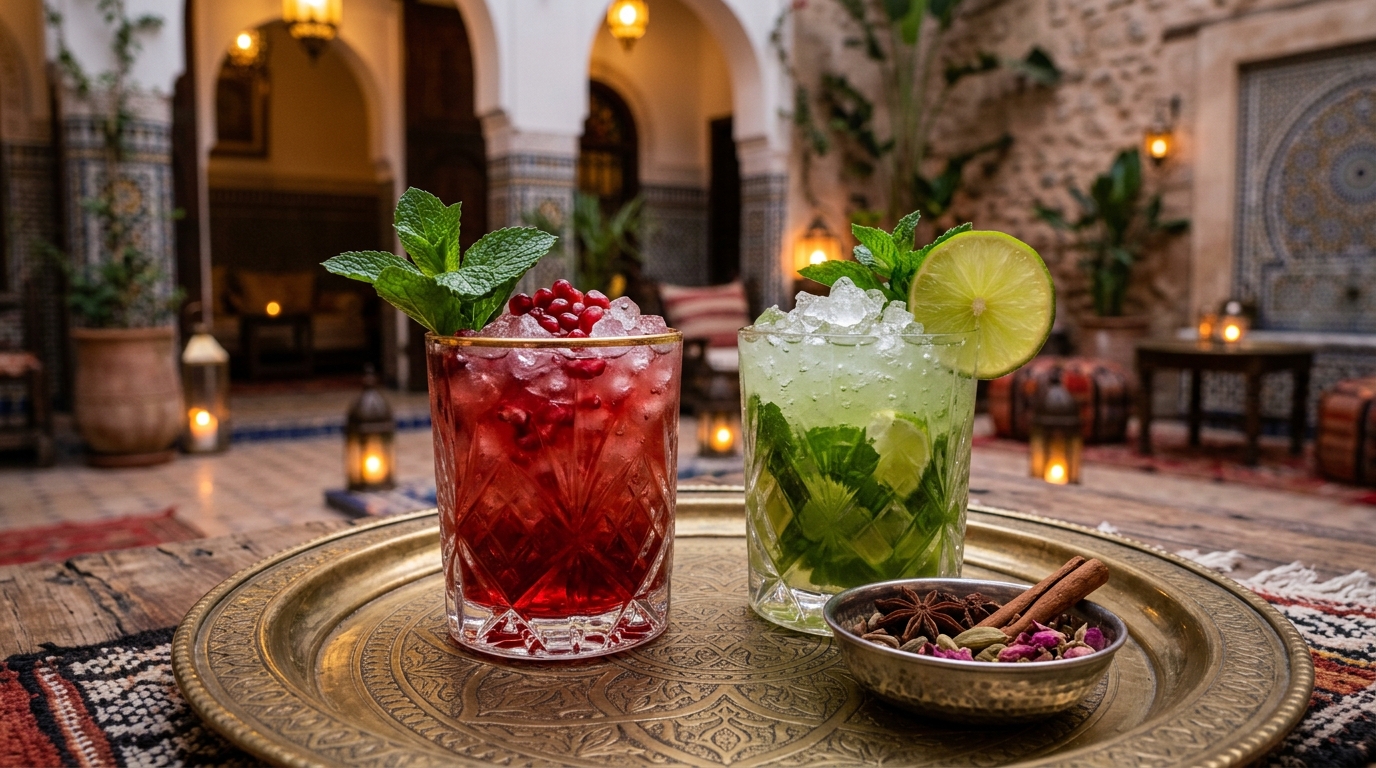
- Kass d-Remman: Autumn pomegranate juice pressed by the glass, rich with antioxidants and ruby tannins.
- Lchin m’aa Remman: A half-and-half blend of orange and pomegranate combining sweet citrus with tart wild berry flavor.
- Grapefruit (Pamplemousse): Crisp, bitter, and cleansing, popular with elders seeking digestion aids after Friday couscous.
Grandmother Wisdom: Cinnamon, Blossoms, and Citrus
In the Moroccan home, oranges are treated with the respect reserved for noble ingredients. Long before street juice bars existed, grandmothers turned the winter citrus harvest into a cornerstone of family hospitality.
The classic Moroccan dessert found in every home is simple: peeled oranges sliced into rounds, arranged on a painted ceramic plate, sprinkled with ground Ceylon cinnamon, and splashed with distilled orange blossom water (ma zhar).
“Oranges clean the stomach after rich tagines,” grandmothers teach every winter. “The cold juice calms the liver, the cinnamon warms the blood, and the flower water soothes the nervous system. When God gives you oranges in winter, you eat them every day to keep the doctor far from your door.”
Grandmothers also caution against cutting corners. They insist that orange juice must be consumed within three minutes of pressing, before air dulls its natural sweetness and depletes its vitamins. At a medina cart, that rule is naturally obeyed: the juice goes from the tree branch to your throat in less than sixty seconds.
Frequently Asked Questions
Why does Moroccan orange juice taste sweeter than supermarket juice?
Morocco’s climate provides over three hundred days of annual sunshine paired with cool night breezes, especially in the Souss Valley and Berkane. These sunny microclimates encourage citrus trees to produce higher natural sugar concentrations. At medina carts, vendors squeeze fresh, tree-ripened fruit directly to order without water dilution, chemical preservatives, or pasteurization.
Is it safe to drink fresh orange juice from street carts?
Yes, street juice stalls in prominent Moroccan squares are clean and regulated by local municipal health authorities. The fruit is sliced fresh right in front of you, and the juice is pressed on the spot without sitting in holding tanks. If you have a sensitive stomach, you can ask for your juice without added ice (bla thelj) and observe that the vendor uses clean running water to rinse glassware.
What is the customary price for a glass of orange juice?
A standard glass of freshly squeezed orange juice costs between 4 and 5 Moroccan dirhams (roughly $0.40 to $0.50 USD) at traditional stalls. Specialty juices such as pure pomegranate, blood orange, or mixed grapefruit blends typically cost between 10 and 20 dirhams depending on seasonal fruit availability.
How do stall numbers work in Jemaa el-Fna?
The large painted numbers on Jemaa el-Fna juice carts represent official city licences issued decades ago. These pitches are passed down through families from father to son. Medina locals often have personal relationships with specific cart numbers and return to the same family stall for years.
Experience the true heart of Moroccan heritage through its culinary traditions. Join us in preserving and honoring these ancestral recipes.
What People Are Saying
No comments yet. Be the first — we'd love to hear from you.
The Moroccan Food
Culturally Verified & Fact-CheckedThe Moroccan Food editorial team brings together native culinary researchers, heritage preservationists, and experienced home cooks across Marrakech, Fes, and Casablanca. Every recipe and cultural guide is reviewed against ancestral oral traditions and authentic regional practices.