Mqila: The Slow-Simmered Skillet Meat That Tells Morocco's Nomadic Story
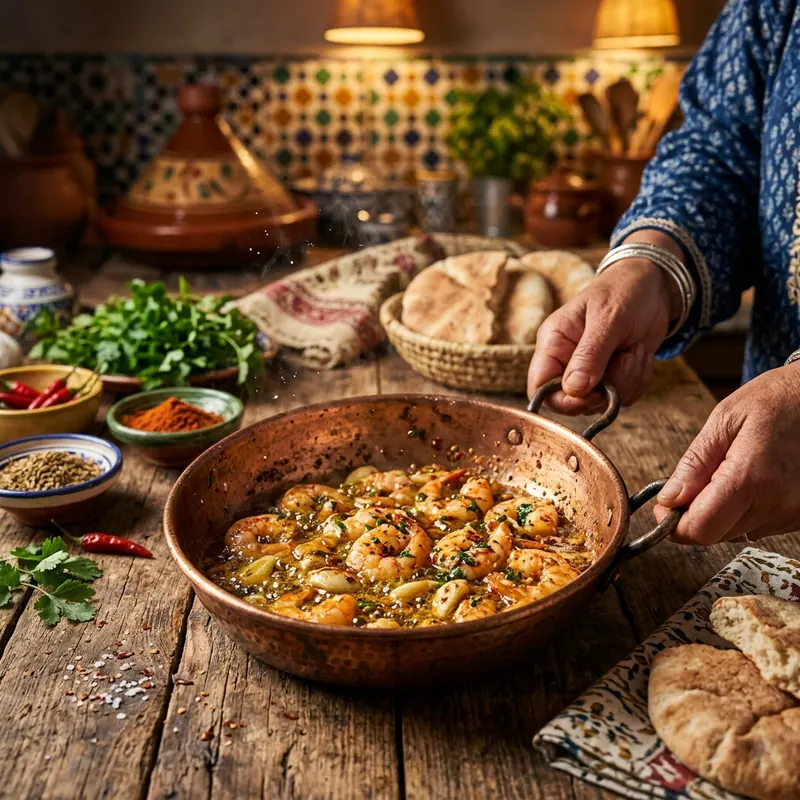
In the quiet hours after a grand Moroccan celebration, when the festive marquee empties and the clay tagines have cooled, an iron pan begins to work its ancestral magic in the kitchen.
Outside Morocco, travelers know the conical clay tagine, the Friday couscous, and the roasted Eid lamb. But mention Mqila (often pronounced M’qila in everyday speech) to any Moroccan grandmother or rural cook, and watch their eyes light up with nostalgic reverence.
The word itself comes from miqlah, the classical Arabic term for a wide, shallow frying pan or heavy skillet. Yet Mqila is far more than cookware. It is an ingenious tradition forged by Amazigh shepherds, desert caravans, and medina grandmothers. It represents one of North Africa’s oldest meat-cooking philosophies: searing, braising, and reducing spiced cuts in heavy metal until every trace of water vanishes, leaving tender meat resting in glistening, aromatic amber oil.
Nomadic Roots: Meat Preservation on the Trans-Saharan Trail
To understand why Mqila exists, you must travel back to an era long before refrigeration reached the High Atlas or the desert outposts of Sijilmassa and Taroudant.
In pastoral Amazigh communities, sheep, goats, and cattle were precious capital, slaughtered only for communal rites: tribal reconciliations, weddings, birth celebrations (aqiqa), and Eid al-Adha. When an animal was sacrificed, a family suddenly faced forty kilos of fresh meat under a blazing North African sun.
Nothing could be wasted. While tender organ meats were eaten as fresh skewers on the day of slaughter, tougher muscle cuts—neck, shank, flank, and shoulder—required preservation.
Moroccan cooks developed two legendary responses. One was Khlii, where strips of salted beef were sun-dried on rooftops before being submerged in molten tallow. The second, more immediate method was Mqila.
By simmering fresh meat cubes in an emulsion of olive oil, rendered fat, crushed garlic, and stone-ground coriander seeds, cooks achieved two goals at once. Long, gentle heat dissolved tough connective tissue into melting gelatin. As water evaporated from the skillet, the oil and fat acted as a natural sterile seal. Once cooled, the fat solidified into a firm blanket that shielded the cooked meat from airborne microbes, allowing herders to carry iron pans of meat across desert trails for weeks without spoilage.
Mqila vs. Tagine: The Battle of Iron and Clay
Many visitors mistake Mqila for a standard meat tagine, but Moroccan home cooks know the two dishes occupy opposite culinary poles.
The clay tagine is an instrument of moisture retention. Its conical lid catches rising steam, condenses it against cool ceramic walls, and drips water back onto ingredients below. This creates a gentle, humid braise with a plentiful sauce (marqa) intended for light bread dipping.
Mqila behaves in the opposite manner. It is prepared in a wide, heavy-bottomed skillet made of cast iron, hammered iron, or tin-plated copper. The pan has low sides and no lid during the final cooking stages.
The wide surface area encourages rapid liquid evaporation. Rather than swimming in broth, the meat undergoes what Moroccan cooks call el-qlya (frying and reducing). The dish starts with a quick sear, moves into a gentle water simmer to soften muscle fibers, and finishes with fierce reduction until the pan is waqfa f’idamha—literally “standing upright in its own oil.” When Mqila is done, there is not a single drop of water left in the pan; only tender, caramelized meat cubes resting in fragrant, bubbling fat.
The Flavor Blueprint: Garlic, Dry Coriander, and Olive Oil
While royal palace tagines from Fes rely on intricate spice blends containing nutmeg, mace, cinnamon, and ginger, Mqila embraces a clean, rustic blend of mountain spices:
- Crushed Red Garlic (Touma Beldiya): Entire heads of pungent local purple garlic, crushed into a paste with coarse sea salt.
- Ground Dry Coriander Seeds (Qasbour Yabes): The soul of Mqila. Whole coriander seeds are toasted in a dry pan, then crushed into coarse, fragrant powder. Coriander seed provides bright, citrusy notes that cut through the richness of sheep fat, while its natural antibacterial oils preserve the cooked meat.
- Cold-Pressed Olive Oil (Zit Beldiya): A generous pour of peppery, unrefined Moroccan olive oil from Zerhoun or the Souss Valley.
- Toasted Mountain Cumin (Kamoun Beldi): Added in moderation alongside sweet red paprika (tahmira) for color and deep warmth.
Turmeric, ginger, and saffron are deliberately excluded from traditional Mqila. Saffron and ginger belong to fresh palace stews; Mqila belongs to the soil, where garlic and coriander seed reign supreme.
The Communal Skillet Ritual: The Sourdough Khobz Scoop
Mqila is never spooned onto individual plates. Doing so would separate the caramelized meat cubes from the seasoned oil, ruining the dish’s defining magic.
The heavy iron skillet is carried straight from the fire to the center of a low round wooden table (mida). The oil is still murmuring and bubbling gently around the meat.
Diners gather on low banquettes, each holding a thick wedge of rustic bread (khobz beldi). For Mqila, white sandwich bread is unthinkable; you need dense, crusty sourdough flatbread made from stone-milled whole durum wheat (zra’a) and barley, flecked with toasted anise seeds or nigella.
Using the thumb and first two fingers of the right hand, each person tears off a morsel of bread, shapes it into a small scoop, and reaches into their sector of the skillet. You press the bread into a cube of beef or mutton—so tender it parts without resistance—capturing both the caramelized meat and a precious pool of garlicky, coriander-perfumed oil.
The first bite offers extraordinary contrast: the crunch of the bread crust, the tenderness of the meat, the savory punch of garlic, and the herbal brightness of roasted coriander seed. A sip of hot gunpowder green tea with fresh mint cuts through the oil, leaving your palate refreshed for the next scoop.
Grandmother’s Rules for Authentic Mqila
To prepare authentic Mqila at home, follow four rules from Moroccan grandmothers:
- Be Generous with Coriander Seed: Toast whole green-brown coriander seeds in a skillet until fragrant and grind them coarsely. The citrus aroma distinguishes real Mqila from ordinary fried meat.
- Never Rush the Reduction: Simmer the meat covered in water until tender, then uncover and cook over medium heat until every trace of water sizzles away. If any steam remains, the meat will not store well and the oil will taste watery.
- Listen to the Sizzle: A skilled cook knows when Mqila is finished by sound. As long as water is present, the pan makes a bubbling hiss. When all moisture evaporates and only oil remains, the sound changes to a clean, rhythmic crackle. That crackle signals perfection.
- Let the Meat Rest in its Fat: Mqila tastes wonderful straight from the pan, but it tastes even better the next morning. As the skillet cools, the meat absorbs seasoned olive oil and spices, developing deeper flavor.
Frequently Asked Questions
What is the fundamental difference between Mqila and Khlii?
While both are historic Moroccan meat preservation methods using coriander, garlic, and cumin, their preparation differs completely. Khlii requires strips of beef to be cured in salt and sun-dried outdoors until completely dehydrated like jerky before being simmered in melted tallow. Mqila uses fresh, uncured cubes of beef or mutton, braised fresh in olive oil and spices in an iron skillet until the liquid evaporates.
What cuts of meat work best for traditional Mqila?
Cuts with a healthy balance of muscle, connective tissue, and fat yield the best results. Lamb shoulder, neck, shank, and beef chuck or brisket are ideal. Extremely lean cuts like tenderloin dry out during the long simmering process and should be avoided.
How do you know when Mqila has reduced enough to be preserved?
Watch the pan closely until all water has boiled away. The oil should turn crystal clear and golden amber, free of cloudy liquid or steam bubbles. Drop a small piece of bread into the oil; if it crisps immediately without sputtering, no water remains, and the meat is safely preserved.
Can you use tagine spices like saffron and ginger in a traditional Mqila?
Traditional recipes strictly avoid saffron, ginger, and cinnamon. Mqila relies specifically on the rustic curing profile of dry coriander seeds, fresh garlic paste, cumin, paprika, and olive oil. Adding sweet tagine spices changes the fundamental character from an ancient skillet confit into a conventional stew.
Experience the true heart of Moroccan heritage through its culinary traditions. Join us in preserving and honoring these ancestral recipes.
What People Are Saying
No comments yet. Be the first — we'd love to hear from you.
The Moroccan Food
Culturally Verified & Fact-CheckedThe Moroccan Food editorial team brings together native culinary researchers, heritage preservationists, and experienced home cooks across Marrakech, Fes, and Casablanca. Every recipe and cultural guide is reviewed against ancestral oral traditions and authentic regional practices.