The Science of Ras el Hanout: What These Spices Actually Do to Your Body and Brain
Ras el Hanout and the Science of Ancient Spices
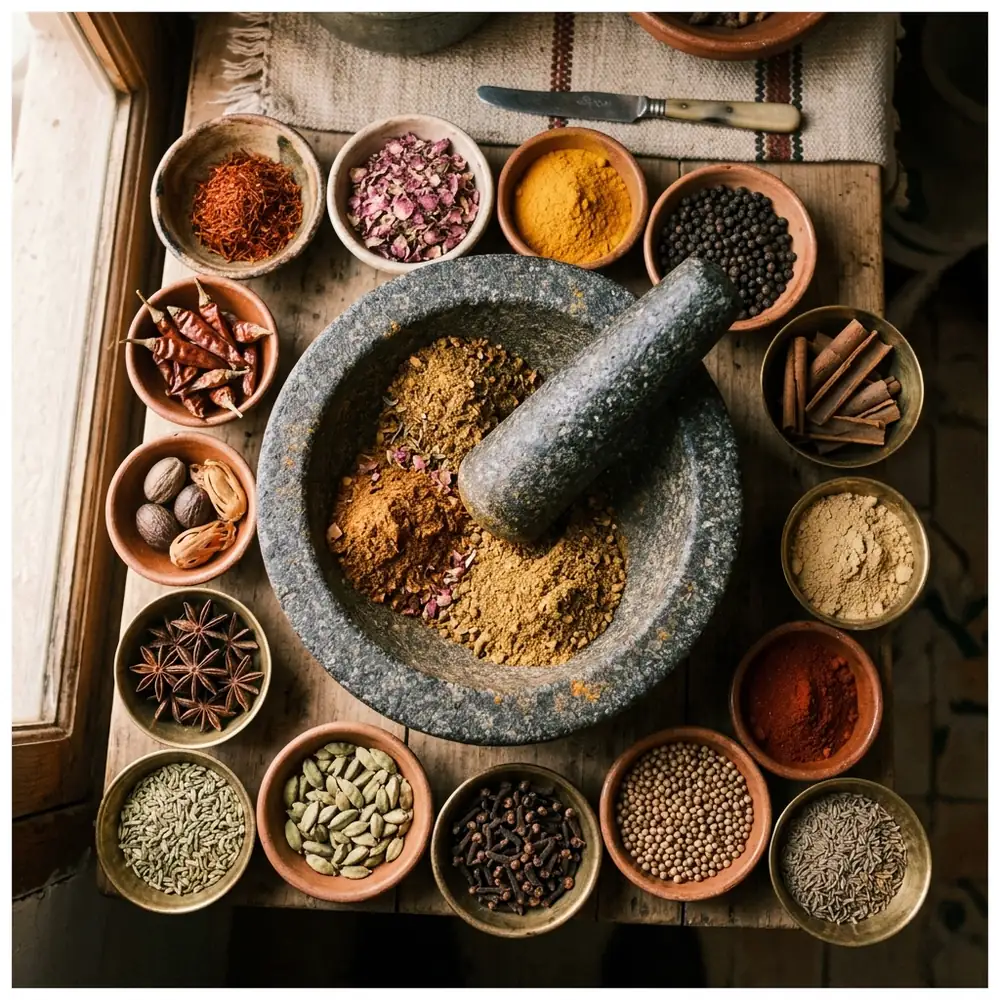
Ras el hanout means, literally, "head of the shop" — the best the spice merchant has, the signature blend that every souk vendor keeps according to their own closely held formula. A classic composition might include cumin, coriander, ginger, turmeric, cinnamon, black pepper, cardamom, clove, mace, rose petals, dried galangal, and somewhere between eight and thirty other ingredients depending on who is making it.
The medieval pharmacists who contributed to the development of these spice blends — because it was physicians and pharmacists, not cooks, who first systematically combined spices in North African Islamic medicine — were working from humoral theory and empirical observation. They didn't have randomized controlled trials. But they had centuries of noting what happened when people ate certain combinations of things, and some of what they observed turns out, when examined with modern biology, to be at least partially correct.
Curcumin (Turmeric): The Most Studied Spice Compound in Current Research
The active compound in turmeric is curcumin. The research literature on curcumin is vast — not all of it of equal quality, not all the claims supported by the evidence, and the bioavailability problem (curcumin is poorly absorbed by the body on its own) is real and often glossed over in popular accounts.
What the better-quality evidence does support: curcumin inhibits NF-κB, a protein complex that regulates inflammation at the cellular level. In studies of people with inflammatory conditions, curcumin supplementation has shown reductions in CRP (C-reactive protein, a marker of systemic inflammation) that are clinically significant. The bioavailability issue is partially addressed by cooking turmeric in fat — which curcumin is fat-soluble — and by combining it with black pepper, which contains piperine, a compound that increases curcumin absorption by up to 2000%.
Ras el hanout traditionally combines turmeric, fat-based cooking, and black pepper. The medieval pharmacists who designed this combination did not know about piperine. They knew that the combination worked better than the components separately.
Saffron: The Spice With the Most Surprising Clinical Profile
Saffron is the most expensive spice in the world by weight — a fact that has caused significant adulteration problems in the market, which is why Moroccan saffron from Taliouine is specifically sought and specifically tested. It contains two primary active compounds: safranal and crocin.
The clinical research is at an early stage but genuinely interesting. A 2019 meta-analysis in the Journal of Integrative Medicine reviewed eight randomized controlled trials comparing saffron to placebo or to antidepressant medication in patients with mild-to-moderate depression. The summary finding: saffron supplementation was significantly superior to placebo and non-inferior (comparable in effect size) to low-dose antidepressants, with a better tolerability profile.
Mechanistically, the working hypothesis is that crocin and safranal interact with serotonin reuptake mechanisms — similar in principle to SSRI antidepressants — and have antioxidant effects on brain tissue. This is preliminary. The studies are small. But the signal is consistent enough across multiple research groups to be taken seriously.
The dose in the studies — around 30mg daily — is achievable through food if saffron is used liberally in cooking. The traditional Moroccan use of saffron — generous, not decorative — might matter here.
Ginger and Cinnamon: The Blood Sugar and Inflammation Pair
Ginger: Contains gingerols and shogaols — compounds that inhibit the production of prostaglandins and leukotrienes, which are the chemical messengers that produce inflammation and pain. The evidence for ginger's anti-inflammatory effects is solid enough that several pharmaceutical companies have investigated ginger-derived compounds as potential drug candidates.
Fresh ginger has a different chemical profile than dried — the drying process converts gingerols to shogaols, which are more potent but present in different proportion. Moroccan cooking uses both: fresh ginger in certain preparations, dried ginger powder in spice blends. The combination provides both.
Cinnamon: The research on cinnamon and blood sugar regulation has been ongoing for decades. The current consensus is that cinnamaldehyde — cinnamon's main active compound — appears to improve insulin sensitivity and slow the digestion of carbohydrates, producing a more gradual rise in blood glucose after eating. Effect sizes are modest and not consistent across all populations, but the direction of the evidence is clear.
In a cuisine where cinnamon appears in meat dishes, in sweet preparations, in spice blends, and as a table condiment, the cumulative exposure is significant. This was not a deliberate health strategy. It was flavor preference. The health effect may be a secondary benefit of a flavor tradition that predates any understanding of the mechanism.
What This Does and Doesn't Mean
It doesn't mean eating ras el hanout will cure inflammation, prevent depression, or regulate blood sugar in any dramatic clinical sense. Individual spice compounds at the concentrations present in food are not pharmaceutical doses.
What it might mean: a diet consistently rich in these spice compounds — over years and decades, as is the case in traditional Moroccan eating patterns — could contribute to the kind of background modulation of inflammation and metabolic function that epidemiological studies have documented in populations eating traditional Mediterranean and North African diets.
The spices in your kitchen are not medicine. But the gap between food and medicine is smaller than the modern separation between them suggests — and the Moroccan spice tradition, which was explicitly pharmacological in its origins, has been working on that gap for centuries.
Experience the true heart of Moroccan heritage through its culinary traditions. Join us in preserving and honoring these ancestral recipes.
What People Are Saying
No comments yet. Be the first — we'd love to hear from you.
Dr. Sara El Mansouri
Culturally Verified & Fact-CheckedThe Moroccan Food editorial team brings together native culinary researchers, heritage preservationists, and experienced home cooks across Marrakech, Fes, and Casablanca. Every recipe and cultural guide is reviewed against ancestral oral traditions and authentic regional practices.