Tayeb Ouhari: The Spicy Medina Chickpea Broth That Wakes Up Fez and Meknes
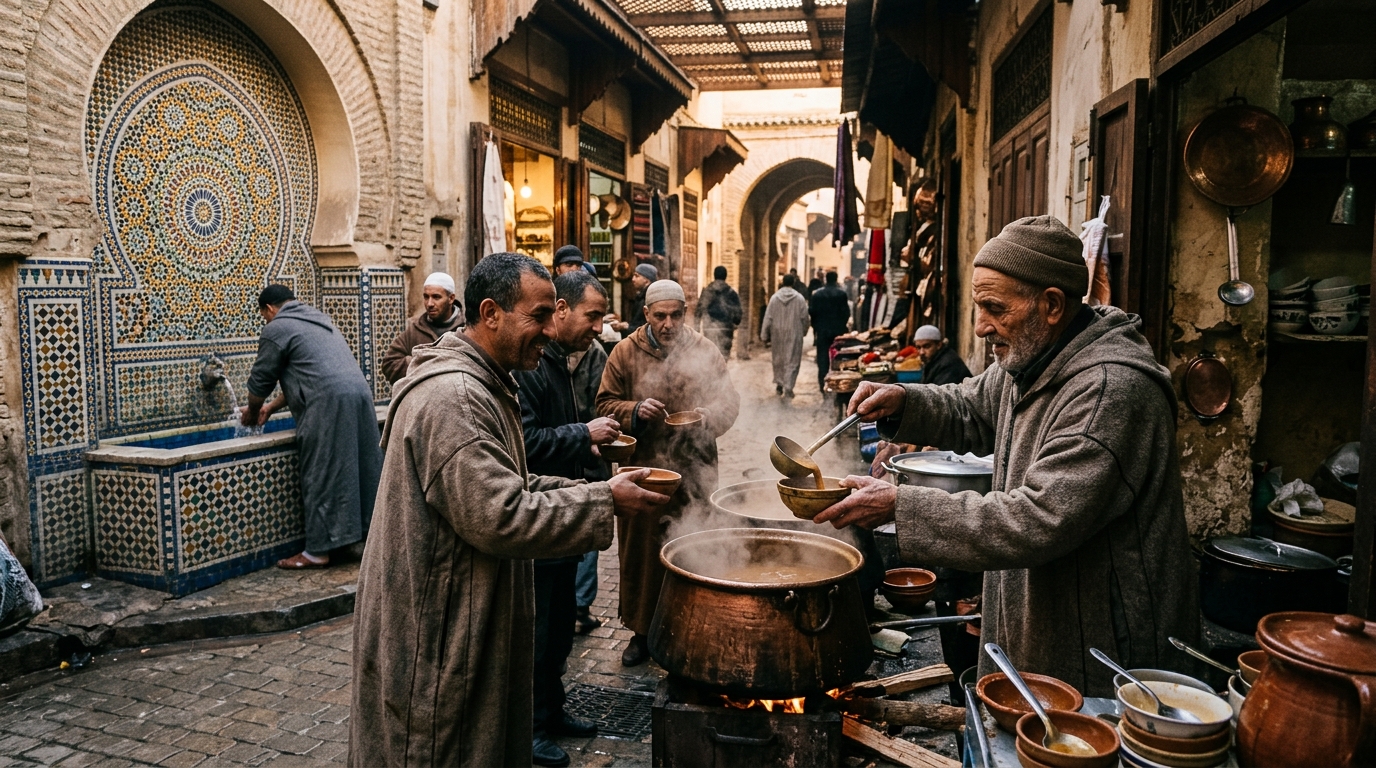
The morning air smells of woodsmoke, wet stone, and frost. While hotel kitchens prepare bread and jam for travelers, the real pulse of the old cities beats around low stone doorways near Bab Boujloud, Place el-Hedim, and the lower medina of R’cif.
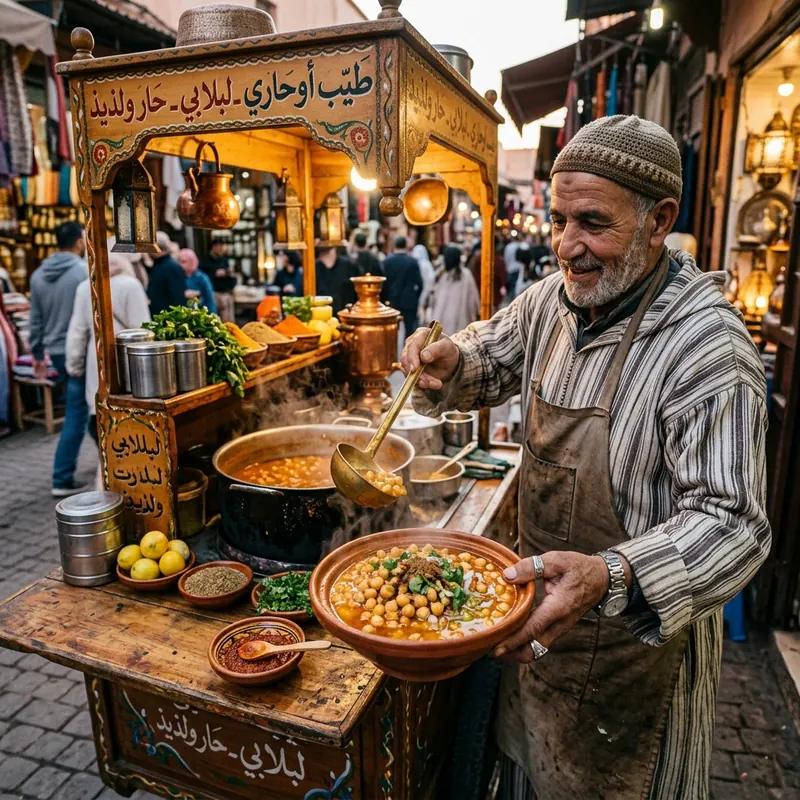
There, street masters stand over colossal blackened cauldrons. The liquid inside is blood-red, thick with bubbling oil, and fragrant with cumin, garlic, and fierce dried chili. This is Tayeb Ouhari—a legendary dish that sits somewhere between a stew, a medicinal broth, and a morning wake-up call for the working class.
       +-------------------------------------------------------------+
       |               THE ARCHITECTURE OF TAYEB OUHARI              |
       +-------------------------------------------------------------+
       | [ The Name ]     Darija: "Tayeb" (cooked soft) + "Ouhari"   |
       |                  (fiery, burning, tongue-tingling spice)    |
       | [ The Base ]     Slow-simmered lamb marrow bones & fat      |
       | [ The Starches ] Melting chickpeas (hummus beldi)           |
       | [ The Spices ]   Smoked paprika, roasted cumin, cayenne     |
       | [ The Finish ]   Fiery harissa smear & splash of vinegar    |
       | [ The Vessel ]   Thick glazed earthenware bowl (zlafa)      |
       +-------------------------------------------------------------+
The Meaning of the Name: Cooked and Burning
Tayeb Ouhari translates directly to “cooked and spicy” or “tender and fiery.” The word tayeb signifies that legumes and bones have cooked so long and gently that they have surrendered all resistance—the chickpeas dissolve on your palate without chewing. The word ouhari comes from the root for heat and sharp spice, warning the diner that this is no polite afternoon broth. It is hot in temperature and fierce in chili heat.
To taste Tayeb Ouhari is to discover a style of Moroccan food that rarely appears in restaurant guidebooks. Most accounts focus on sweet-and-savory tagines, saffron-scented chickens, or sugar-dusted pastillas. Tayeb Ouhari belongs to a different lineage: the unvarnished street sustenance of northern laborers, tanners, wood-turners, and muleteers who need immediate fuel to survive long work in cold stone workshops.
The Morning Geography: Fes and Meknes
Tayeb Ouhari is the undisputed specialty of the Saïss plain, anchored by Fes and Meknes.
In Fes, vendors cluster near Bab Boujloud (the Blue Gate) and the lower markets of Bab R’cif. In Meknes, you find them tucked into arcades facing Place el-Hedim, near the monumental gate of Bab Mansour. Here, winter temperatures drop near freezing as winds rush off the Middle Atlas.
Vendors open by six in the morning. Their setup is simple: wooden benches polished smooth by thousands of elbows, a stack of heavy glazed clay bowls (zlafat), crusty rounds of country barley bread (khobz sh’ir), and jars of house-made harissa and sharp red vinegar.
Laborers step in, pay five to seven dirhams, and receive a steaming bowl filled to the brim. No spoons are required. You cup the earthenware bowl in both hands to draw warmth into cold fingers, lift it to your lips, and take a long sip of the red broth. It hits your throat with an immediate shockwave of marrow richness, garlic, and cayenne heat, followed by the mellow earthiness of tender chickpeas.
                       THE MORNING WORKER RITUAL

    [ Step 1 ] Take your place at the communal wooden bench.
    [ Step 2 ] Vendor ladles boiling broth and chickpeas into zlafa.
    [ Step 3 ] Spoon in fiery harissa paste and splash with vinegar.
    [ Step 4 ] Cup both palms around clay bowl for hand warmth.
    [ Step 5 ] Sip broth directly; tear barley khobz to scoop peas.
The Alchemy of Bone Marrow and Spice
A street vendor does not use lean meat. Instead, he visits the local butcher at twilight, buying cracked beef leg bones, lamb knuckles, and chunks of cured fat (ch’ham).
These marrow-rich bones are placed into a copper cauldron with cold water, garlic heads crushed whole, and a generous fistful of sweet paprika (tahmira). The paprika gives the broth its deep brick-red color and fruitiness. As the cauldron simmers through the night, collagen melts into gelatin, and rich marrow renders into the soup.
When soaked chickpeas are added to this boiling broth, they braise in a rich, spiced emulsion. Starches released from the legumes thicken the broth, creating a velvety consistency that clings to your lips. Cayenne pepper (soudaniya) is stirred in toward the end, providing sustained heat that kindles an internal fire lasting through morning labor.
The Secret Finish: The Vinegar and Harissa Splash
What transforms Tayeb Ouhari from a heavy soup into a balanced culinary marvel is the dual condiment finish applied right before serving: harissa and vinegar.
Before the vendor hands you your bowl, he shakes a sharp splash of red vinegar across the surface. Then, using a wooden paddle, he swirls a dollop of crushed red chili paste (harissa) into the center.
The vinegar provides crucial culinary acidity. The acetic acid cuts directly through the thick marrow fat, brightening the broth and cleansing the palate between mouthfuls. The harissa, fragrant with ground caraway and coriander, adds floral complexity to the blunt cayenne heat. The interplay of rich fat, fiery chili, and sharp vinegar creates an addictive tension that keeps customers draining bowls to the last drop.
       +-------------------------------------------------------------+
       |               AUTHENTIC HOMESTYLE TAYEB OUHARI              |
       +-------------------------------------------------------------+
       | * 500 g dried Moroccan chickpeas, soaked overnight          |
       | * 1 kg beef or lamb marrow bones, cracked                   |
       | * 100 g rendered beef tallow or olive oil                   |
       | * 8 large cloves garlic, finely crushed                     |
       | * 2 tablespoons sweet Moroccan paprika (tahmira)            |
       | * 1 tablespoon ground cumin (kamoun beldi)                  |
       | * 1.5 teaspoons hot cayenne pepper (soudaniya)              |
       | * 1 tablespoon coarse sea salt                              |
       | * Red vinegar and harissa paste for serving                 |
       +-------------------------------------------------------------+
Preparation Method:
- In a large heavy pot, combine cracked bones, tallow, crushed garlic, paprika, cayenne, and 2.5 liters of water. Bring to a boil over medium-high heat.
- Skim away grey impurities that rise during the first fifteen minutes.
- Add drained, soaked chickpeas. Reduce heat to medium-low, cover, and simmer for 2.5 hours until chickpeas are soft and bones release marrow.
- Stir in sea salt and ground cumin during the final 30 minutes of simmering.
- Remove large bone fragments. Whisk lightly to emulsify the marrow fat with the chickpea broth.
- Ladle boiling broth and chickpeas into earthenware bowls.
- Finish each bowl with a splash of vinegar and a spoonful of harissa. Serve hot with crusty bread.
Grandmother’s Rules for Rich Broth
- Crack the Bones: Never use smooth whole bones. Have the butcher split them lengthwise to expose interior marrow.
- Emulsify the Fat: If fat pools on the surface, whisk a ladleful of cooked chickpeas into a smooth paste and stir it back into the pot. Starch binds the fat into the soup.
- Never Skip Vinegar: Without acid, marrow fat feels heavy. A splash of vinegar transforms the broth into a crisp restorative.
- Use Stale Bread: Traditional eaters prefer day-old dense barley or wheat bread (khobz) that holds structure when dipped into boiling broth.
Frequently Asked Questions
What is the difference between Tayeb Ouhari and Hamouss Kamoun?
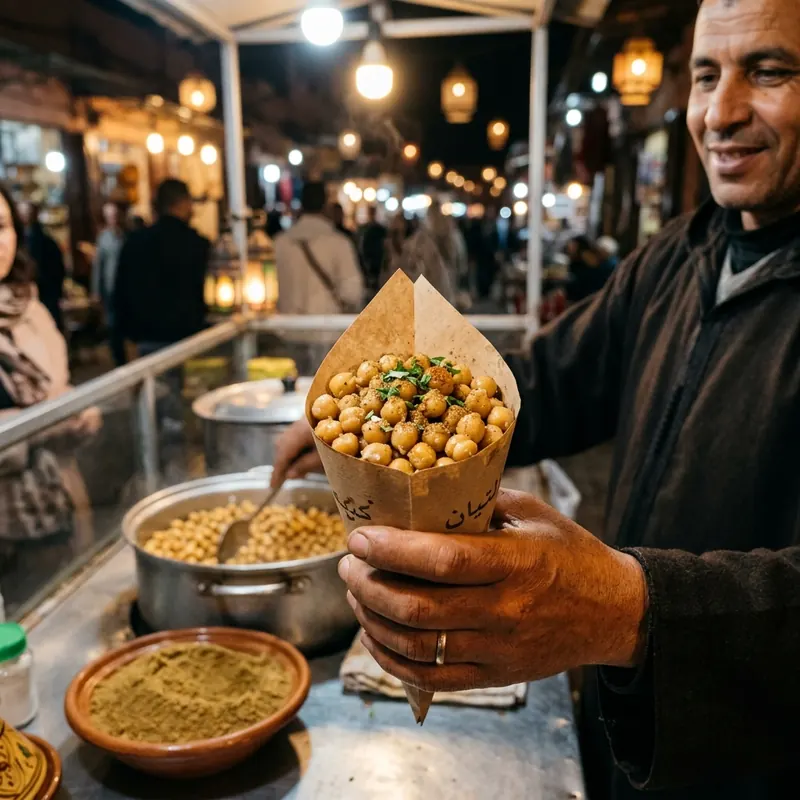
While both star chickpeas, they represent completely different styles. Hamouss Kamoun is a clean, dry handheld street snack: chickpeas are boiled in water with garlic and bay leaves, drained, and served in a paper cone dusted with dry cumin. Tayeb Ouhari is a rich soup stew: chickpeas are simmered in red broth enriched with bone marrow, paprika, and cayenne, served in a bowl with vinegar, harissa, and bread.
Is Tayeb Ouhari considered a breakfast or lunch dish?
Traditionally, Tayeb Ouhari is an early-morning breakfast dish eaten between 6:00 AM and 9:00 AM by laborers and early risers. However, in working-class neighborhoods, vendors keep cauldrons simmering until mid-afternoon, making it a popular budget lunch for traders and students.
Can you make a vegetarian version of Tayeb Ouhari?
You can create a plant-based version by replacing beef bones and tallow with a generous cup of fruity extra virgin olive oil. While it lacks the gelatinous marrow richness of traditional street stalls, adding roasted cumin, heavy paprika, cayenne, and garlic produces a warming chickpea stew.
Why do vendors serve Tayeb Ouhari with vinegar alongside spicy red pepper?
The splash of vinegar is essential for balancing flavor and digestion. Acetic acid cuts through heavy lipids of bone marrow and tallow, preventing the broth from feeling greasy on the palate. Combined with fiery cayenne, the sour-spicy dynamic awakens the senses on cold mornings.
Experience the true heart of Moroccan heritage through its culinary traditions. Join us in preserving and honoring these ancestral recipes.
What People Are Saying
No comments yet. Be the first — we'd love to hear from you.
The Moroccan Food
Culturally Verified & Fact-CheckedThe Moroccan Food editorial team brings together native culinary researchers, heritage preservationists, and experienced home cooks across Marrakech, Fes, and Casablanca. Every recipe and cultural guide is reviewed against ancestral oral traditions and authentic regional practices.