Traditional Moroccan Drinks: Beyond Mint Tea to Spiced Coffees, Raïb, and Fresh Nectars
Traditional Moroccan Drinks: Beyond Mint Tea to Spiced Coffees, Raïb, and Fresh Nectars
In any Moroccan home, welcoming someone through the doorway is never done with empty hands. Long before food reaches the table, something warm or cooling is poured into a glass. While Moroccan mint tea rightly claims its place as the national emblem of hospitality, the broader landscape of Moroccan beverages is far wider and deeply connected to orchards, dairy herds, and medina apothecary stalls.
From early-morning glasses of spiced coffee that clear the head on cold winter dawns, to midday avocado shakes whipped thick with toasted almonds and orange blossom water, drinks in Morocco serve as nourishment, herbal medicine, and social connection. Walking down any medina lane reveals street stalls pressing fresh citrus, corner mahlabas (traditional dairy and juice shops) churning cultured milk, and café terraces where patrons watch neighborhood life unfold over a small glass of coffee.
Atay: The Sacred Art of Maghrebi Mint Tea
No understanding of Moroccan drink culture can begin without Atay, the sweet green tea infused with fresh mint that flows through every hour of the day. Moroccan mint tea is not simply an afternoon refreshment; it is a ceremonial ritual performed with care and unhurried patience.
The foundation rests on three ingredients:
- Gunpowder Green Tea (Chay Chinwi): Tightly rolled Chinese green tea pearls that unfurl when heated, releasing a brisk, smoky astringency.
- Fresh Spearmint (Naânaâ): Morocco cultivates several mint varieties, with Naânaâ Meknassi (from the Meknes plain) considered the most prized for its sweet, clean aroma.
- Sugar: Traditionally chipped from a solid cone of white sugar (soukkar qaleb), yielding a silky sweetness that balances the natural bitterness of green tea.
Seasonal Herbs of the Teapot
While fresh spearmint reigns in spring and summer, Moroccan grandmothers adjust the teapot (berrad) as temperatures drop. In winter, fresh mint steps aside for chiba (absinthe or tree wormwood), a silvery, intensely bitter herb prized for its warming properties and digestive benefits. Only a small sprig of chiba is used, rinsed in warm water to soften its bitterness before being slipped into the pot.
Other beloved tea botanicals include louiza (lemon verbena) added in the evening to calm the stomach, salmia (mountain sage) infused during cold months, za’atar (wild mountain thyme) to soothe digestion after rich feasts, and fliyou (wild pennyroyal) brewed when winter chills take hold.
The Pouring Ceremony
Preparing Atay is an art form. First comes the tashlila (the rinse): boiling water is poured over tea pearls in the berrad, swirled gently, and poured out into a glass. This first amber liquid holds the spirit of the tea and is kept. A second splash of boiling water is swirled and discarded to wash away excess dust.
The first liquid returns to the pot alongside boiling water, sugar, and bruised mint. The pot is placed directly over the flame to come to a gentle boil, ensuring the sugar melts into the brew. Finally, the host lifts the teapot high above small glasses, letting a thin, steaming stream cascade down. This high pour aerates the tea, cools it to drinking temperature, and crowns each glass with a delicate foam rim known as the regga. Without this foam crown, the tea was not served with proper respect.
Qahwa M’atara: Spiced Medina Coffee
While tea represents home and family, coffee belongs to the street, the medina quarter, and lively conversation. In historic medinas like Fes, Marrakech, and Meknes, traditional spice merchants (attarine) still prepare custom coffee blends known as Qahwa M’atara (perfumed or spiced coffee).
Unlike dark European roasts, Moroccan spiced coffee combines medium-roasted Arabica beans with whole spices:
- Dried Ginger (Skinjbir): Provides sharp, warming heat that clears the chest.
- Cinnamon Bark (Qerfa): Adds natural sweetness and woody fragrance.
- Green Cardamom (Qeâqolla): Imparts fragrant citrus-herbal notes.
- Black Peppercorns (Ibzar): Lends a lingering, savory kick at the back of the throat.
- Nutmeg (Gouza) and Mace (Bsibisa): Ground sparingly for complex aroma.
- Sesame Seeds and Aniseed: Often toasted and ground into the beans to give body and a nutty finish.
Traditionally simmered slowly in an open pot over glowing charcoal, this spiced brew is strained into small glass cups and sipped slowly. It delivers gentle warmth that cuts through damp mountain fog.
In modern neighborhood cafés, patrons order Nass-Nass (meaning “half-half” in Moroccan Arabic). Served in a clear glass tumbler, Nass-Nass consists of equal parts strong espresso and hot foamed milk—tailored for lingering over afternoon conversation.
Mahlaba Delights: Jus d’Avocat and the Legendary Zaâzaâ
Turn down any main avenue in a Moroccan city and you will see the white tiled walls of a mahlaba. Originally established as dairy distribution depots by families from the Sous region, modern mahlabas have evolved into neighborhood juice bars and snack hubs.
Jus d’Avocat: The Moroccan Green Shake
While Western kitchens treat avocado primarily as a salad vegetable, Moroccans have long celebrated it as the base of a luscious sweet milkshake. Jus d’Avocat is thick, creamy, and deeply satisfying:
- 1 ripe Hass avocado, peeled and pitted
- 2 cups cold whole milk
- 2 to 3 tablespoons pure orange blossom water (ma zhar)
- 2 tablespoons honey or sugar
- A handful of soaked, peeled almonds or sweet Medjool date paste
Blended until velvety smooth, this shake is rich enough to serve as a light breakfast or afternoon sustenance. The floral note of orange blossom cuts through the natural richness of the avocado, creating a drink that is sweet, refreshing, and distinctly Moroccan.
Zaâzaâ: The Northern Masterpiece
In northern cities like Tetouan and Tangier, the avocado shake was transformed into a layered culinary specialty known as Zaâzaâ. Served in tall glass sundaes with a long spoon and straw, Zaâzaâ is part drink, part dessert:
- The Base: A thick layer of pureed avocado cream sweetened with condensed milk.
- The Middle: Chilled vanilla caramel flan, chopped bananas, and fresh strawberries.
- The Crown: Whipped cream, roasted almonds, walnuts, crushed wafer biscuits, and a generous drizzle of dark chocolate or strawberry syrup.
Zaâzaâ is eaten after evening walks with friends, celebrated as an indulgent treat that satisfies both thirst and sweet cravings.
Sacred Fermented Dairy: Raïb and Lben
Moroccan dairy culture remains tied to ancestral preservation techniques developed by pastoral communities:
Silky Raïb
Raïb is traditional curdled milk, somewhere between tender custard and fresh yogurt. Historically, fresh raw cow or goat milk was warmed gently and curdled using natural plant enzymes—often the dried yellow stamens of wild cardoon flowers (chouk el-hmar), which contain natural rennet.
Today, raïb is prepared daily in mahlabas by culturing warm milk and letting it set in terracotta pots or small glass cups overnight. It emerges thick and spoonable, with a gentle lactic tang. Locals eat it cold, sprinkled with powdered sugar, flavored with a drop of orange blossom water, or swirled with bright red pomegranate syrup (grenadine).
Refreshing Lben and Saykouk
Lben is traditional cultured buttermilk, obtained as a natural byproduct when fermented cream is churned into fresh farm butter (zoubda beldia). Lightly sour, refreshing, and packed with natural probiotics, chilled lben is the mandatory companion to Friday couscous, cutting through the richness of steamed semolina and tender root vegetables.
During hot summer months, vendors prepare Saykouk: a rustic bowl of steamed cracked barley or couscous drenched in ice-cold lben. It is cooling, earthy, and gentle on the stomach.
Street Fruit Nectars: Oranges and Pomegranates
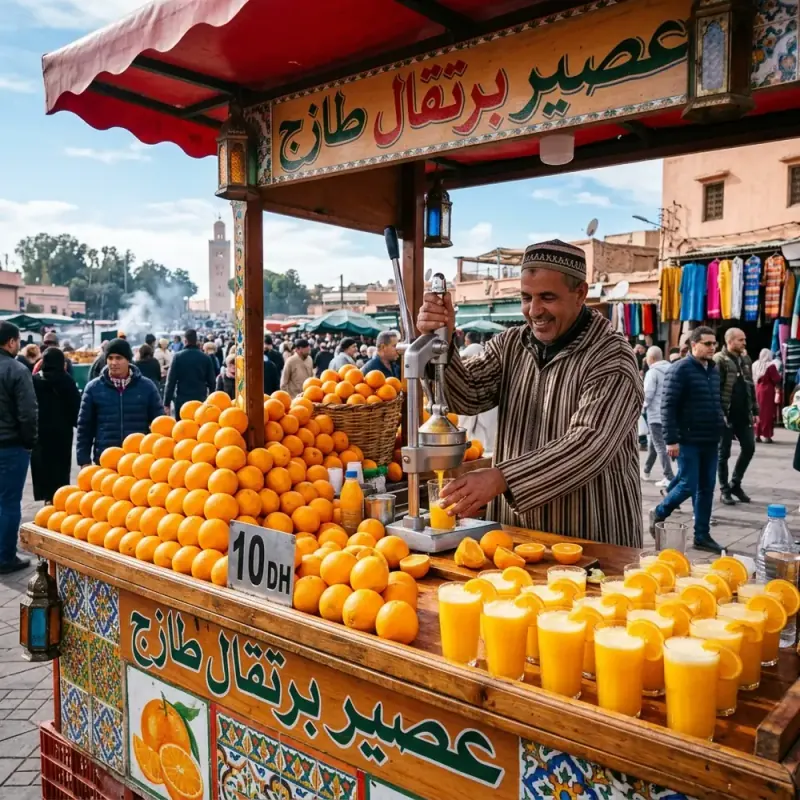
Blessed with sunny river valleys, Morocco produces exceptional citrus fruit. Walking through city squares like Jemaa el-Fnaa in Marrakech or Bab Bou Jeloud in Fes, rows of hand-painted carts display pyramids of fresh fruit.
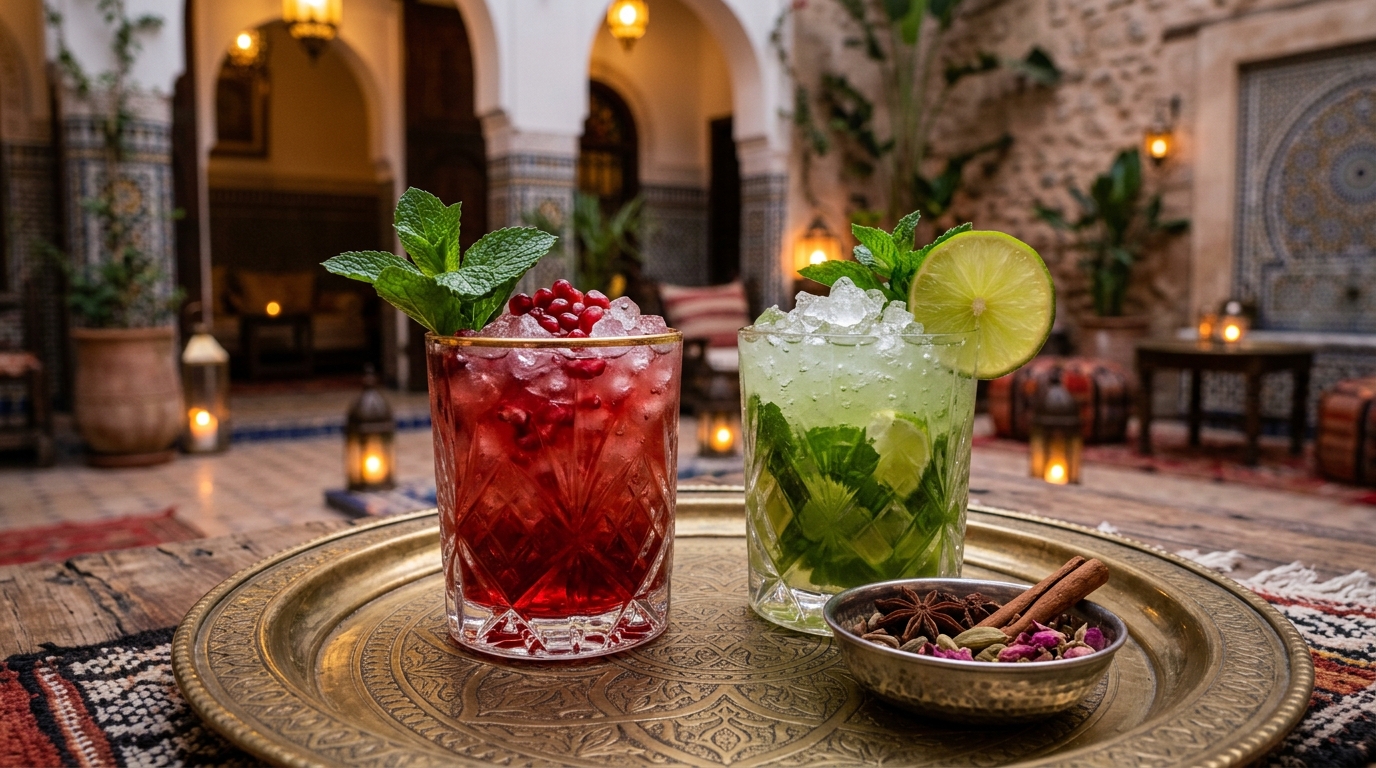
For a few dirhams, vendors press sweet Valencia and Clementine oranges directly into heavy glass tumblers. In autumn, ruby-red pomegranates take center stage. The seeds are pressed whole, producing an astringent nectar often finished with a pinch of fragrant cinnamon and a drop of orange blossom water.
Moroccan drinks reflect an unshakeable connection to the seasons, the wisdom of the spice drawer, and the golden rule of local hospitality: every glass offered is an open door.
Frequently Asked Questions
What makes Moroccan mint tea different from ordinary peppermint tea?
Moroccan mint tea uses Chinese gunpowder green tea pearls boiled directly with water, generous amounts of fresh spearmint leaves (Naânaâ), and sugar. Unlike standard infused tea bags, it is boiled on the stove and poured from high above to create a light foam rim (regga) that aerates the tea and softens bitterness.
What is Qahwa M’atara?
Qahwa M’atara is traditional Moroccan spiced coffee. Medium-roasted Arabica coffee beans are ground with whole warming spices including ginger, cinnamon bark, green cardamom, black pepper, and nutmeg. It is simmered slowly and served in small glasses for a fragrant, warming morning drink.
What ingredients are inside a Moroccan avocado shake (Jus d’Avocat)?
An authentic Moroccan avocado shake blends ripe avocado with chilled whole milk, a splash of pure orange blossom water, and honey or date paste. It is often enriched with crushed roasted almonds, creating a silky beverage enjoyed as breakfast or an afternoon snack.
What is the difference between Raïb and Lben?
Raïb is a thick, spoonable curdled milk dessert similar to creamy set yogurt, often flavored with orange blossom water or pomegranate syrup. Lben is traditional cultured buttermilk with a liquid consistency and tangy flavor, typically served cold with Friday couscous or mixed with steamed barley in Saykouk.
Experience the true heart of Moroccan heritage through its culinary traditions. Join us in preserving and honoring these ancestral recipes.
What People Are Saying
No comments yet. Be the first — we'd love to hear from you.
The Moroccan Food
Culturally Verified & Fact-CheckedThe Moroccan Food editorial team brings together native culinary researchers, heritage preservationists, and experienced home cooks across Marrakech, Fes, and Casablanca. Every recipe and cultural guide is reviewed against ancestral oral traditions and authentic regional practices.