The Best Food in Fes: What to Eat in Morocco's Culinary Capital
When Moroccans argue about which city has the best food, the debate usually ends when someone mentions Fes.
Fes is the spiritual and culinary heart of Morocco. The cuisine here, known as Fassi cuisine, is ancient, highly refined, and deeply complex. It is a cooking style that balances savory meats with sweet fruits, heavy spices with floral waters, and slow-cooking techniques passed down through generations of families living in the labyrinthine old medina.
If you are visiting Fes, eating well should be your primary mission. Here is your guide to the best food in Fes and the specific dishes you need to track down.
The Crown Jewel: Bastilla with Pigeon
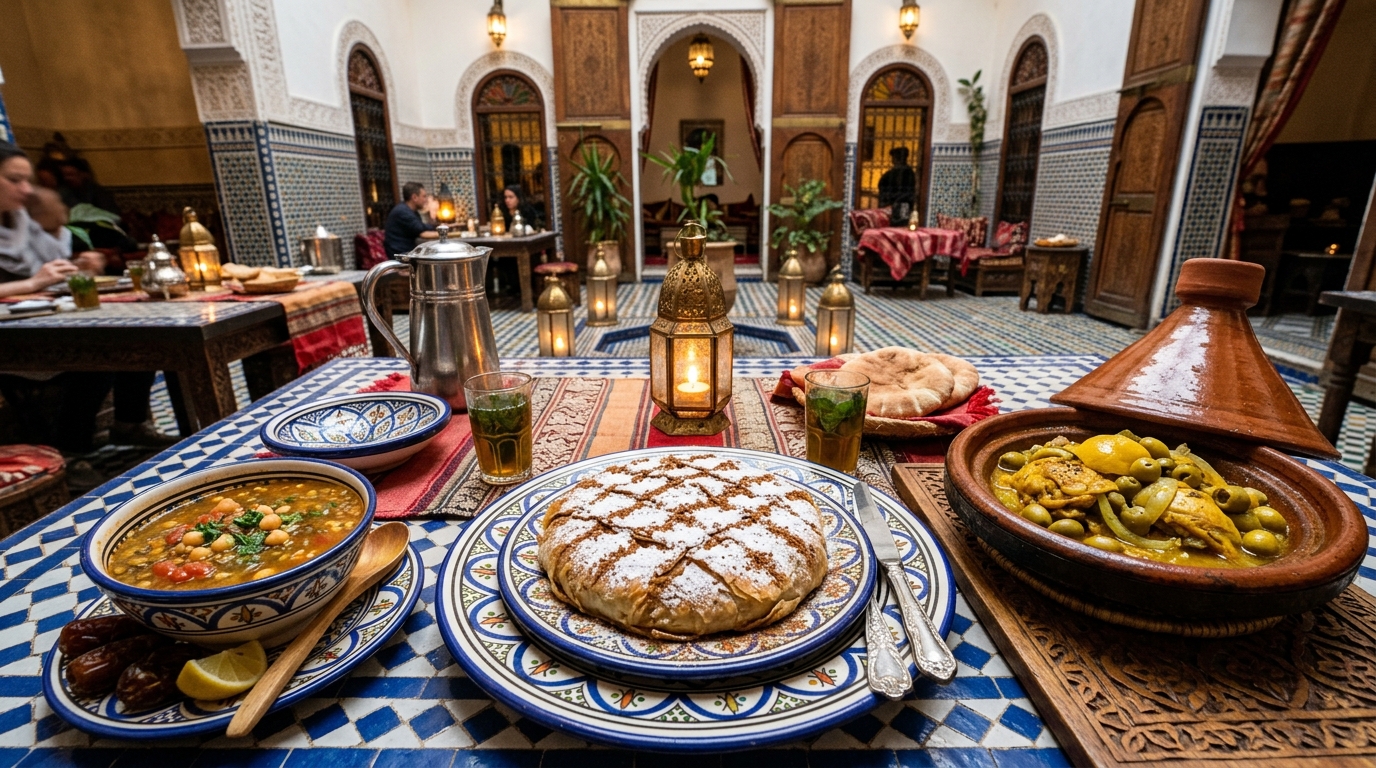
You can find bastilla (or pastilla) all over Morocco, but it was born in Fes. This is the ultimate Fassi dish, representing the absolute height of the city’s culinary tradition.
A traditional Fassi bastilla is a savory-sweet pie made from layers of warqa—a paper-thin pastry dough similar to phyllo but much more delicate. Inside, you will find slow-cooked pigeon (or sometimes chicken) spiced with saffron, ginger, and cinnamon, layered with an egg-and-onion mixture, and topped with crushed, fried almonds. The whole pie is baked until crispy, then dusted heavily with powdered sugar and cinnamon.
The contrast between the crispy shell, the savory poultry, and the sweet almond topping is a shock to the senses the first time you try it. Do not leave Fes without eating a real, freshly made bastilla.
Rfissa: The Ultimate Comfort Food
While bastilla is refined and elegant, Rfissa is pure, unadulterated comfort food. It is traditionally prepared for women who have just given birth, but you can find it in traditional restaurants if you know to ask.
Rfissa consists of shredded pieces of msemen (flaky flatbread) soaked in an incredibly deeply flavored broth made from chicken, lentils, and a heavy dose of fenugreek and saffron. The bread absorbs the broth, becoming soft and savory. It is a messy, beautiful dish meant to be eaten communally with your hands.
Offal and Slow-Cooked Classics
The Fassi kitchen wastes nothing, and some of its most famous dishes revolve around cuts of meat that require extreme patience.
Hergma (or Kour3ine) is a dish of cow or sheep trotters, slow-cooked overnight with chickpeas and raisins. The gelatin from the trotters melts into the sauce, creating a thick, sticky, sweet-and-savory stew that locals adore.
Then there is Mrouzia, traditionally eaten during the Eid al-Adha holiday but available in good Fassi restaurants year-round. It is a lamb dish cooked with a heavy amount of honey, raisins, almonds, and Ras el Hanout (a complex spice blend containing dozens of spices). The meat is preserved in its own fat and sugar, making it incredibly tender and sweet.
Breakfast in the Rcif Neighborhood
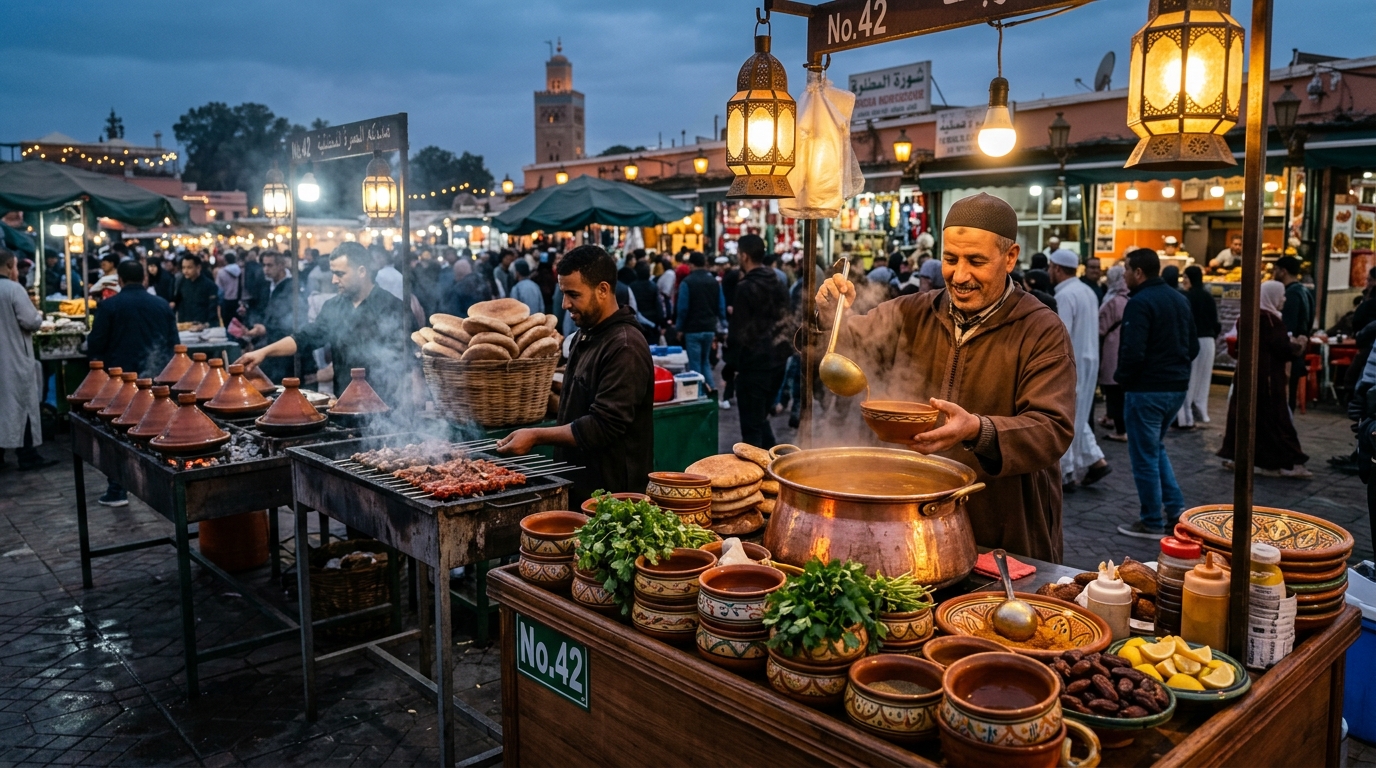
The medina of Fes el-Bali has over 9,000 streets, but for street food, the Rcif neighborhood is unparalleled.
Head there early in the morning for breakfast. Look for the small, steaming vats of bissara—a thick, hearty puree made from dried fava beans or split peas, generously doused in local olive oil, cumin, and chili powder. Dip a piece of fresh khobz into the bowl. It costs pennies, keeps you full for hours, and is deeply satisfying.
The Sweets of Fes
Fes is also famous for its bakeries. As you navigate the medina, you will smell honey and orange blossom water everywhere.
You must try the local shebakia—intricate, flower-shaped cookies fried and soaked in honey, coated in sesame seeds. They are a Ramadan staple but Fes makes them perfectly year-round. Also look out for kaab el ghazal (gazelle horns), delicate crescent-shaped pastries filled with almond paste and lightly scented with pure orange blossom water.
Frequently Asked Questions
Is pigeon safe to eat in a Bastilla? Yes. The pigeons used in Fassi bastilla are squab, specially bred for culinary use, much like chicken or quail. They are completely safe and have a rich, slightly gamey flavor that works perfectly with the sweet almonds.
Where is the best place to eat in Fes? For street food, stick to the Rcif and Talaa Kebira areas. For complex dishes like Bastilla or Tanjia, a dinner at a traditional family-run Riad is usually better than a standard street-side restaurant, as these dishes require hours of preparation.
Why is Fassi food sweeter than other Moroccan food? Fes has a long history of Andalusian and Arab influences, which popularized the technique of mixing sweet fruits (dates, raisins, honey) with savory meats to preserve them and enhance the flavor profile.
Experience the true heart of Moroccan heritage through its culinary traditions. Join us in preserving and honoring these ancestral recipes.
What People Are Saying
No comments yet. Be the first — we'd love to hear from you.
The Moroccan Food
Culturally Verified & Fact-CheckedThe Moroccan Food editorial team brings together native culinary researchers, heritage preservationists, and experienced home cooks across Marrakech, Fes, and Casablanca. Every recipe and cultural guide is reviewed against ancestral oral traditions and authentic regional practices.