The Art of the Briouate: How Paper-Thin Warqa Created Morocco's Crispy Jewel
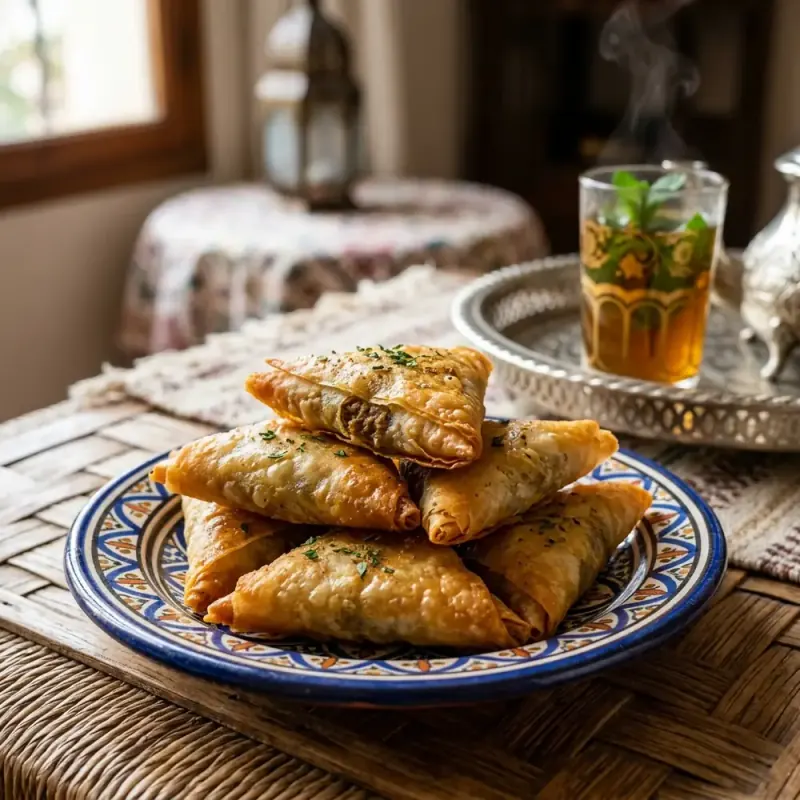
Listen closely to the sound of a Moroccan celebration. Long before musicians strike the first chord on the oud or silver teapots begin their high-arched pour, you hear a distinct sound across the room: a crisp, musical shatter as someone bites into a golden Briouate.
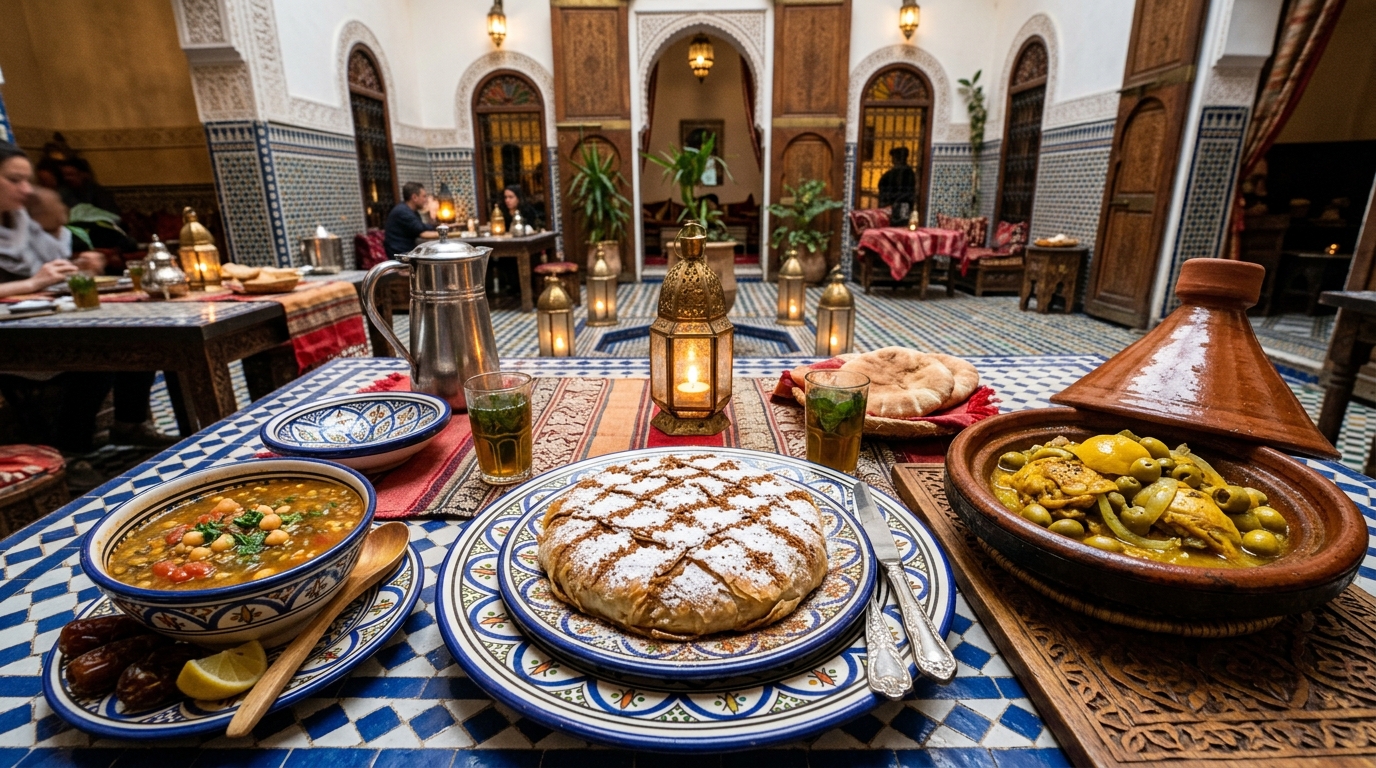
Whether arranged in pyramids on silver platters at a wedding in Fes, or passed around the table when the sunset cannon fires during Ramadan, the Briouate is Morocco’s crispy jewel.
The name carries poetic meaning. In Moroccan Darija, Briouate (singular Brioua) derives from briya, the Arabic word for a small letter or envelope. A master cook takes a ribbon of paper-thin dough, places a filling of spiced meat or scented almond paste at one end, and folds it into a sealed triangular envelope that holds its secrets until the first bite.
Royal Andalusian Roots: The Miracle of Warqa
To understand the Briouate, one must first look at the pastry that makes it possible: Moroccan warqa. The word translates literally as “leaf” or “paper,” and in the medinas of Fes, Tetouan, and Rabat, it represents one of the world’s most demanding artisan crafts.
The history of warqa stretches back over five centuries to Moorish Al-Andalus. Following the fall of Granada in 1492, hundreds of thousands of Andalusian Muslims and Sephardic Jewish families crossed the Strait of Gibraltar to establish new lives in Morocco’s northern and imperial cities. They brought with them courtly culinary arts, including gossamer-thin leaf pastry.
In the old quarters of Fes el-Bali, this tradition has been preserved by female pastry masters known as maâlmat. The artisan sits before a convex, tin-plated copper dome (siniya dial nhas) heated over charcoal or steam. She holds a ball of wet, elastic durum wheat dough in her palm. With rapid taps, she slaps the dough onto the hot metal. In a fraction of a second, a thin film of starch gelatinizes on the copper. She yanks her hand back, taps away pinholes, and within ten seconds peels away a translucent, flexible disk so thin you can read handwriting through it.
While supermarket phyllo is dry and brittle, authentic Moroccan warqa possesses unique elasticity. It folds at sharp angles without cracking, and when fried, its layers separate into dozens of whisper-thin, shatteringly crisp leaves.
The Sacred Geometry: The Art of the Triangle
Folding a Briouate is an exercise in applied geometry taught to every Moroccan child standing beside their mother in the kitchen.
The pastry maker begins by laying a round sheet of warqa on a clean work surface and slicing it into long ribbons three fingers wide. A spoonful of filling is placed at the bottom corner of the strip.
Then begins the fold: bottom-right corner over to the left edge, forming a sharp right triangle. Then straight upward along the edge. Then diagonally across to the opposite side. With each turn, the filling is packed firmly into the corners, ensuring no air pockets remain.
When the end of the ribbon is reached, a small flap of pastry remains. A true Moroccan cook never leaves this flap loose. She dips her finger into a paste of flour and water or beaten egg yolk (known as el-khela) and glides it over the flap, tucking it into the outer pastry pocket like an envelope seal. This step is essential: if a Briouate opens in hot oil, the filling escapes and burns.
Beyond the classic triangle (muthallath), Moroccans also roll warqa into slender cylinders known as sgara (cigars), commonly used for cheese and fish fillings.
The Flavor Spectrum: Savory Mince and Honeyed Almonds
The genius of Moroccan cuisine lies in balancing sweet, savory, and aromatic notes, and the Briouate showcases this range across two legendary traditions.
Savory Kefta with Cinnamon and Fresh Herbs
The most beloved everyday variation is stuffed with spiced ground beef or lamb (kefta). The meat is gently braised with grated sweet onions, freshly minced parsley, ground cumin, sweet paprika, and a touch of Ceylon cinnamon.
As the meat softens, beaten farm eggs are folded directly into the skillet. The eggs cook gently, absorbing rendered meat juices and onion broth, binding the filling into a cohesive mince that stays juicy inside the fried pastry shell without making the warqa soggy.
Shredded Poultry with Saffron Dghmira
For formal banquets, cooks prepare poultry briouates reminiscent of royal pastilla. Chicken or pigeon is braised with saffron threads from Taliouine, fresh ginger, cinnamon, and yellow onions until meltingly tender. The meat is shredded fine, tossed with caramelized onion reduction (dghmira), and sprinkled with toasted crushed almonds.
Fresh Mountain Goat Cheese with Spearmint
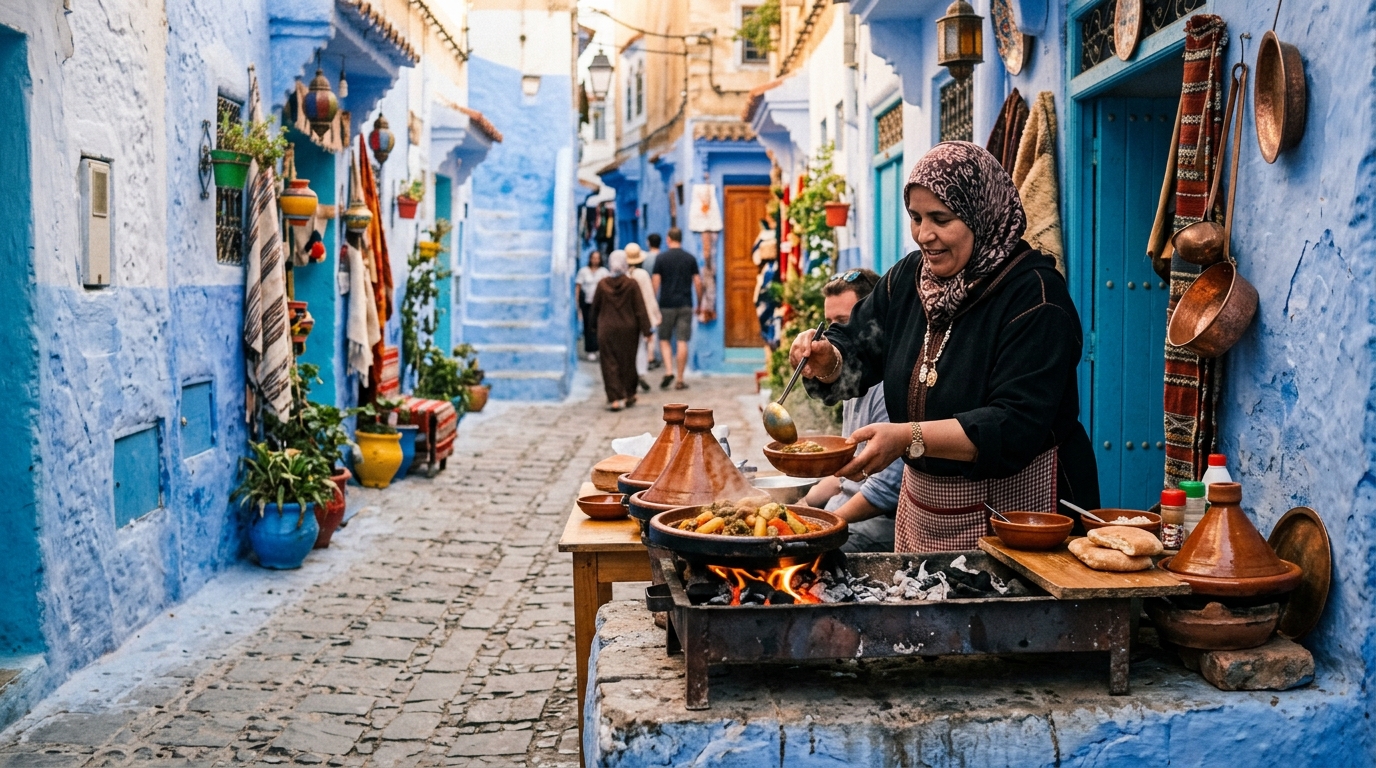
In the northern Rif mountains around Chefchaouen, cooks stuff crisp cigar rolls with fresh goat cheese (jben beldi). The tangy curds are beaten with fresh spearmint leaves, cracked black pepper, and nutmeg, creating a sharp herbal contrast to the rich fried shell.
The Royal Sweet: Orange Blossom Almonds in Wild Honey
The sweetest expression of the Briouate belongs to Moroccan teatime and Ramadan nights. Sweet briouates (Briouates b-el-louz) are filled with almond paste (oqda): blanched sweet almonds stone-ground with fine sugar, cinnamon, a grain of aromatic mastic resin (meska horra), and splashes of distilled orange blossom water (ma zhar).
After frying to a pale golden hue, sweet briouates are plunged immediately into warm wildflower honey infused with orange blossom essence. The hot pastry drinks in the perfumed honey while preserving its internal crunch for weeks.
The Frying Masterclass: The Secret to Light Crispness
Many home cooks fail at Briouates because they drop them into smoking hot oil. High heat browns the exterior sheet in thirty seconds, leaving inner pastry layers pale and doughy.
Mastering the frying pan requires understanding thermal pacing:
- Medium-Low Heat: Oil should be heated to approximately 160°C (320°F). When a Briouate enters the pan, it should produce gentle bubbles, not an aggressive sizzle.
- Continuous Movement: The cook uses a slotted wire skimmer to keep pastries moving in circles, ensuring uniform color across all points of the triangle.
- The Multi-Layer Crisp: At this moderate temperature, heat penetrates slowly through each folded layer, cooking moisture out of the interior leaves. By the time the exterior turns golden amber, every layer inside has transformed into crisp parchment.
- Wire Rack Draining: Never drain fried pastries on flat paper towels, which trap steam and cause sogginess. Transfer them to a raised wire cooling rack so air circulates freely.
Grandmother’s Rules for Perfect Briouates
To achieve authentic medina perfection at home, remember four rules from Moroccan grandmothers:
- Keep the Warqa Moist: Warqa dries out within minutes. Keep pastry sheets covered beneath a damp cotton towel while assembling, and brush each strip with melted butter before folding.
- Never Overfill the Pocket: Excess filling stretches the pastry, creating tears during folding. One teaspoon of filling is plenty for standard triangles.
- Double-Dip Sweet Briouates: For honey-soaked almond briouates, soak the pastries in warm honey for fifteen minutes after frying. For a lasting glossy shine, dip them a second time in warm honey the following day before serving.
- Seal Without Exception: Always tuck the final pastry tail into the pocket and secure it with flour-water paste to keep frying oil clean.
Frequently Asked Questions
What is the difference between Moroccan warqa and commercial phyllo pastry?
Commercial phyllo is extruded and rolled dry, making it stiff and prone to tearing when folded into tight diagonal triangles. Authentic Moroccan warqa is hand-slapped on a hot copper pan, retaining moisture and elasticity. Warqa folds easily without cracking and produces a far crispier crunch after frying.
Can briouates be baked in the oven instead of fried?
Yes. While banquets prioritize deep frying for maximum crunch, briouates bake beautifully in the oven. Brush both sides of each folded triangle with melted clarified butter or oil, arrange on a parchment-lined baking sheet, and bake at 190°C (375°F) for twenty minutes, turning once halfway through.
How do you prevent sweet almond briouates from turning hard after soaking in honey?
Hard almond briouates result from over-frying or using crystallized honey. Fry the pastries only until light golden; they darken once immersed in amber honey. Always use good quality pure honey warmed with orange blossom water, and avoid boiling the honey, which ruins its texture.
Can unbaked briouates be frozen in advance?
Briouates freeze exceptionally well. Place assembled, unbaked triangles in a single layer on a baking sheet lined with plastic wrap and freeze until solid. Once frozen, transfer them to airtight containers separated by parchment paper. Fry directly from frozen in medium-hot oil without thawing.
Experience the true heart of Moroccan heritage through its culinary traditions. Join us in preserving and honoring these ancestral recipes.
What People Are Saying
No comments yet. Be the first — we'd love to hear from you.
The Moroccan Food
Culturally Verified & Fact-CheckedThe Moroccan Food editorial team brings together native culinary researchers, heritage preservationists, and experienced home cooks across Marrakech, Fes, and Casablanca. Every recipe and cultural guide is reviewed against ancestral oral traditions and authentic regional practices.