Coastal Alchemy: How Safi, Essaouira, and Oualidia Mastered the Art of Sardine Pulp & Coastal Chermoula

title: "Coastal Alchemy: How Safi, Essaouira, and Oualidia Mastered the Art of Sardine Pulp & Coastal Chermoula" slug: "moroccan-coastal-seafood-safi-essaouira-chermoula-secrets" category: "Food & Cuisine" excerpt: "Beyond the tourist grills: explore the five regional variations of Chermoula marinade, the artisanal craft of pounding ocean sardines into spiced meatballs, and the salt-crusted Atlantic sea harvest."
Coastal Alchemy: How Safi, Essaouira, and Oualidia Mastered the Art of Sardine Pulp & Coastal Chermoula
Bismillah. Welcome back to my table, where the bracing salt air of the roaring Atlantic meets the sweet, smoldering perfume of crushed cumin and olive wood embers. Wash your hands in orange blossom water, take your place on the woven rush mat, and let me transport you to where the Moroccan continent ends and the great western ocean begins.
Tourists know Morocco for its fragrant mountain lamb tagines and golden saffron-tinted chicken with preserved lemons. But those who truly know the kingdom’s core know that its soul is tethered to the fierce Atlantic coastline. Along the jagged shoreline running from the pottery cliffs of Safi down past the oyster lagoons of Oualidia to the wind-battered battlements of Essaouira (Mogador), generations of seafaring cooks have turned the silver bounty of the ocean into high culinary art.
This is not the world of delicate white fish filleted with tweezers. This is the domain of Sardina pilchardus—the fat, glistening, oil-rich Atlantic sardine—and the alchemical mortar-and-pestle wizardry of Chermoula, the ancient North African marinade that breathes life, fire, and fragrance into the harvest of the sea. Come with me as we step past the wharfside grills into the salt-crusted alleys of our coastal ports, to master the art of pounding fresh sardine pulp (Kafta d-l-Hout) and find the spice secrets that have ruled these Atlantic waves for centuries.
1. The Silver Wealth of the Atlantic: How Safi Became the Sardine Capital of the World
To understand Moroccan coastal cooking, you must first understand the ocean that feeds it. Off the western shores of Morocco flows the Canary Current—a colossal marine upwelling system that pulls icy, nutrient-rich water from the deep ocean floor toward the sunlit surface. This biological engine fuels an explosion of plankton, creating one of the richest and most teeming pelagic marine habitats on Earth.
THE CANARY CURRENT COLD UPWELLING CYCLE:
[Deep Atlantic Cold Trench Waters]
                │
                ▼ (Upward Geostrophic Flow)
[Plankton & Mineral Bloom in Sunlight Zone]
                │
                ▼ (Massive Pelagic Feeding)
[Wild Atlantic Sardines (Sardina pilchardus)]
                │
                ▼ (Dawn Coastal Landing)
[Safi, Essaouira, & Oualidia Artisanal Wooden Fleets]
At the epicentre of this maritime empire sits Safi (Asfi). Nestled beneath towering red clay cliffs that gave birth to Morocco’s famed pottery dynasty, Safi became known throughout the twentieth century as the undisputed Sardine Capital of the World. At dawn, the port is an orchestra of shouting dockworkers, screeching gulls, and the rhythmic chugging of blue wooden trawlers (chalutiers) laden to the gunwales with glittering silver cargo.
+--------------------------------------------------------------------------+
|                 ATLANTIC MOROCCAN SEAFOOD TERROIR MATRIX                 |
+------------------+-----------------------+-------------------------------+
| PORT / REGION    | SIGNATURE HARVEST     | CULINARY SPECIALTY            |
+------------------+-----------------------+-------------------------------+
| Safi             | Deep-Water Atlantic   | Pounded Sardine Pulp Meatballs|
| (Asfi)           | Sardines (High Oil)   | in Spiced Red Pepper Tagine   |
+------------------+-----------------------+-------------------------------+
| Essaouira        | Coastal Rock Sardines | Whole Sea-Salt Kanoun Charring|
| (Mogador)        | & Atlantic Sea Bream  | with Preserved Lemon Chermoula|
+------------------+-----------------------+-------------------------------+
| Oualidia         | Crepidula Oysters,    | Spider Crab in Seaweed Ash,   |
|                  | Clams, Sea Urchins    | Lagoon Herb-Steamed Shellfish |
+------------------+-----------------------+-------------------------------+
| El Jadida        | Mackerel, Red Mullet, | Portuguese Cistern Fish Stew  |
| (Mazagan)        | Squid (*Kalamar*)     | with Fennel & Pickled Lemon   |
+------------------+-----------------------+-------------------------------+
The Atlantic sardine caught here is nothing like the pale, dry, bony fish found in sluggish inland seas. The Moroccan sardine is thick-backed, muscular, and rich in omega-3 fatty acids and mineral-dense oils from navigating heavy Atlantic swells. When pulled fresh from the water at dawn, its skin is a mirror of iridescent sapphire and silver, its flesh firm, pink, and tasting of pure oceanic sweetness.
2. The Art of Sardine Pulp (Kafta d-l-Hout): From Fisherman's Catch to Culinary Masterpiece
Ask any Moroccan coastal grandmother what represents the peak of seaside comfort, and she will not hesitate: Kafta d-l-Hout—tender, meltingly succulent sardine meatballs poached in an unctuous, reduced tomato and sweet pepper reduction.
Yet, transforming whole, oily sardines into light, velvety dumplings requires an artisanal technique that separates the true master of the hearth from the novice.
THE ANATOMY OF CRAFTING SARDINE PULP (KAFTA D-L-HOUT):
[Whole Fresh Atlantic Sardines]
               │
               ▼ (Head, Gut, Backbone & Tail Removal)
[Double Butterfly Fillets]
               │
               ▼ (Thumb-Peeling the Iridescent Outer Skin)
[Pure Pink Sardine Muscle Meat]
               │
               ▼ (Pounding in Heavy Brass/Stone Mortar (Mehraz))
[Coarse Fish Mash]
               │
               ▼ (Incorporation of Minced Lamb Kidney Fat (Shahma) & Spices)
[Emulsified, Silky Sardine Dough]
               │
               ▼ (Hand-Rolled with Par-Boiled Round Rice)
[Velvety Sardine Pearls Ready for the Clay Tagine]
The Meticulous Skinning Ritual
You cannot simply toss sardines into an electric food processor. Industrial blades whip air into the fish, heat the delicate oils, and puree the skin and microscopic bones into an unpleasant, gray, gluey paste.
The true Moroccan way begins at the sink with a bowl of ice-cold sea salt water. With swift, confident thumb strokes:
- The head and intestines are pinched and pulled away in a single motion.
- The thumb is slid down the spine, detaching the delicate backbone and tail fin without tearing the flesh.
- The double fillets are laid flat, and with the pad of the thumb, the master cook peels back the thin, silvery outer skin from head to tail, discarding it completely.
- What remains is pristine, ruby-pink sardine muscle meat, free of bitterness and grease.
The Sacred Mortar and the Secret of Shahma
The skinned fillets are placed into a heavy brass or stone mortar (l-Mehraz). With rhythmic, echoing blows of the pestle, the fish is pounded into a coarse, velvety pulp.
And now, let me reveal the crowning secret that coastal fishwives guarded like royal jewels: the inclusion of fat.
Because wild sardines are dense in muscle and low in saturated fats, rolling pure fish pulp into balls and simmering them will cause the protein fibers to tighten, resulting in dry, rubbery meatballs. To prevent this, our grandmothers always pounded in a precise ratio (roughly 10% to 15% by weight) of finely minced lamb kidney fat or tail suet (Shahma d-l-Kelia or Shahma Beldia), or in lighter households, grated sweet white onion and bone marrow.
THE BIOCHEMICAL MAGIC OF THE FISH-SUET EMULSION:
[High-Protein Sardine Actomyosin Fibers]
                 +
[Low-Melting-Point Lamb Suet / Kidney Fat Triglycerides]
                 +
[Starchy Par-Boiled Round Rice Grains]
                 ║
                 ▼
[Thermal Melting in Tagine: Fat liquefies from inside the ball,
 creating micro-steam pockets that puff the sardine meat into an
 impossibly light, juicy, melt-in-the-mouth dumpling.]
To bind the pulp, a handful of par-boiled round Egyptian-style rice (Rouz Beldi) is kneaded into the spiced fish dough. As the meatballs simmer in the tagine, the rice expands, drinking in the aromatic juices of the tomato sauce while acting as structural scaffolding that keeps each sphere impossibly tender.
3. Decoding the Chermoula Matrix: The 5 Coastal Regional Variations
If French cuisine rests upon the pillar of Mirepoix and Italian upon Soffritto, Moroccan seafood cuisine bows before the undisputed throne of Chermoula.
Chermoula is not a mere sauce; it is a complex, bio-chemical marinade engineered to cut through the heavy richness of oily ocean fish, tenderize dense fibers with natural citrus acids, and perfume the meat with deep, earthy terpenes and volatile aromatics. Across our Atlantic coastline, each maritime enclave has evolved its own signature variation:
+-----------------------------------------------------------------------------+
|                     THE 5 REGIONAL CHERMOULA VARIATIONS                     |
+---------------------+-------------------------+-----------------------------+
| REGION              | CORE INGREDIENTS        | DISTINCTIVE CHARACTER       |
+---------------------+-------------------------+-----------------------------+
| 1. Essaouira        | Fresh Coriander, Flat   | Balanced, deeply aromatic,  |
|    (The Classic)    | Parsley, Purple Garlic, | heavy on toasted coriander  |
|                     | Cumin, Sweet Paprika,   | seed and salty-sour         |
|                     | Preserved Lemon Rind,   | preserved lemon zest        |
|                     | Zit Beldi               |                             |
+---------------------+-------------------------+-----------------------------+
| 2. Safi             | Sun-Dried Niora Pepper, | Deep crimson, smoky, fiery; |
|    (The Fiery Red)  | Hot Cayenne (*Sudaniya*)| uses smoked sweet pepper and|
|                     | Roasted Garlic, Cumin,  | a dash of red wine vinegar  |
|                     | Cold-Pressed Olive Oil  | to break down fish oil      |
+---------------------+-------------------------+-----------------------------+
| 3. Oualidia         | Wild Sea Herbs, Flat    | Herbaceous, verdant, fresh; |
|    (The Green Lagoon)| Parsley, Crushed Green | designed for shellfish and  |
|                     | Coriander, Lemon Juice, | delicate lagoon catches;    |
|                     | Green Cumin Seeds       | zero heavy paprika          |
+---------------------+-------------------------+-----------------------------+
| 4. Tangier & North  | Whole Crushed Garlic,   | Pale, intensely sharp,      |
|    (The White Lemon)| Wild Mountain Oregano   | acidic; relies on Seville   |
|                     | (*Za'atar*), Lemon Juice| bitter orange (*Larendj*)   |
|                     | Sea Salt, White Pepper  | and olive oil maceration    |
+---------------------+-------------------------+-----------------------------+
| 5. Coastal Taktouka | Charred Red Bell Pepper,| Cooked, jammy glaze; used   |
|    (Cooked Chermoula| Grated Ripe Tomato,     | to coat whole rock fish     |
|     Glaze)          | Garlic, Paprika, Cumin  | before baking in bread ovens|
+---------------------+-------------------------+-----------------------------+
The Anatomy of the Classic Essaouira Chermoula
To make the quintessential Atlantic Chermoula that makes the port of Essaouira legendary:
AUTHENTIC ESSAOUIRA CHERMOULA FORMULA:
- 1 Large Bunch Fresh Flat-Leaf Coriander (Qasbour) - Finely Hand-Chopped
- 1/2 Bunch Fresh Italian Flat Parsley (Ma'adnous) - Finely Hand-Chopped
- 6 Cloves Moroccan Purple Garlic (Touma Beldia) - Crushed to a Paste with Salt
- 2 tbsp Sweet Smoked Paprika (Tahmira Beldia / Niora)
- 1.5 tbsp Freshly Ground Roasted Cumin Seeds (Kamoun Beldi)
- 1 tsp Ground Coriander Seed (Al-Qasbour Yabes)
- 1/2 tsp Fiery Red Cayenne Pepper (Sudaniya)
- Pulp & Minced Rind of 1 Salt-Cured Preserved Lemon (L'hamd Marakad)
- Juice of 1 Fresh Squeezed Sun-Ripened Lemon
- 1/2 cup Unfiltered Cold-Pressed Olive Oil (Zit Beldi)
- 1 tsp Coarse Atlantic Sea Salt
The herbs must be meticulously dried before chopping; water on the leaves dilutes the essential oils and causes the marinade to turn dark and sour. When pounded in the mortar with coarse sea salt and garlic, the cell walls of the coriander rupture, releasing linalool and citrusy terpenes that bond instantly with the lipid-rich extra virgin olive oil.
4. The Chemistry of the Clay Coastal Tagine: Sardine Pearls in Spiced Tomato Reduction
Now, let us bring the elements together in the unglazed clay crucible of our coastline: the Tagine d-l-Hout.
Cooking seafood in an authentic clay tagine is a lesson in thermodynamic mastery. Unlike metal pans that conduct violent, erratic heat, the porous earthenware of the tagine heats slowly, radiating gentle, infrared warmth that envelops the delicate fish balls from all dimensions without boiling them violently.
+--------------------------------------------------------------------+
|                  THE STRATIFIED FISH TAGINE ARCHITECTURE           |
+--------------------------------------------------------------------+
|                [ Conical Clay Lid with Steam Vent ]                |
|                                                                    |
|     Layer 5: Whole Fiery Piri-Piri Chilies & Preserved Lemon Strips|
|     Layer 4: Purple M'ssala Cured Olives & Charred Bell Pepper Ribs|
|     Layer 3: Golden Pounded Sardine Meatballs (Kafta d-l-Hout)     |
|     Layer 2: Simmering Grated Tomato Coulis with Garlic & Chermoula|
|     Layer 1: The Sacrificial Raft (Crossed Celery Stalks & Carrots)|
|                                                                    |
|           [ Heavy Earthenware Base over Olive Wood Embers ]        |
+--------------------------------------------------------------------+
The Sacrificial Aromatic Raft
At the bottom of the tagine, the master cook never places fish directly against the clay floor. Instead, she creates a protective, aromatic trellis using whole celery stalks (Krafes), halved wild carrots, or sliced sweet bell peppers.
This sacrificial layer serves two vital scientific functions:
- It elevates the fish meatballs above direct bottom heat, preventing any scorch or sticking.
- As the vegetables simmer, the celery releases natural nitrates, celery oil, and moisture that vaporize upward, perfuming the sardine meatballs with herbal freshness while seasoning the emerging sauce.
The Simmer and the Glaze
Over the vegetable raft, a coulis of grated, sun-ripened plum tomatoes (Tmatem Beldia) is poured, enriched with half of our prepared Chermoula. The glossy, spiced sardine meatballs are nestled gently into the sauce.
The top is crowned with charred strips of roasted sweet red horn peppers (Felfla Mashwiya), strips of salty preserved lemon peel, violet-cured Moroccan olives (Zitoun M'ssala), and two whole, un-pierced red chili peppers (Felfel Har).
The conical clay lid is lowered, and the tagine is placed over a bed of dying olive charcoal (Kanoun). For forty-five minutes, the steam rises, condenses against the cool sloped walls of the conical lid, and rains back down in a continuous baste. The tomato sauce reduces from a watery liquid into an unctuous, thick, mahogany-red glaze (Dghira) where the olive oil visibly separates around the perimeter—the universal sign in Moroccan gastronomy that the sauce has reached perfection.
5. Beyond the Meatball: Salt-Crusting, Kanoun Charring, and the Oualidia Lagoon
While Kafta d-l-Hout reigns supreme inside the home, the open-air docks of Essaouira and Safi tell another, equally primal culinary story: the ritual of the whole Atlantic sardine charred on the Kanoun.
WHOLE ATLANTIC SARDINE CHARRING RITUAL:
[Dawn-Landed Whole Ocean Sardines (Un-gutted & Scale-Intact)]
                        │
                        ▼ (Generously Dredged in Coarse Grey Sea Salt)
[Protective Salt-Armor Crust]
                        │
                        ▼ (Locked into Double Wire Grilling Grids)
[Suspended 2 Inches over Scorching Argan/Olive Charcoal]
                        │
                        ▼ (Exact 120-Second Flash Sear Per Side)
[Scales Caramelize & Trap Subcutaneous Omega-3 Fats Inside Flesh]
                        │
                        ▼
[Served Piping Hot with Fresh Cumin, Raw Red Onion & Hot Hearth Bread]
The Philosophy of the Scale and the Guts
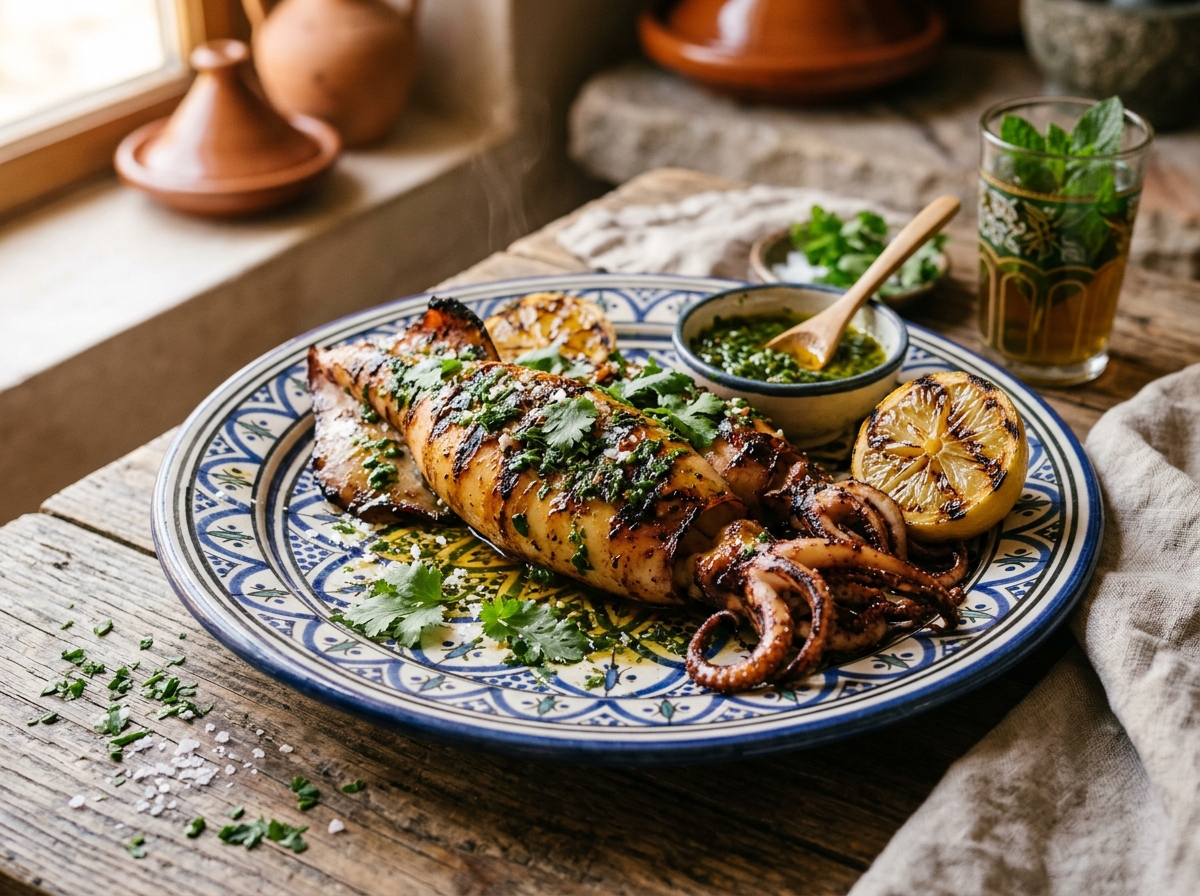
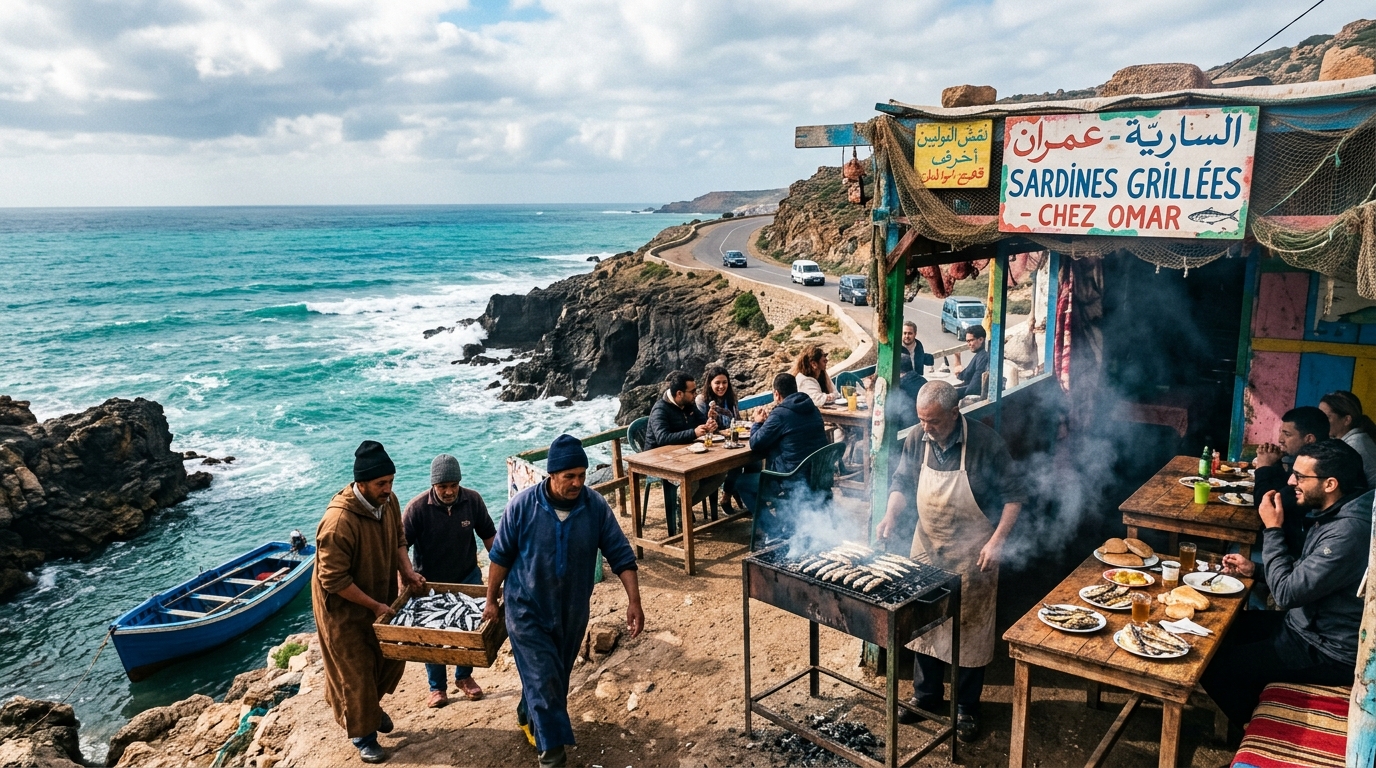
If you visit the blue-painted wooden stalls along the ramparts of Essaouira at lunchtime, you will see master grillers tossing whole, un-gutted sardines into mounds of coarse Atlantic rock salt. They do not remove the scales, nor do they slit the belly.
To the uninitiated, this seems shocking. But listen to the wisdom of the fishermen: the intact silvery scales and coarse salt form a ceramic-like protective armor over the hot charcoal. As the fish hits the glowing embers, the subcutaneous layer of fat under the skin liquefies, essentially steam-poaching the sardine meat in its own rich juices inside the scaled skin.
When cooked for precisely two minutes per side, the griller lifts the fish onto a piece of wrapping paper. You pull the tail; the entire charred skin and backbone peel away effortlessly in one clean motion, revealing glistening, steaming, pristine white meat that melts on your tongue like salted cream, experienced only with a dusting of freshly roasted ground cumin (Kamoun Beldi) and a squeeze of fresh lemon juice.
The Shellfish Terroir of Oualidia
A short drive north of Safi brings you to the tranquil crescent-shaped lagoon of Oualidia. Here, seawater filters gently through sandbars into calm, shallow waters, creating Morocco's oyster and shellfish capital.
Here, culinary traditions merge with ancient Berber coastal foraging:
- Oualidia Oysters (Huîtres de Oualidia): Cultivated in pristine tidal beds, these cupped Pacific and indigenous oysters are eaten raw within minutes of harvest, served on beds of damp seaweed with only a wedge of bitter seville orange or a single drop of spicy shallot-vinegar Chermoula.
- Spider Crab in Kelp Embers (Al-Baqroush): Massive, spiny Atlantic spider crabs caught in the rocky reefs outside the lagoon are packed in wet sea kelp and buried beneath glowing driftwood charcoal on the beach. The steam trapped within the kelp shell cooks the sweet crab meat to tender perfection, infused with the natural brine and iodine of the Atlantic.
6. Coastal Sea Harvest: Sun-Dried Fish (L-Gueddid d-l-Hout) & Pickled Boquerones
Before modern refrigeration reached the Atlantic villages, coastal families perfected ancient methods of preserving the seasonal ocean surplus that rival the great curing traditions of Scandinavia and Japan.
+----------------------------------------------------------------------------+
|                  ANCESTRAL MOROCCAN SEAFOOD PRESERVATION                   |
+---------------------+-------------------------+----------------------------+
| METHOD              | PROCESS                 | CULINARY APPLICATION       |
+---------------------+-------------------------+----------------------------+
| L-Gueddid d-l-Hout  | Sardines butterflied,   | Rehydrated in winter       |
| (Sun-Dried Fish)    | rubbed with salt, cumin,| lentil stews, fava bean    |
|                     | garlic & paprika, dried | Bissara, or couscous       |
|                     | on cliffside reed mats  | during stormy seas         |
+---------------------+-------------------------+----------------------------+
| Anchois M'raqad     | Fresh Atlantic anchovies| Eaten as tapas with crusty |
| (Pickled Anchovies) | cured in sea salt, then | bread, black olives, and   |
|                     | pickled in bitter orange| raw sweet purple onion     |
|                     | juice, garlic & olive oil|                           |
+---------------------+-------------------------+----------------------------+
| Hout M'khammar      | Salt-fermented fish     | Rare umami seasoning paste |
| (Old Cured Paste)   | aged in clay amphorae   | used to deepen broth bases |
|                     | with wild herbs         | in ancient coastal towns   |
+---------------------+-------------------------+----------------------------+
During the dry, windy months of July and August, the women of Safi lay split, salted sardines across aromatic wild fennel branches spread over reed mats facing the Atlantic sea breeze. The intense combination of ocean salt, strong UV sunlight, and brisk coastal winds dehydrates the fish within three days, locking in an intense, savory umami depth. When winter storms prevent the fishing boats from braving the treacherous Atlantic swells, these dried treasures (L-Gueddid d-l-Hout) are rehydrated in bubbling pots of white fava bean soup (Bissara) or slow-cooked lentils, providing powerful warmth and sustenance to the port families.
7. Grandmother's Secrets (H'kam Lalla) for the Coastal Kitchen
To master the art of Moroccan seafood in your own home, treasure these practical secrets passed down from the matriarchs of Safi and Essaouira:
- The Ice-Water Finger Bath for Skinning: Never attempt to skin room-temperature sardines; the delicate fat between the flesh and skin will melt, causing the fillets to disintegrate in your hands. Always submerge your whole sardines in a bowl filled with cold water, ice cubes, and two tablespoons of sea salt for ten minutes before filleting. The icy brine firms the muscle proteins, allowing the skin to zip off effortlessly like a silk glove.
- The Cumin-Bloom Secret: Never add raw ground cumin directly into a cold wet marinade; it can leave a dusty, chalky bitterness. Always warm your ground cumin in a dry, heavy pan over low heat for 60 seconds until fragrant, or whisk it into warm extra virgin olive oil before combining it with the chopped herbs and garlic. The oil dissolves the fat-soluble cuminaldehyde, unleashing sweet, warm, woody undertones.
- The Preserved Lemon Separation Rule: In fish cooking, never treat the skin and the pulp of preserved lemon (L'hamd Marakad) as the same ingredient. The soft, salty-sour interior pulp should be scraped out, minced finely, and mashed into the raw Chermoula marinade to season the flesh. The firm, fragrant yellow rind should be sliced into thin julienne ribbons and reserved strictly as a decorative garnish placed on top of the tagine during the final ten minutes of simmering.
- The Sacrificial Celery Raft: If you do not have fresh wild carrots to line your tagine, use whole, unchopped outer ribs of celery with their leafy tops intact. They act as a natural non-stick roasting rack, infuse the sauce with clean herbal aroma, and prevent your fish balls from scorching on the clay base.
- The Resting Window for Tagine d-l-Hout: Never serve a fish tagine the very second it is lifted from the flame. The sauce will be thin, bubbling with loose steam, and the fish balls will be fragile. Let the tagine rest with its lid slightly ajar for ten to fifteen minutes off the heat. As the temperature gently drops, the natural gelatin from the fish and the starch from the rice will bind with the olive oil, transforming the sauce into a glossy, luxurious reduction that clings to every piece of crusty bread.
8. Frequently Asked Questions (FAQ)
Q1: Why do authentic Moroccan sardine meatballs (Kafta d-l-Hout) include lamb kidney fat or suet?
Lean sardine muscle meat contains very little saturated fat. When ground and simmered in an acidic tomato sauce, the fish protein fibers contract tightly, which can make the meatballs dense and dry. Incorporating a small amount of finely minced lamb kidney fat (Shahma) or beef marrow introduces low-melting-point lipids that melt from within during simmering. This creates microscopic steam pockets throughout the meatball, yielding an exceptionally tender, juicy, melt-in-the-mouth texture with zero gamey flavor.
Q2: What is the fundamental difference between raw Chermoula and cooked Chermoula?
Raw Chermoula is a vibrant, cold-emulsified marinade made with fresh chopped herbs (coriander, parsley), crushed raw garlic, citrus juice, olive oil, and dry spices used to tenderize and season raw fish before grilling, baking, or poaching. Cooked Chermoula (such as the base for Taktouka or fish glazes) is gently simmered in a pan with grated ripe tomatoes or roasted sweet peppers and olive oil until the liquids reduce into a thick, glossy, jam-like compote, mellowing the raw garlic bite into a sweet, rich savory glaze.
Q3: How do you eliminate the overpowering fishy smell when cooking fresh sardines at home?
The unpleasant "fishy" odor in seafood is caused by the breakdown of trimethylamine oxide (TMAO) in aging fish. To keep your kitchen smelling like a gourmet coastal haven:
- Use only sardines landed within 24 to 36 hours whose eyes are crystal clear and gills are bright ruby-red.
- Thoroughly peel and discard the outer silvery skin, which contains the highest concentration of volatile oxidized surface oils.
- Ensure your Chermoula includes ample crushed fresh garlic, fresh lemon juice, and ground coriander seed—these ingredients chemically neutralize volatile amine compounds on contact.
Q4: Why are whole sardines grilled along the port of Essaouira without removing the entrails or scales?
Grilling sardines with their scales and entrails completely intact is an intentional ancestral technique. The thick layer of scales combined with a heavy crust of coarse Atlantic rock salt acts as a natural insulating shell over blistering charcoal embers. This traps the fish's natural oils and moisture inside, effectively steam-roasting the meat in its own juices while preventing the delicate flesh from drying out or sticking to the grill bars. Once cooked, the charred skin and entrails are peeled away in one motion, leaving behind pure, succulent, sweet meat.
Q5: Can I substitute other fish species for sardines when making traditional Kafta d-l-Hout?
Yes, absolutely. While Atlantic sardines are the undisputed traditional standard, excellent authentic substitutes include Atlantic mackerel (Kabayla), horse mackerel (Chrèl), or bonito/skipjack tuna. If using white fish fillets like sea bass, cod, or hake, you will need to add a bit more olive oil or grated onion and par-boiled rice to compensate for the lower natural fat content of white fish flesh.
9. Visual Curation & Photography Prompts
To bring the salt-crusted beauty and vibrant flavors of Moroccan coastal seafood to life, use the following photography prompts:
Image Prompt 1: Dawn at the Port of Safi
- Subject: A traditional wooden fishing boat painted in vivid cobalt blue and turquoise docked at the stone wharf of Safi at first light. In the foreground, weathered wooden crates overflow with glistening, iridescent silver Atlantic sardines, with the dramatic red clay pottery cliffs and ancient fortress walls visible through the morning sea mist.
- Vibe: Cinematic, maritime, raw, atmospheric, authentic dawn light.
- Style: Documentary travel photography, natural ocean morning lighting, crisp maritime detail, 35mm film aesthetic.
- Format: 16:9 Landscape.
Image Prompt 2: Pounding the Sardine Pulp in the Brass Mehraz
- Subject: An overhead close-up shot of a grandmother's hands using a heavy antique beaten-brass pestle to pound fresh, ruby-pink skinned sardine fillets inside a polished brass mortar (Mehraz). Beside the mortar sit small ceramic pinch bowls of vibrant crimson sweet paprika, golden roasted cumin seeds, crushed garlic, and fresh bright green coriander leaves.
- Vibe: Generational craftsmanship, culinary heritage, artisanal action, rich textures.
- Style: High-end culinary documentary, dramatic directional side lighting, shallow depth of field.
- Format: 4:3 Portrait.
Image Prompt 3: The Classical Clay Sardine Tagine
- Subject: An authentic unglazed red clay Moroccan tagine bubbling gently over glowing olive wood charcoal in a clay brazier (Kanoun). Inside, perfectly round golden sardine meatballs are nestled in a thick, mahogany-red tomato reduction, garnished with charred red pepper ribbons, vibrant purple M'ssala olives, thin slices of salt-preserved lemon rind, and two glossy whole red chili peppers.
- Vibe: Mouth-watering, rustic, soul-warming, vibrant Moroccan colors.
- Style: Food editorial photography, warm charcoal glow from below, natural steam rising, shallow focus.
- Format: 16:9 Landscape.
Image Prompt 4: Kanoun-Charred Sardines of Mogador
- Subject: A close-up of whole Atlantic sardines dredged in coarse grey sea salt sizzling across an iron grill grate suspended over glowing argan shell charcoal on the windy ramparts of Essaouira. Flashes of orange flame, delicate white smoke, and blistering golden scales capture the raw energy of street seafood grilling.
- Vibe: Street food energy, rustic, elemental, smoky, appetizing.
- Style: Action food photography, fast shutter speed capturing glowing sparks and rising smoke, warm contrast.
- Format: 1:1 Square.
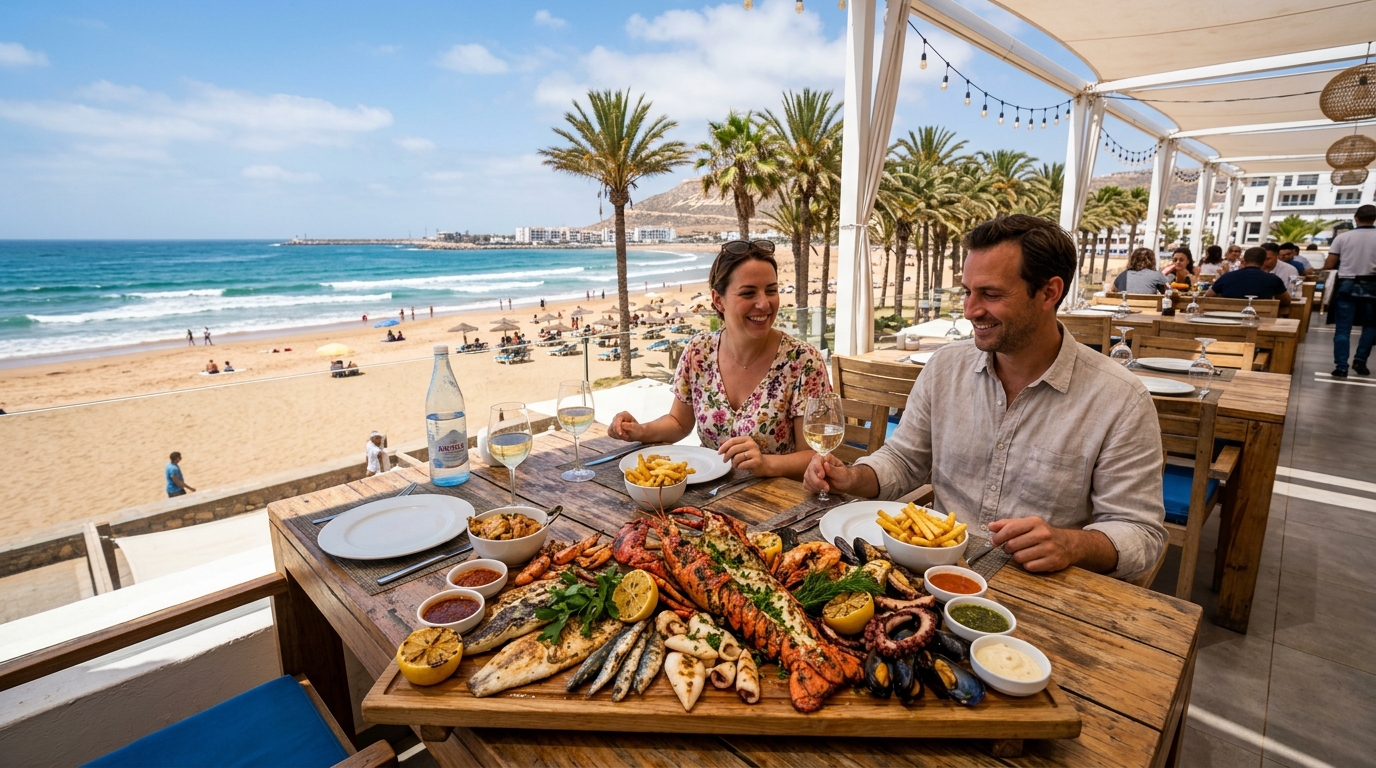
Image Prompt 5: The Grand Coastal Seafood Feast
- Subject: A lavish coastal spread laid out on a blue-and-white zellij tile tabletop overlooking the Atlantic ocean. The feast features the steaming Tagine of Kafta d-l-Hout, a shallow bowl of fresh Crepidula oysters on crushed ice with lemon halves, a rustic bowl of vibrant green Chermoula, torn crusty Moroccan country bread (Khobz), and a filigree glass of cold mint tea.
- Vibe: Celebration, seaside bounty, relaxed luxury, vibrant coastal lifestyle.
- Style: Lifestyle editorial travel photography, bright natural sunlight, ocean background bokeh, rich color saturation.
- Format: 16:9 Landscape.
Experience the true heart of Moroccan heritage through its culinary traditions. Join us in preserving and honoring these ancestral recipes.
What People Are Saying
No comments yet. Be the first — we'd love to hear from you.
Lalla Fatima & The Medina Culinary Guild
Culturally Verified & Fact-CheckedThe Moroccan Food editorial team brings together native culinary researchers, heritage preservationists, and experienced home cooks across Marrakech, Fes, and Casablanca. Every recipe and cultural guide is reviewed against ancestral oral traditions and authentic regional practices.